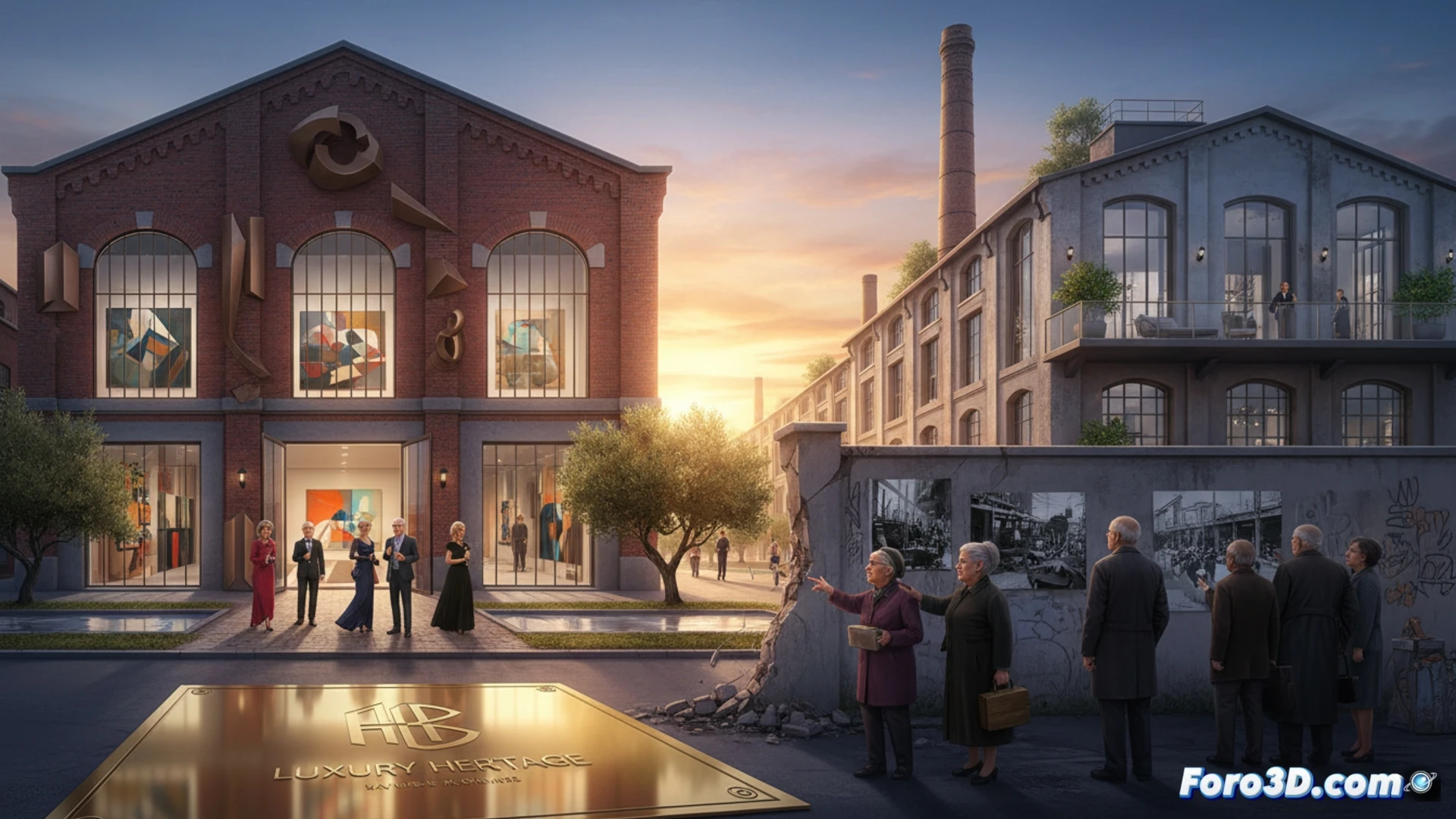
In the Paris region, former temples of industrial labor like the Renault factory on Île Seguin and the Maison du Peuple are being transformed into art galleries and luxury residences. For ordinary citizens, this means seeing their history turned into an exclusive product that pushes them out of their own neighborhood, while land prices skyrocket uncontrollably.
The algorithm of exclusion: zoning and tax exemptions as a driver 🏗️
Behind these conversions lies a technical process that few question: local governments change industrial zoning to mixed-use or commercial, and grant multi-million dollar tax exemptions to construction companies. These urban planning changes prioritize profitability over social cohesion, allowing tax benefits that could fund affordable housing or community centers to be allocated to luxury projects. The result is a silent but systematic displacement.
Art with a hint of Chanel: the gentrification facelift 🎭
The funniest part of it all is seeing an old engine factory become the trendy spot for a 12-euro coffee. Now tourists take selfies where welders once stood, while the government applauds the operation as a cultural success. Sure, because nothing says social cohesion like turning working-class memory into a souvenir for Instagrammers with fat wallets.