The European Union has finally recognized that making films and series is a job, not a hobby. The new regulation promises fair wages and dignified conditions for creators. However, it comes late: platforms like Netflix and Amazon have already dismantled unions and made the sector precarious. The law, far from being a shield, seems more like a patch designed from the lobbyists' office.
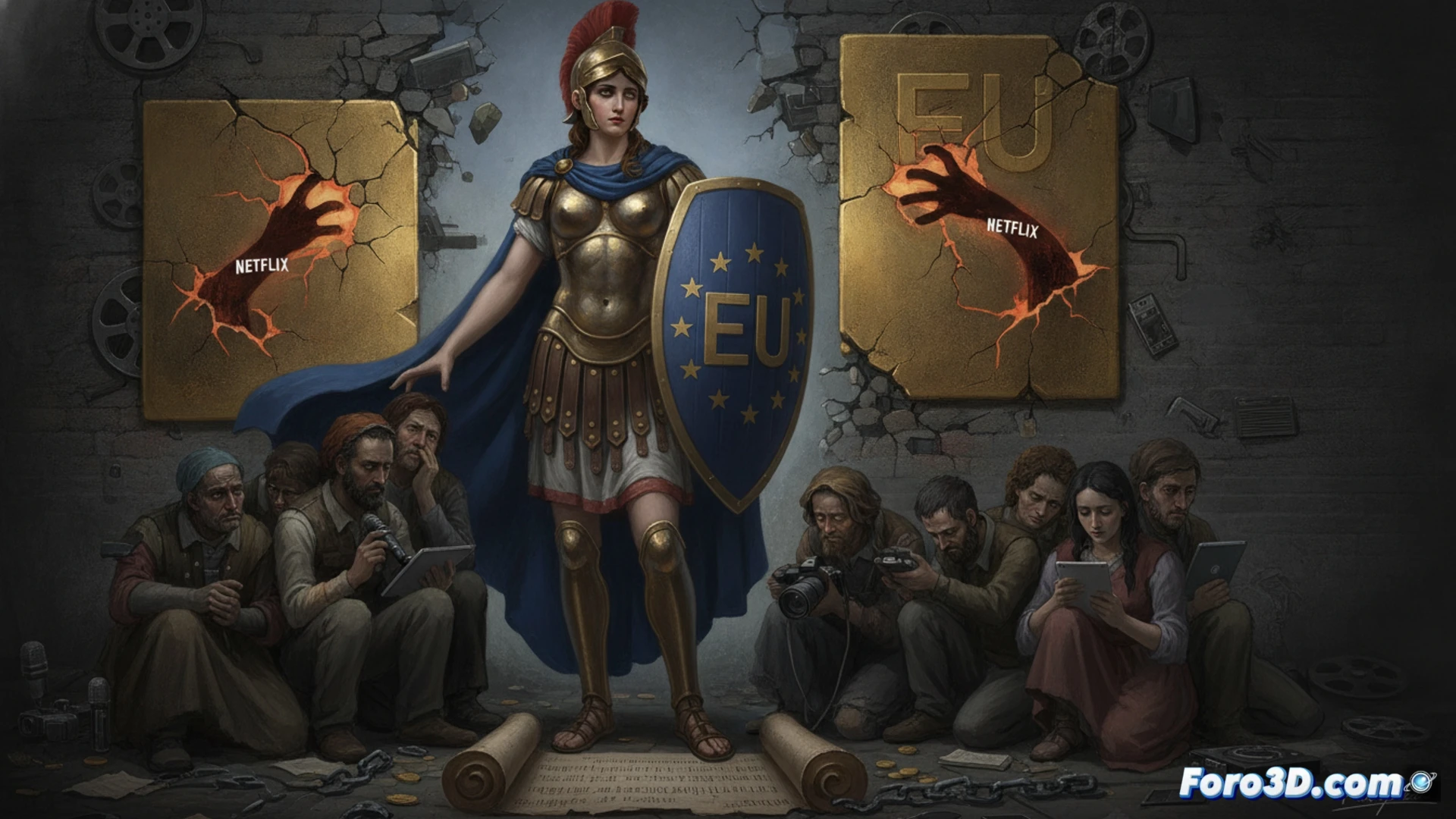
The Algorithm of Precarity: How Multinationals Will Evade Regulation 🎭
The European directive establishes committees to set rates, but employers will have a majority on those boards. Fair pay will be calculated using criteria that favor large production companies, not independents. Furthermore, the regulation excludes creators from YouTube and TikTok, who make up the majority of the sector. Studios are already studying paying fines as an operating cost, preferring sanctions over decent wages. Labor surveillance technology is conspicuously absent.
Quality European Series: Now with the Same Budget as a SpongeBob Episode 🎬
Citizens will see more European productions in their catalog, but most will feature actors paid in transport vouchers and scripts written by third-rate AI. Studios have crunched the numbers: it's cheaper to pay the fine than to raise the crew's salary. Meanwhile, established artists will continue billing like royalty, and unions will celebrate the law as a triumph. Precarity, as always, remains in the final cut.