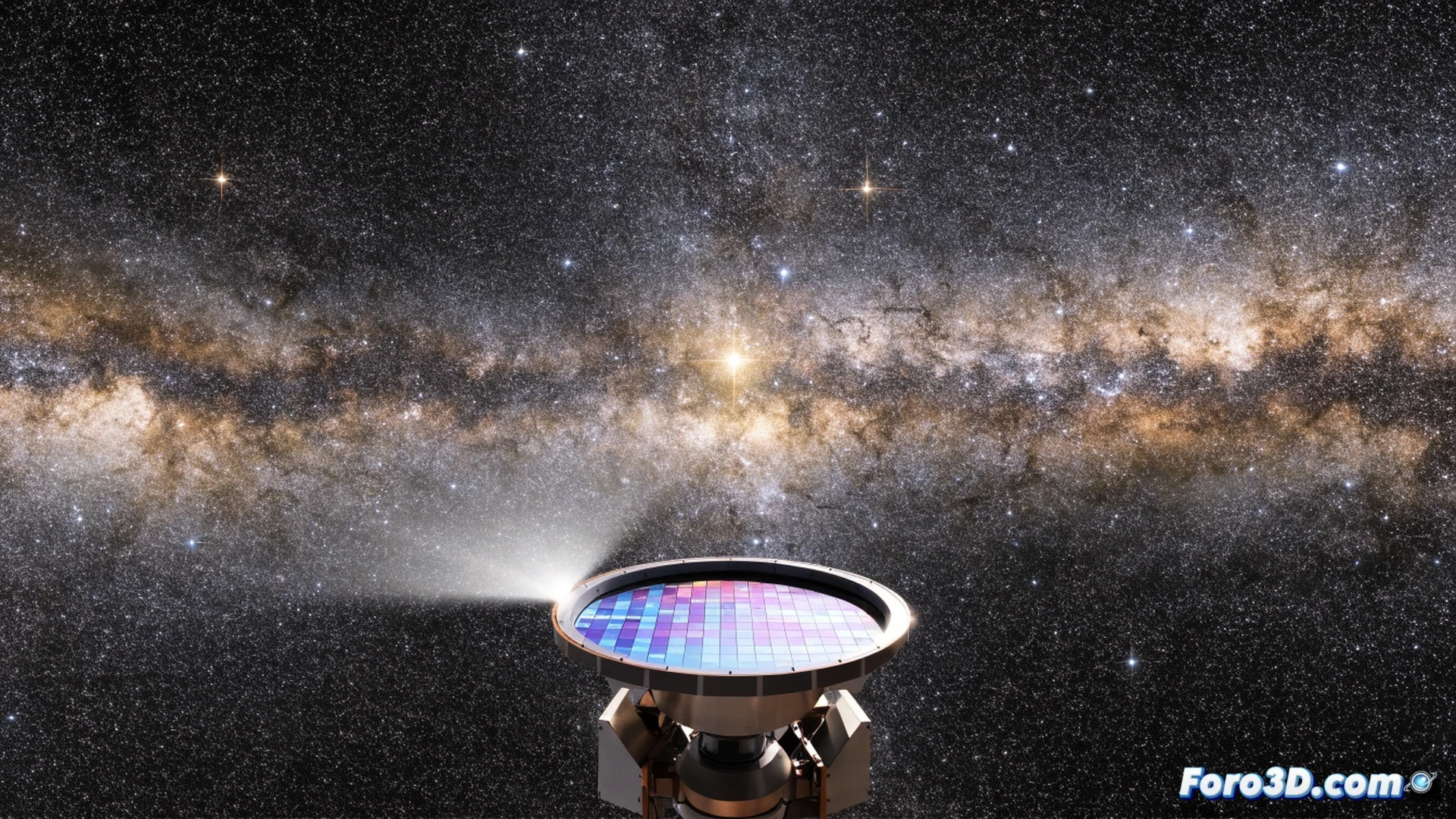
The European Space Agency's Euclid telescope has managed to capture the most detailed image of the center of our galaxy in a single day. The snapshot contains more than 60 million stars and will serve as a reference map for scientists to search for exoplanets with greater precision. This advance brings the discovery of new worlds closer and expands our knowledge of the universe.
How this image refines the search for exoplanets 🔭
The key lies in the instrument's resolution and field of view. By having such a complete stellar census of the galactic bulge, astronomers can detect small brightness variations caused by transiting planets or gravitational microlensing. This eliminates background noise and reduces false positives. Euclid, designed to map dark matter, now offers a valuable byproduct: a massive stellar database that will serve as a guide for telescopes like the James Webb.
60 million selfies and not a single tag 📸
Euclid took the photo in one day. If we tried to upload it to Instagram, we would need more storage than the ESA server has and would probably crash the network. The good thing is that, since there are no social networks in space, the telescope saved itself the filters and hashtags. Now scientists can study the stars without anyone asking what filter was used to make the galactic center look brighter than it is.