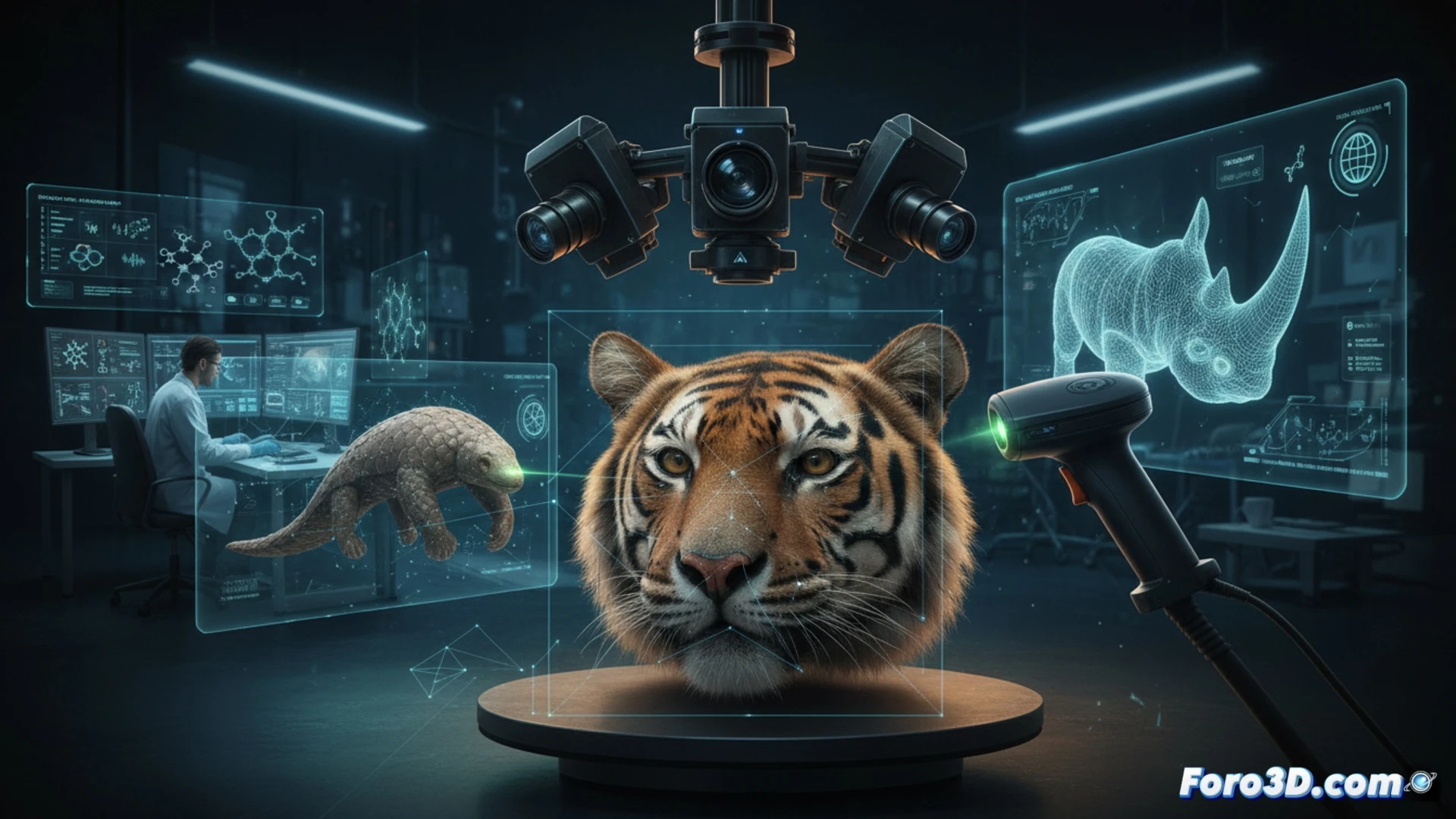
The smuggling of stuffed specimens, from skulls of protected felines to taxidermied birds, moves millions of dollars a year. For forensic police, the material evidence is fragile and often degrades during the judicial process. This is where the digital forensic pipeline makes a difference: through 3D scanning and photogrammetry, an exact replica of the specimen is generated, allowing taxonomic identification, expert analysis without physical manipulation, and unalterable traceability of the confiscated object.
Digital chain of custody and metric record 🔐
Upon receiving a specimen at customs, the first step is high-resolution photogrammetry with cross-polarized light to eliminate shadows and capture the texture of fur or scales. Subsequently, a laser or structured light scan records the geometry with submillimeter precision. The resulting model is processed in software such as Agisoft Metashape or RealityCapture, generating an .OBJ or .PLY file with metadata of date, location, and operator. This model is integrated into a forensic blockchain platform, ensuring that any subsequent modification is recorded. The original piece can then be stored without the need for continuous exposure, while the digital file travels to the court.
Precision as a defense of biodiversity 🦅
The technology not only documents but exposes the smuggler's lie. A detailed scan reveals illegal cuts, tool marks, or restorations that attempt to disguise a protected species as a legal one. In court, the expert can rotate the 3D model in real time, pointing out fractures or anomalies that traditional photography hides. In the end, the digital record becomes a silent and incorruptible witness. Each scanned vertebra is an argument against wildlife trafficking.
What specific technical challenges does photogrammetry face when digitizing stuffed specimens with irregular feathers or fur for use as evidence in customs?
(PS: In the forensic pipeline, the most important thing is not to mix the evidence with the reference models... or you'll end up with a ghost at the scene.)