Verifying an authentic historical wax seal is a challenge that transcends mere visual inspection, as these wax seals constitute irrefutable proof of documentary provenance. In the field of Digital Law, the authentication of these physical objects becomes a pillar for the certification of digital assets, where the chain of custody and originality determine the legal validity of an estate. This article explores how the intersection of photogrammetry and 3D scanning offers precise tools to differentiate a genuine seal from a forgery.
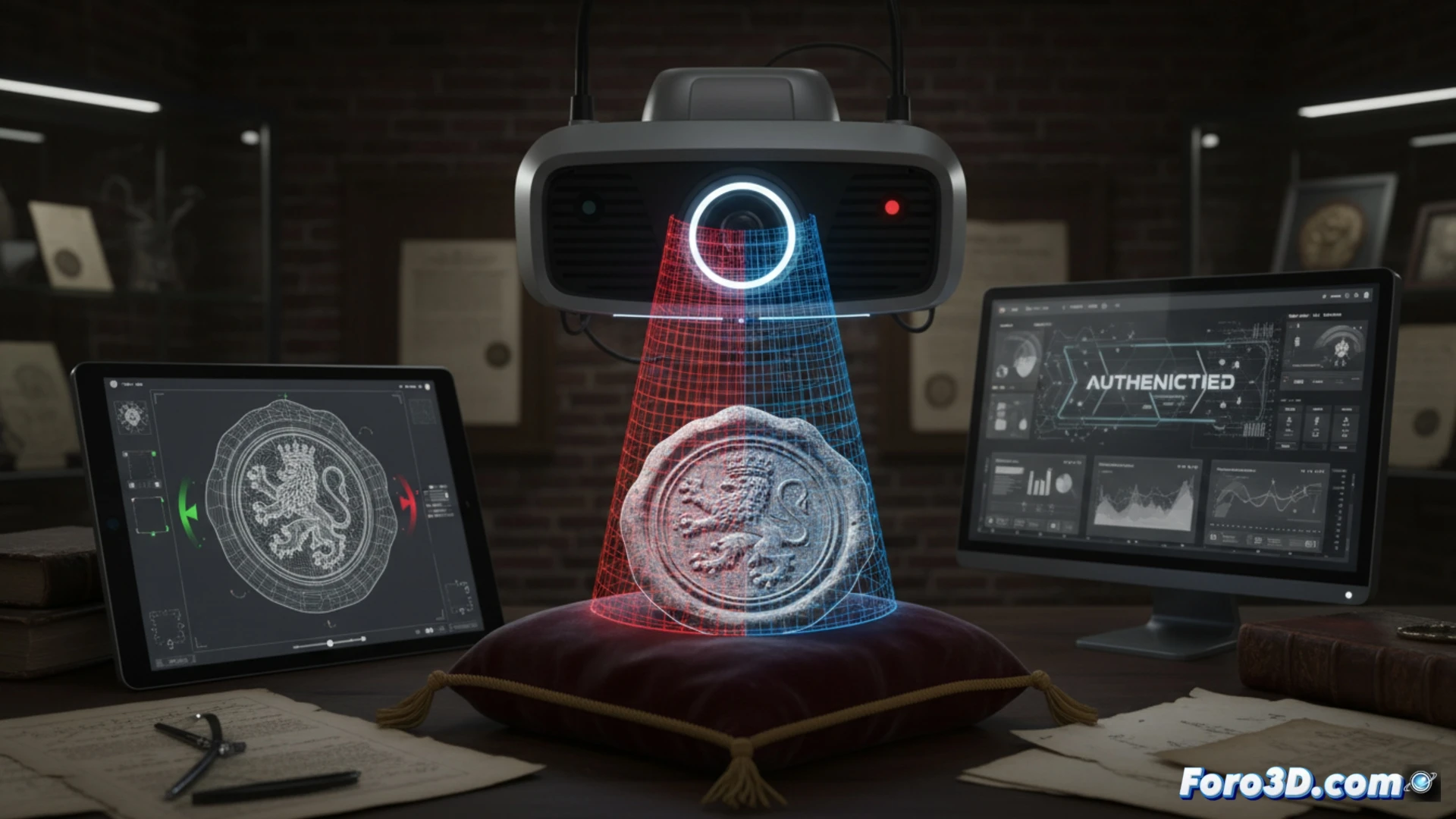
Photogrammetry and Digital Twins as Expert Evidence 🔍
The application of high-resolution photogrammetry techniques allows capturing the microtopography of a wax seal, including cracks, air bubbles, and unique wear patterns that function as an irreversible fingerprint. By generating a three-dimensional digital twin, experts can compare this geometry against databases of registered original seals, identifying millimetric discrepancies that betray a copy. This process not only reinforces the authentication of heritage objects but also sets a technical precedent for the digital certification of assets. The precision of the scan, combined with point cloud matching algorithms, offers traceability that surpasses the limitations of traditional chemical analyses.
Legal Frameworks Against the Forgery of Heritage Assets ⚖️
The implementation of digital twins as proof of authenticity requires a robust legal framework that recognizes these 3D records as valid evidence in intellectual property litigation. Courts must define whether the digital fingerprint of the scanned seal constitutes a copyright on the virtual representation of the object, thus protecting the original owner against forgery. This approach poses a dilemma: while technology democratizes verification, it also demands unified standards so that digital certification is not vulnerable to algorithmic manipulation. The protection of these assets depends on a synergy between technical precision and legislative adaptation.
Is it possible that a detailed 3D scan of a historical wax seal reveals wear patterns or micro-imperfections not visible to the naked eye, allowing for a conclusive differentiation between an authentic piece and a highly sophisticated modern forgery?
(PS: Thaler wanted his machine to be an author, I just want my 3D printer not to jam at 3am)