Modern aviation requires pilots to maintain prolonged static postures in confined spaces, increasing the risk of musculoskeletal injuries. 3D body scanning and digital anthropometry offer a precise solution for capturing the pilot's actual morphology in their work environment. This article analyzes how human digitization allows for evaluating joint angles, functional reaches, and seat pressure, transforming the ergonomic design of flight decks.
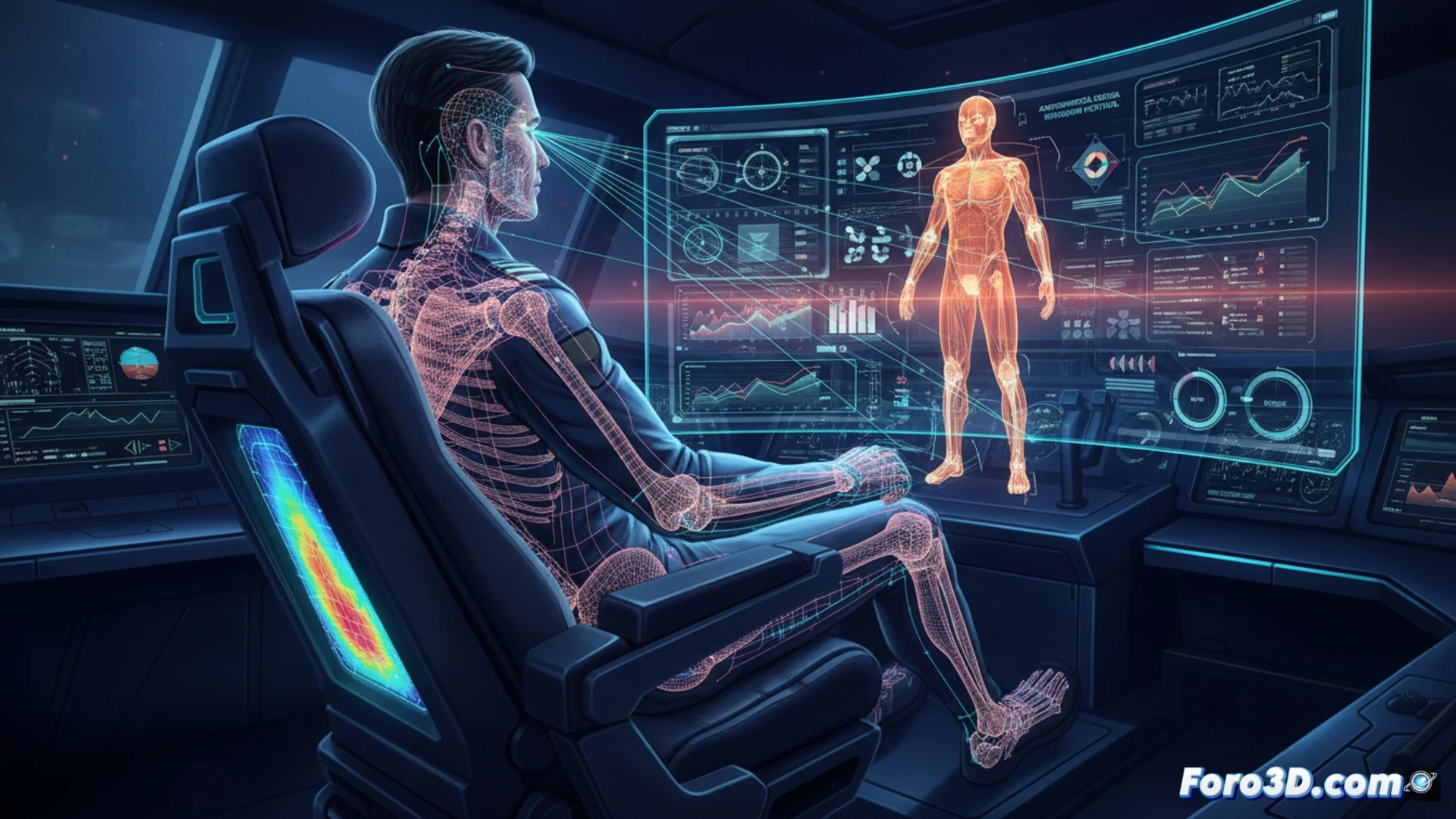
Capture Methodology and Anthropometric Modeling 🛠️
The process begins with structured light scanners or photogrammetry that record the pilot's body surface in real-time. The data generates a human digital twin with millimeter precision, upon which cabin variables are simulated: distance to the instrument panel, knee and hip angle, and pressure on the armrest. Using ergonomic analysis software, comfort limits are calculated according to standards such as SAE J833 or MIL-STD-1472. This approach allows for identifying areas of cervical hyperextension or lumbar compression without the need for costly physical prototypes.
Towards Safer and More Personalized Aviation ✈️
The implementation of digital twins not only optimizes the design of seats and controls but also reduces accumulated fatigue on long-duration flights. Aerospace companies already use these models to validate cabin prototypes with diverse population percentiles, improving ergonomic inclusion. By anticipating chronic injuries and enhancing comfort, digital anthropometry is consolidated as a key tool for the operational safety and occupational health of pilots.
Which 3D body scanning methodology is most effective for quantifying pressure zones and critical contact points in pilots during long-duration flight simulations?
(PS: Scanning your body for an avatar is like taking a 3D selfie, but without a selfie stick.)