Drift spraying represents a critical risk in modern agriculture, where chemical particles can travel kilometers, affecting neighboring crops and ecosystems. The use of 3D scanning and computational simulation allows real-time modeling of aerosol dispersion, optimizing the application of herbicides and pesticides. This technology not only reduces economic losses from over-application but also mitigates cross-border conflicts, a key factor in the geopolitics of the global food supply chain.
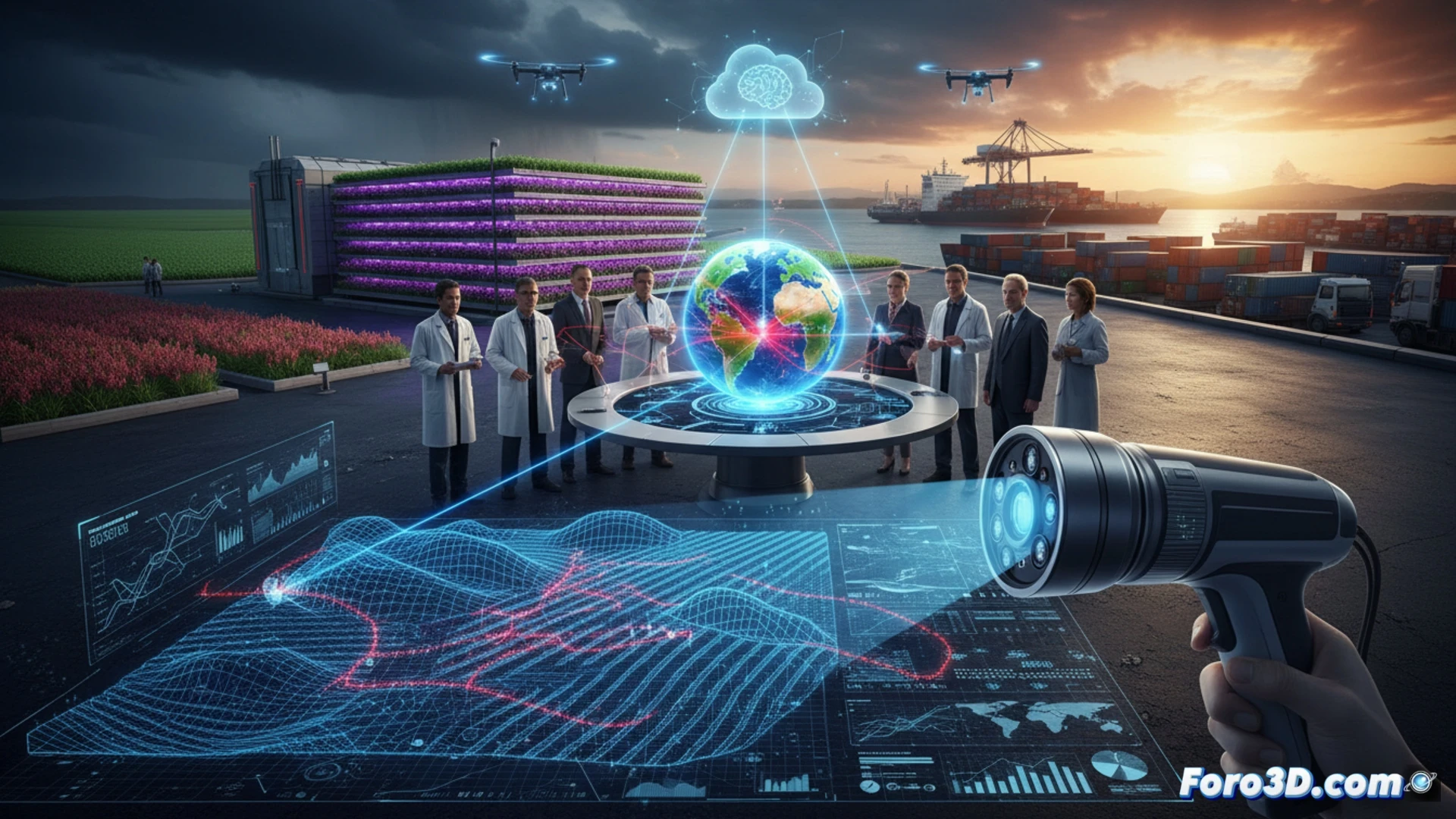
Dispersion modeling and logistics route optimization 🌱
LiDAR scanning and photogrammetry systems generate point clouds of the plant canopy and terrain topography. By integrating this data with computational fluid dynamics (CFD) models, the trajectory of fumigant droplets under wind and humidity conditions can be accurately predicted. This allows operators to adjust nozzle pressure and drone flight altitude, reducing drift by up to 70%. From a logistical perspective, this precision decreases dependence on imported chemical inputs, a strategic factor in regions where fertilizers and pesticides are geopolitical weapons.
Global resilience and agricultural sovereignty 🌍
The ability to simulate cross-border impacts using digital twins of agricultural fields provides countries with a diplomatic negotiation tool. By scientifically demonstrating that controlled drift does not affect neighboring nations, trade barriers are reduced and export flows are stabilized. In a context of tensions over access to fertilizers, 3D scanning becomes an asset of technological sovereignty, enabling agricultural supply chains to be more efficient, less polluting, and more resilient to geopolitical shocks.
How can real-time 3D scanning of fumigation clouds transform the geopolitical control of agricultural supply chains by predicting and preventing cross-border conflicts over chemical drift?
(PS: visualizing the global supply chain is like following a trail of breadcrumbs... in 3D)