In modern warfare, air superiority depends not only on the pilot or radar, but on the millimeter precision of every rivet. A recent incident in the Eastern theater of operations reveals how an assembly error in the left wing spar of a fifth-generation fighter caused a catastrophic failure during an evasive maneuver. We analyze this case through a forensic 3D reconstruction that breaks down the exact fracture point and its domino effect on the fuselage structure.
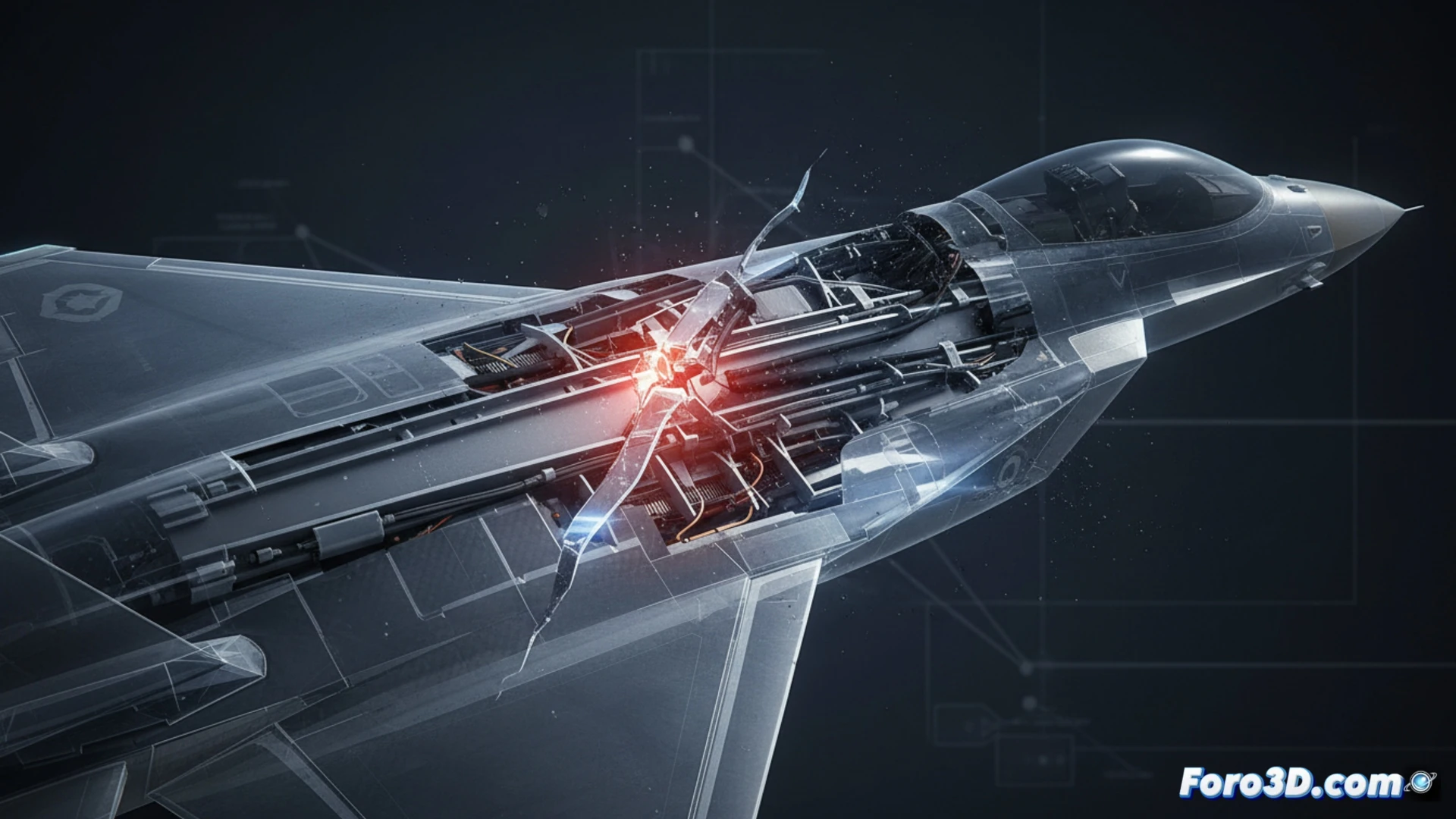
3D Reconstruction of the Structural Failure Point 🛠️
Our 3D model, based on leaked maintenance reports and photographs of the wreckage, identifies the stress concentration zone at the junction of spar N.3 with the torsion box. The finite element simulation shows that a 2.3-degree misalignment in the assembly of the titanium bolts generated microcracks during takeoff. Upon reaching 8.5 Gs in a tight turn, the critical point gave way, initiating an asymmetric separation of the wing. The visualization allows us to see how the loss of lift on the left plane caused an uncontrolled spin, making safe ejection at low altitude impossible. This manufacturing defect, classified as an assembly line torque error, turned a $90 million aircraft into a flying coffin.
Tactical Lessons from the Simulation ✈️
The 3D reconstruction not only documents the failure but redefines combat logistics. A single air assembly error can nullify the technological advantage of an entire fleet. Visualizing the structural collapse in real time forces us to ask: how many pilots have died not from the enemy, but from a hurried nut tightener. In conflict analysis, the digital model becomes irrefutable proof that wars are won in hangars, not just in the sky.
What specific lessons about aircraft assembly tolerances can be drawn from the 3D analysis of structural failures occurring in real combat missions?
(PS: Rebuilding virtually is the first step to rebuilding in reality)