In Japan, a growing number of expectant mothers are choosing non-invasive prenatal testing (NIPT) over traditional methods like amniocentesis. The main reason is reduced stress: these tests analyze fetal DNA in maternal blood without the risk of miscarriage. For the public, this represents an advancement in maternal healthcare, offering safer and more comfortable options that decrease anxiety during pregnancy.
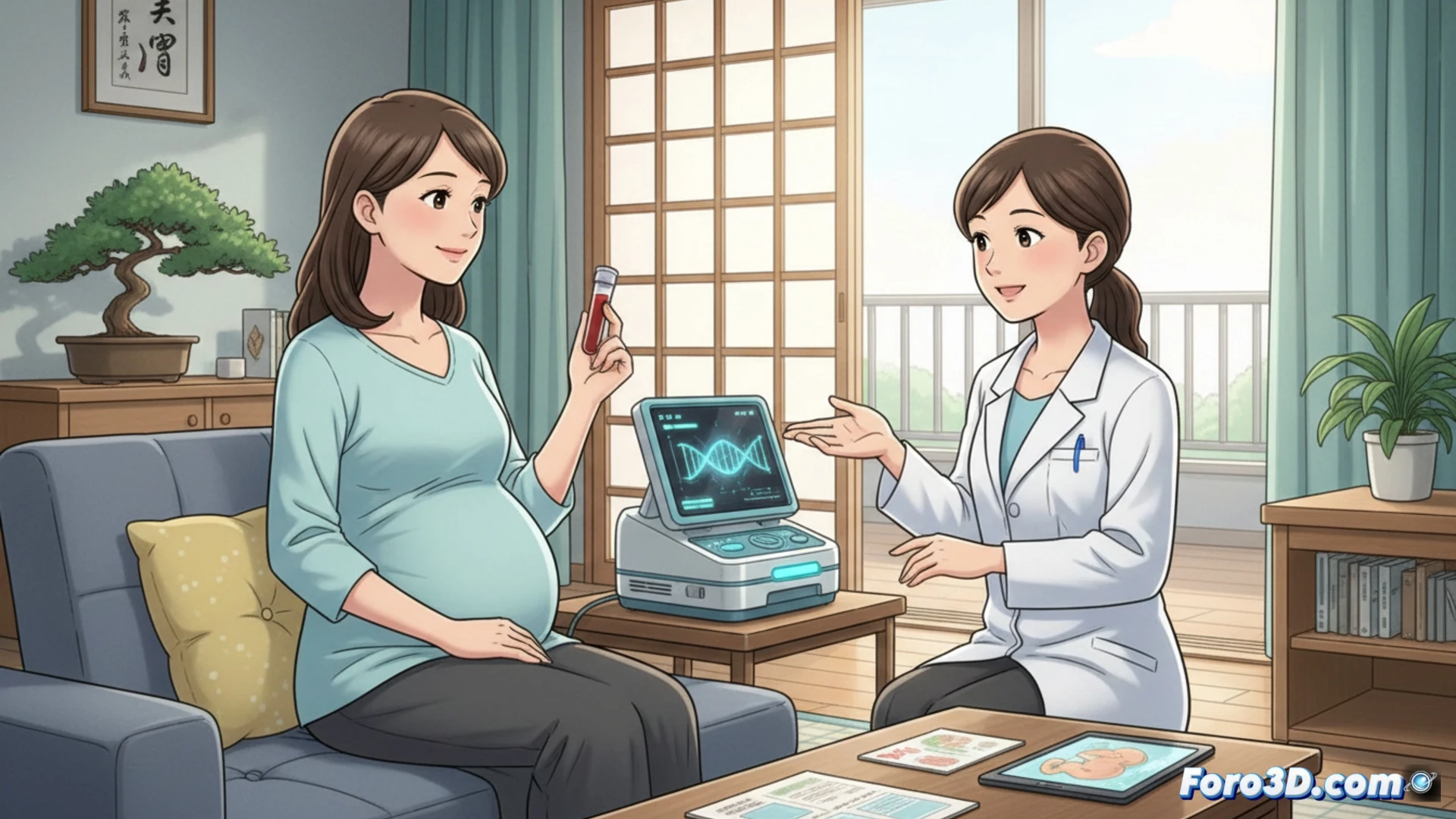
The technology behind the prenatal revolution 🧬
NIPT is based on sequencing fragments of cell-free DNA circulating in the mother's blood. From the tenth week of gestation, chromosomal abnormalities such as Down syndrome are detected with high precision. Although they do not completely replace invasive tests in high-risk cases, their sensitivity and specificity exceed 99% for the most common trisomies. This allows doctors to offer early diagnoses without subjecting the fetus to procedures that carry a small but real risk of loss.
Goodbye to the needle, hello to digital panic 📱
Of course, now Japanese expectant mothers avoid the needle prick, but gain a new source of anxiety: checking the results on the mobile app 50 times a day. Because if technology has taught us anything, it's that eliminating a physical risk only opens the door to a textbook digital stress. At least, while waiting for the email with the verdict, they can entertain themselves by watching baby panda videos. All in the name of mental health.