The United States has relocated the USS Boxer with 2,000 marines from the Middle East to the South China Sea. The official news states that the priority now is to contain Beijing, not invade Iran. The American war machine never rests, it only changes targets while citizens watch without any say in these strategic moves.
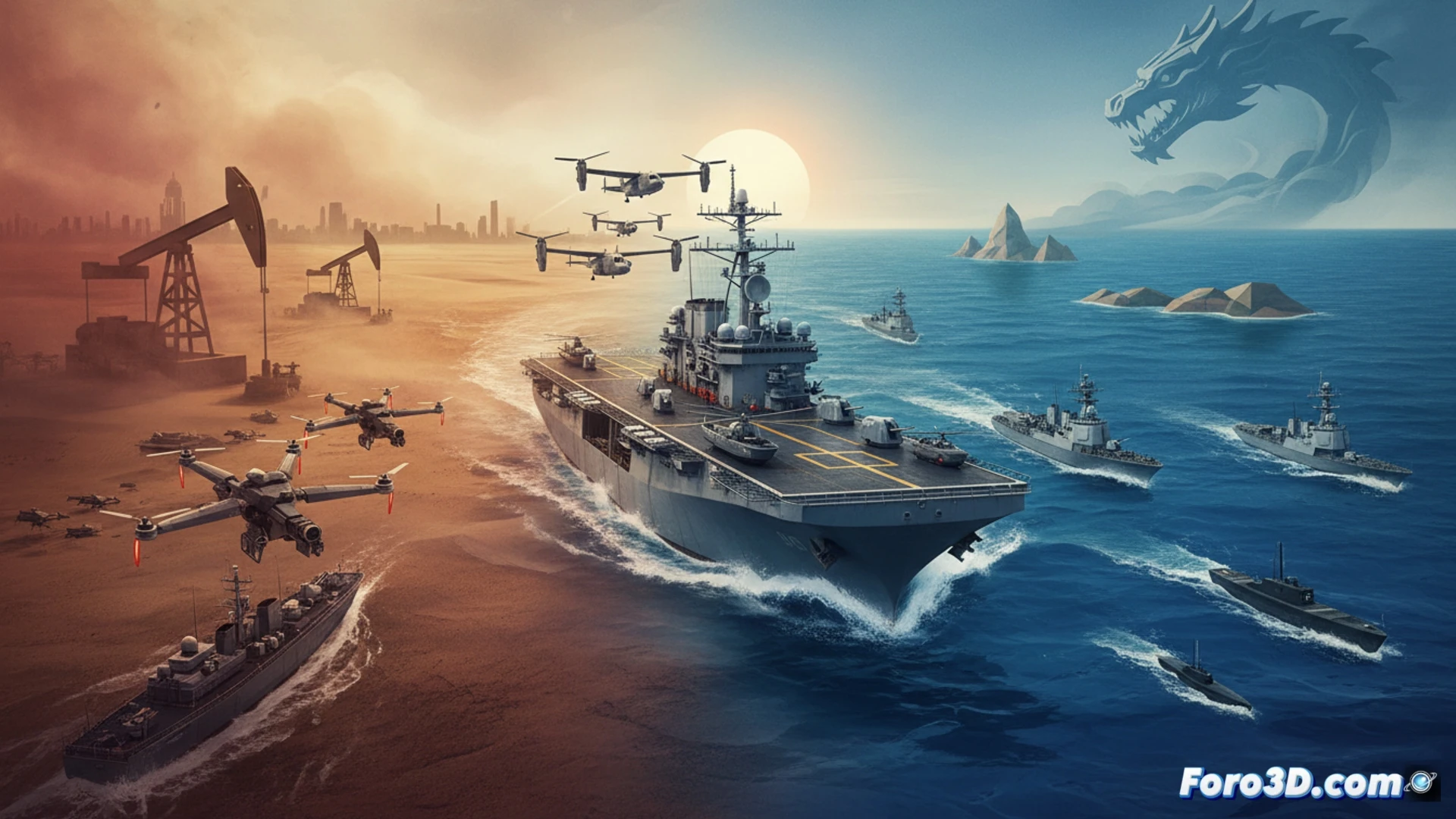
Drones and Satellites: The New Pacific Surveillance 🛰️
The USS Boxer deployment is supported by advanced surveillance technology: MQ-9 Reaper drones, reconnaissance satellites, and electronic warfare systems. The Pacific fleet integrates these assets to track Chinese movements in real time. Data is processed at command centers in Guam and Japan. It's not just a ship; it's a node in an intelligence network spanning from Taiwan to the Strait of Malacca.
Democracy in Airplane Mode: Meanwhile, in Your Living Room 🍕
While the USS Boxer sails, you're deciding between pizza or pasta for dinner. Foreign policy is decided in offices with maps and classified data, and then you find out on TV when the ship has already been at sea for three days. Democracy ends where strategic interests begin. And those, like airplane wifi, are always in airplane mode when it's time to vote.