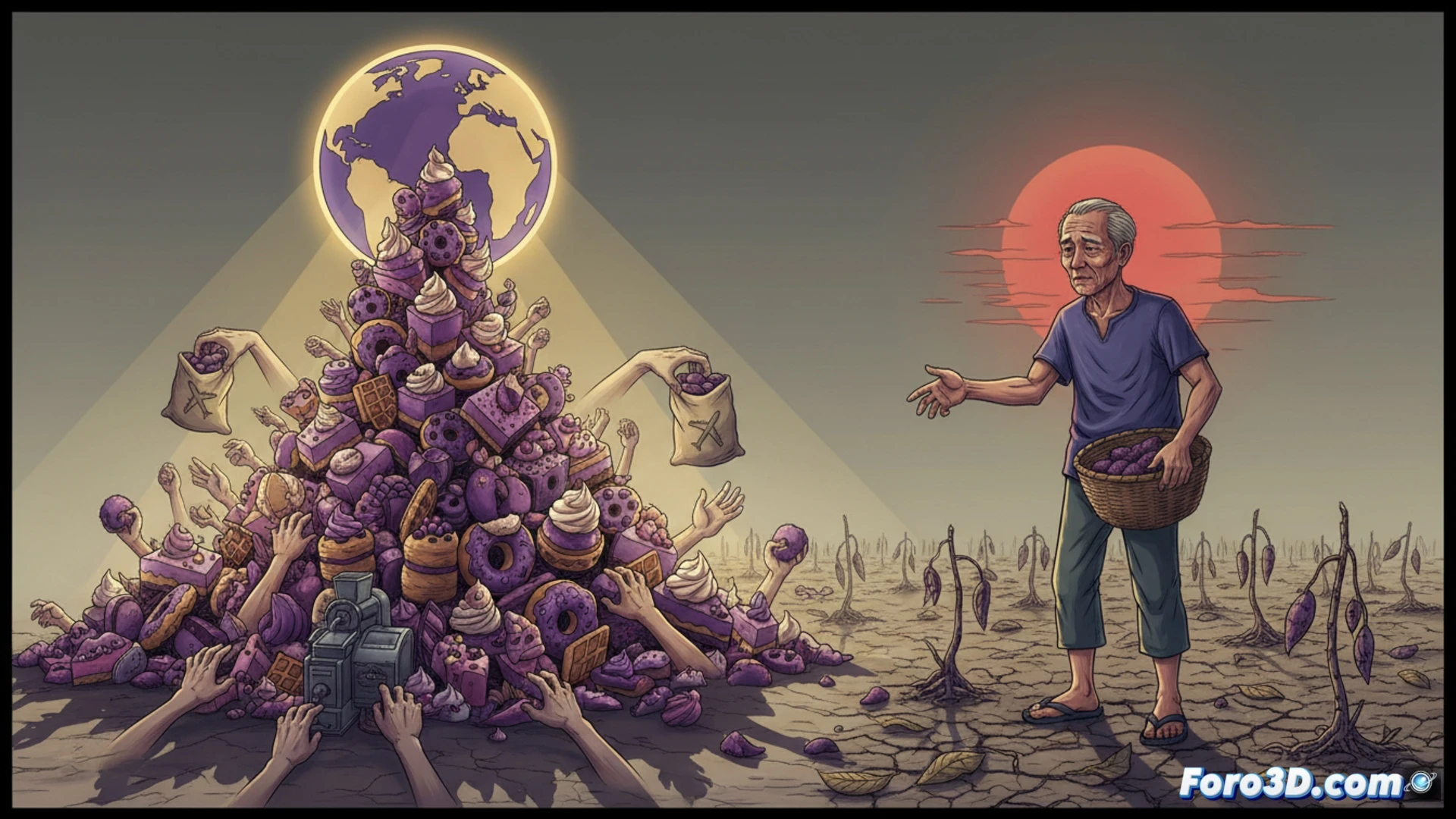
The purple tuber known as ube, the base of viral desserts and drinks on social media, faces a paradox: while its global demand skyrockets, its production in the Philippines fell from 30,000 to 12,400 tons between 2006 and 2025. Farmers sell the entire harvest to fulfill international orders, without reserving seeds for the next planting. Commercial success is devouring its own foundation.
Agricultural technology: micropropagation to save the crop 🌱
Faced with seed scarcity, Philippine laboratories are testing in vitro cultivation techniques. The process involves extracting meristems from the tuber, disinfecting them, and placing them in media with hormones such as BAP and NAA to induce shoots. Each explant can generate up to 20 seedlings in 8 weeks. This allows for multiplying genetic material without relying on tubers destined for sale. The method reduces pressure on commercial stock, but requires investment in infrastructure and trained personnel that is not accessible to all farmers.
Ube becomes so famous that it ceases to exist 😅
Ube has achieved what many products dream of: being a global trend. Too bad that, at this rate, it will soon only exist in Instagram photos and jars of imported extract. Filipino farmers live the drama of having a crop so highly sought after that they cannot save even a single tuber to reproduce it. It's like a bakery selling so much bread that it runs out of sourdough starter. Ube's success is so overwhelming that it is liquidating its own raw material.