The SKAO telescope does not seek light, but radio waves that travel unobstructed from the origin of the cosmos. While you tune your car radio, this observatory captures signals from distant galaxies. The same technology you use to heat pizza or take an X-ray reveals black holes and dead stars. Science turns everyday objects into windows to the deep universe.
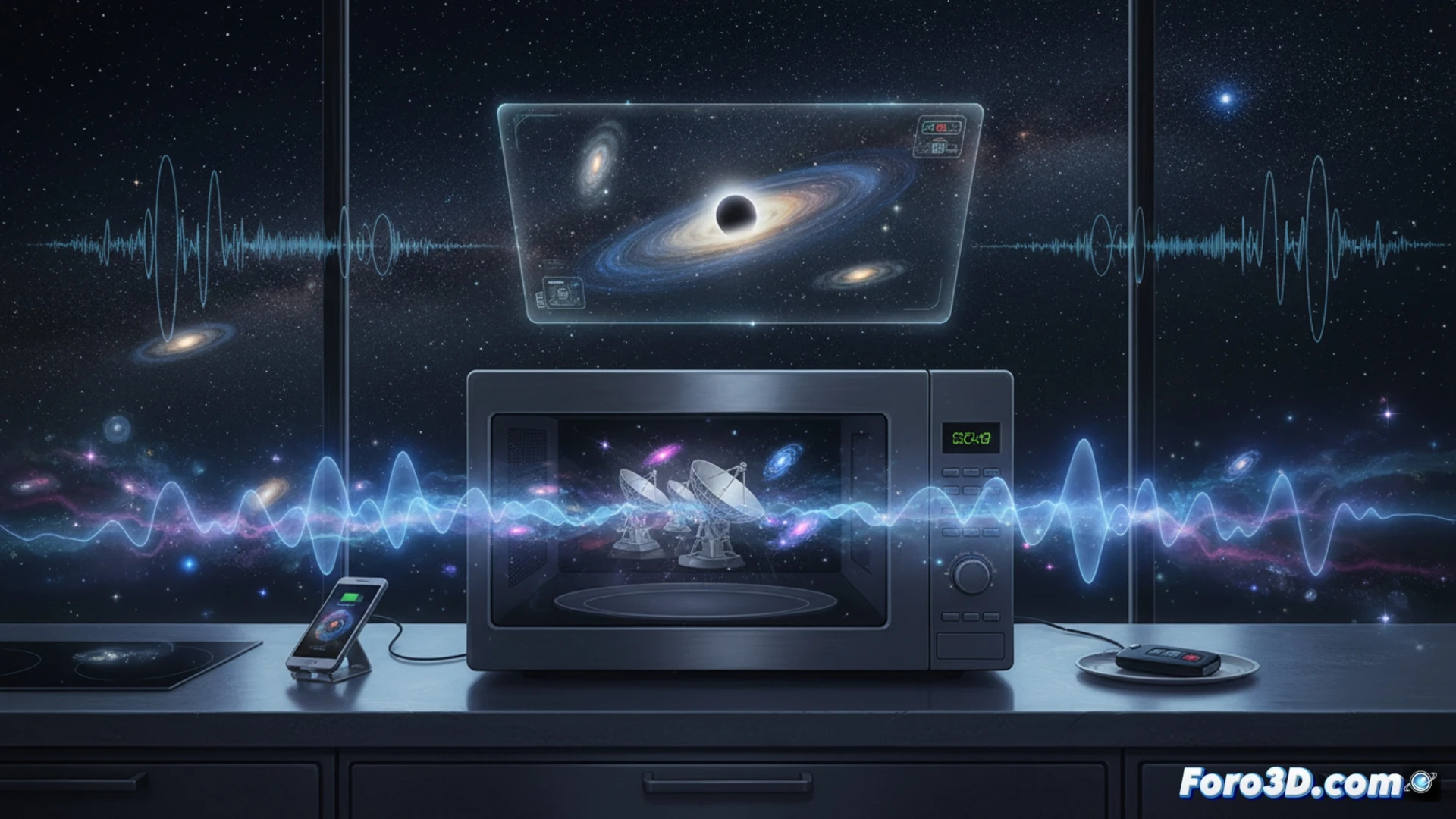
How everyday waves decipher the sky 🌌
The SKAO works like a giant radio frequency receiver, similar to your home microwave but with antennas distributed across two continents. It analyzes neutral hydrogen, the raw material of galaxies, using the same physical principle that allows radar to measure distances. Each captured signal is processed with algorithms reminiscent of a WiFi router. The result: a three-dimensional map of the universe that does not depend on visible light.
The home microwave, that great astronomer 📡
It turns out that the microwave you use to defrost empanadas shares principles with the SKAO. The difference is that yours heats food and the other detects the echo of the Big Bang. If your microwave breaks down, you won't be able to map the cosmos, but you can still heat a coffee. So next time you press the start button, remember: you are using a distant cousin of a 2 billion euro telescope. It's not magic, it's physics.