Listening bars are proliferating as spaces of worship for sound and calm, offering a curated, distraction-free auditory experience. However, this bubble of peace reveals an uncomfortable paradox: disconnection from digital and urban noise becomes a paid privilege. While some savor vinyl in soundproofed rooms, the majority endure the daily din with no real alternative. The oasis is private, with mandatory consumption.
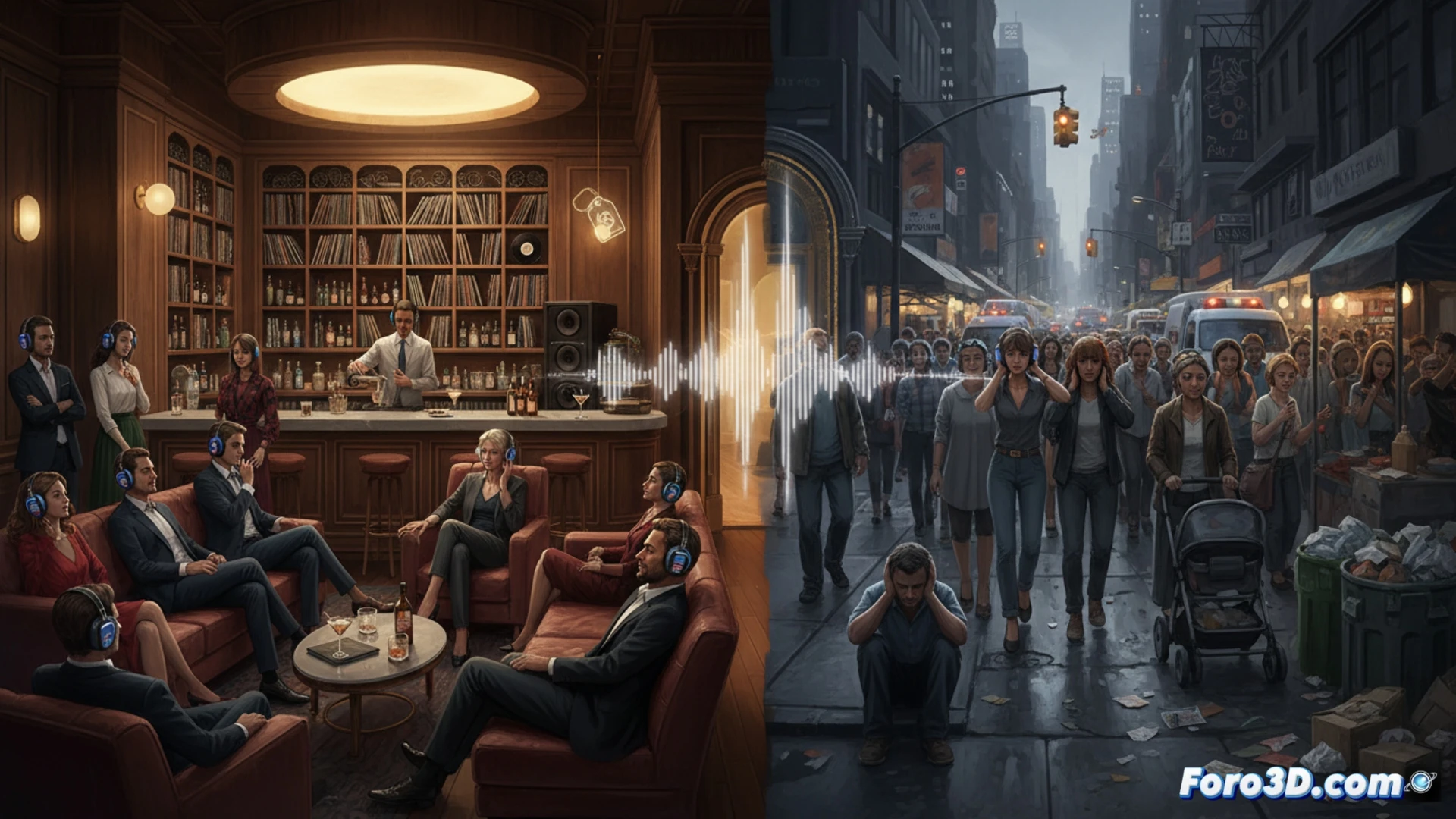
Acoustics as a social filter in urban development 🎧
The technology in these spaces is impeccable: sound absorption systems, high-fidelity speakers, and structural isolation. But their implementation is a luxury that does not solve the underlying problem. Modern urban development does not regulate environmental noise as a right, but as an externalized cost. The technical solution exists (sound-absorbing materials, acoustic zoning, leisure regulations), but it is applied only where there is profitability. Public silence remains absent as a parameter of city design.
The refined ear of the paying customer 🎵
It's curious: you pay 12 bucks for a kombucha and sit in a designer chair to listen to Miles Davis as if it were a zen ritual. Then you step outside and are greeted by a car horn, construction work, and the neighbor's drill. The listening bar sells you the illusion that silence is an exclusive product, like specialty coffee. But hey, if you can't afford it, you can always put on some headphones and dream you're in one. Meanwhile, noise remains free for everyone.