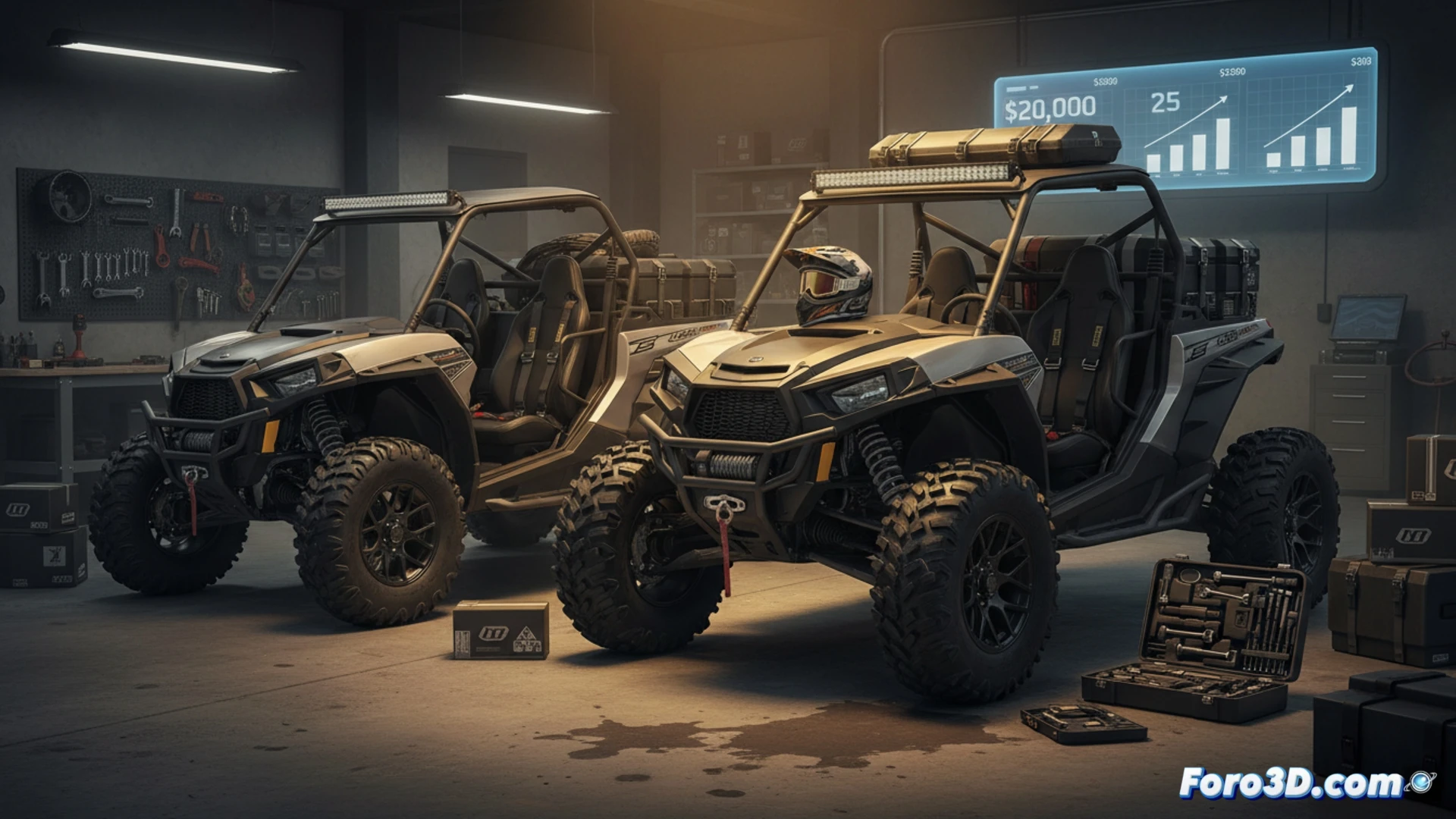
Buying an off-road side-by-side seems like a bargain starting at $20,000, but the reality is that the base vehicle is just the bait. For real use, the buyer must add harnesses, helmets, neck protection, specific tires, and tools that skyrocket the cost. The business isn't in the chassis, but in the proprietary accessories with a 300% markup, many unnecessary for occasional use.
The technical trap of the closed ecosystem 🛑
The business model relies on technical dependency. Spare tires and maintenance tools are only sold at official dealers; no generic alternatives exist in conventional stores. Manufacturers design parts with proprietary measurements and mounts to prevent competition. Additionally, they pressure with safety arguments to sell accessories like helmets or neck braces, creating a false sense of risk if their products are not purchased. The $20,000 buyer ends up paying $30,000 with no way out.
The hobby that turns into a bottomless pit 💸
The real trick is selling a hobby as if it were a board game, but with casino costs. Dealers tell you that without the official $400 harness you'll go flying, when on a weekend use, the only thing flying is your budget. In the end, the citizen pays for a hobby that manufacturers turn into a perpetual subscription. The news sells it as inevitable, but it's simple financial engineering: the cheap bait, the expensive hook.