The United Kingdom plans 21,000 homes in Crews Hill, a green area north of London. Half would be affordable. Residents and business owners oppose it: they will lose businesses and natural spaces. The government cites the housing crisis. Both are right, but the debate is a mirage. Urban planning should not be a zero-sum game between housing and nature.
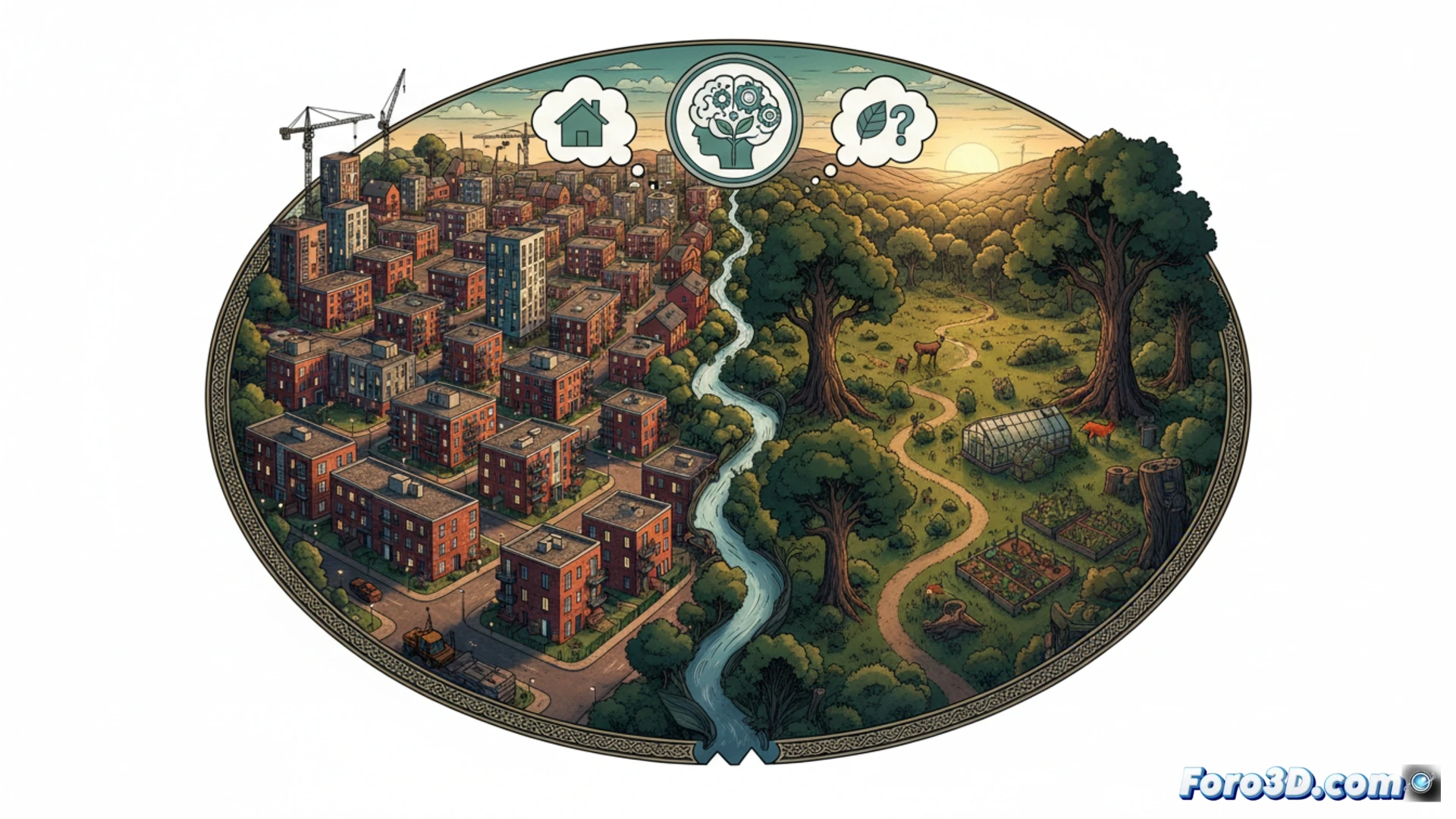
The myth of the garden city: between concrete and grass 🌿
The concept of the garden city was born as an ideal of balance, not as an excuse for urbanization. What the British government proposes is not a garden: it is a housing development with grass. Building housing and parks is possible, but it is more expensive, slower, and less profitable for developers. The problem is not the need for homes, but a model where speculation dictates design. Trees do not finance campaigns; bricks do not vote either.
The architect of money always finds a pencil ✏️
Residents do not hate young people who need a flat. They hate being sold a garden city and being given an industrial estate with plastic planters. The pulse is not between ecology and necessity: it is between common sense and a developer who has already called their favorite architect. Because money, in the end, always finds someone to draw a pretty plan for it. And artificial grass, by the way, is already on sale.