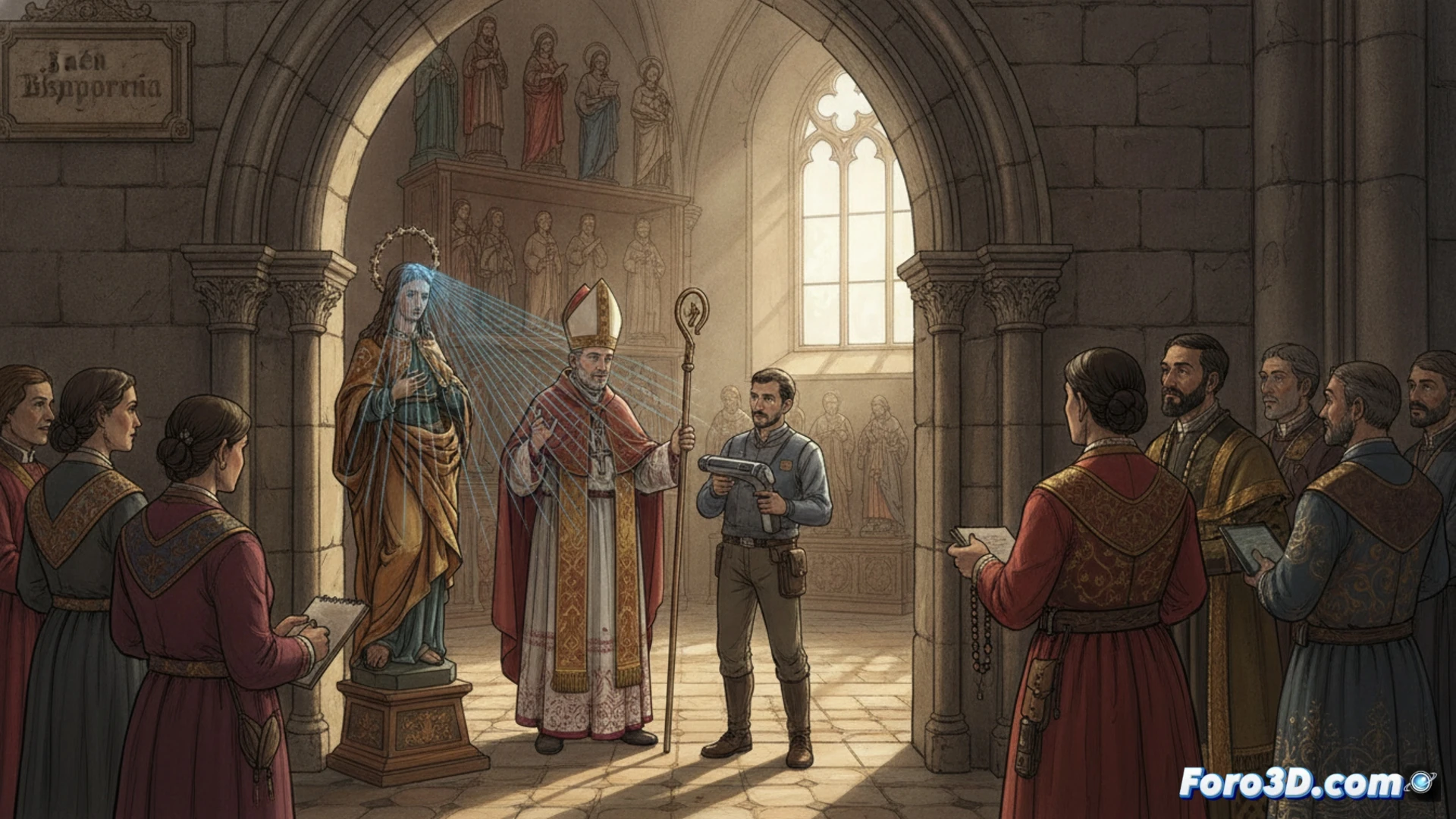
The Bishopric of Jaén has established new regulations for the scanning and digital reproduction of its religious images. The measure aims to prevent unauthorized copies, but it affects devotees, artisans, and museums wishing to replicate these figures. Prior permission is required, and in many cases, a license fee must be paid to use the obtained 3D models.
3D Scanning: Between Heritage Protection and Data Control 🏛️
3D scanning technology allows for the millimeter-precise digitization of any religious figure. However, the new regulation from the Bishopric of Jaén imposes restrictions on the process. Any scan requires ecclesiastical authorization and a license fee. Researchers and artists find their access limited, while the Bishopric favors friendly private companies to carry out official scans at high prices. Heritage protection is used as an excuse for strict commercial control.
Faith Now Has a Price: Pay to Scan Your Favorite Saint 💸
So, if you wanted to print a replica of the Christ of Expiration for your nativity scene, get ready to pay up. The Bishopric has turned devotion into a business with licenses and paid official scans. Soon we'll see ads for deals: buy your saint in 3D, limited edition blessed by the parish priest. Of course, don't forget to pay the divine VAT. Competition with Amazon is no longer just earthly.