Ignacio Soto Borja, co-creator and historian of padel, has pointed out that the Aztec ball game is a direct precedent of this sport. According to his analysis, the essence of modern padel was already present in those pre-Columbian courts. Soto Borja attributes the current success of padel to its family-friendly nature, a quality that allows parents and children to play together regardless of age or skill level.
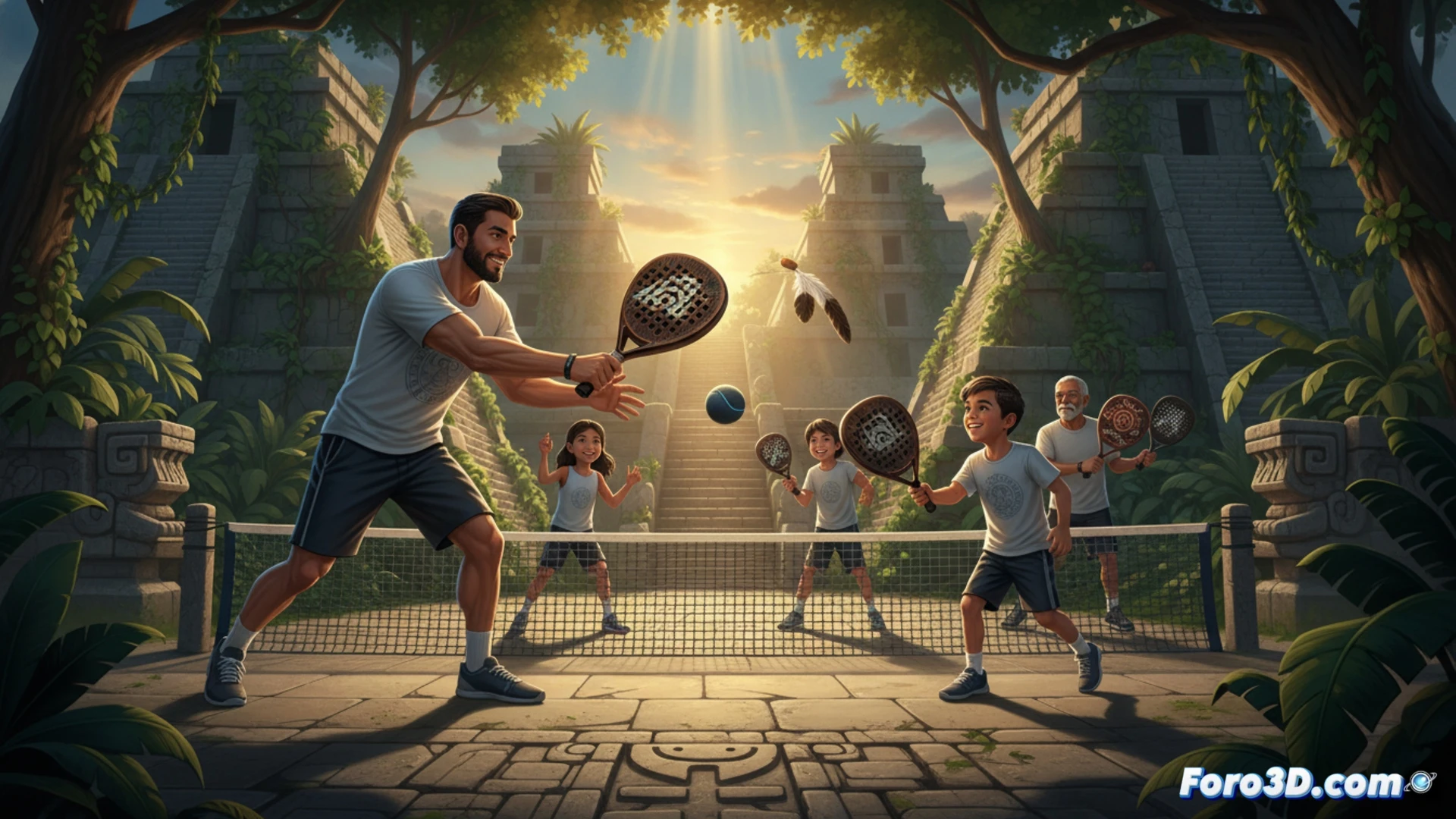
Technical evolution: from tlachtli to carbon fiber 🎾
The transition from tlachtli to modern padel involved notable technical changes. The heavy Aztec rubber balls gave way to pressurized rubber spheres with controlled bounce. Solid wooden paddles transformed into rackets made of carbon fiber and EVA foam, designed to offer precision and impact absorption. The court, once made of stone with side rings, is now artificial turf and tempered glass, optimized for a game of strategy and control rather than brute force.
And the Aztecs had no idea they invented padel 😅
What the Aztecs didn't know is that, centuries later, their ritual sport would become the perfect excuse for executives to sweat it out on a Wednesday night. While they played for honor or life, we argue about whether the ball hit the double wall or not. Sure, at least we don't sacrifice the loser; we just make them buy the beers.