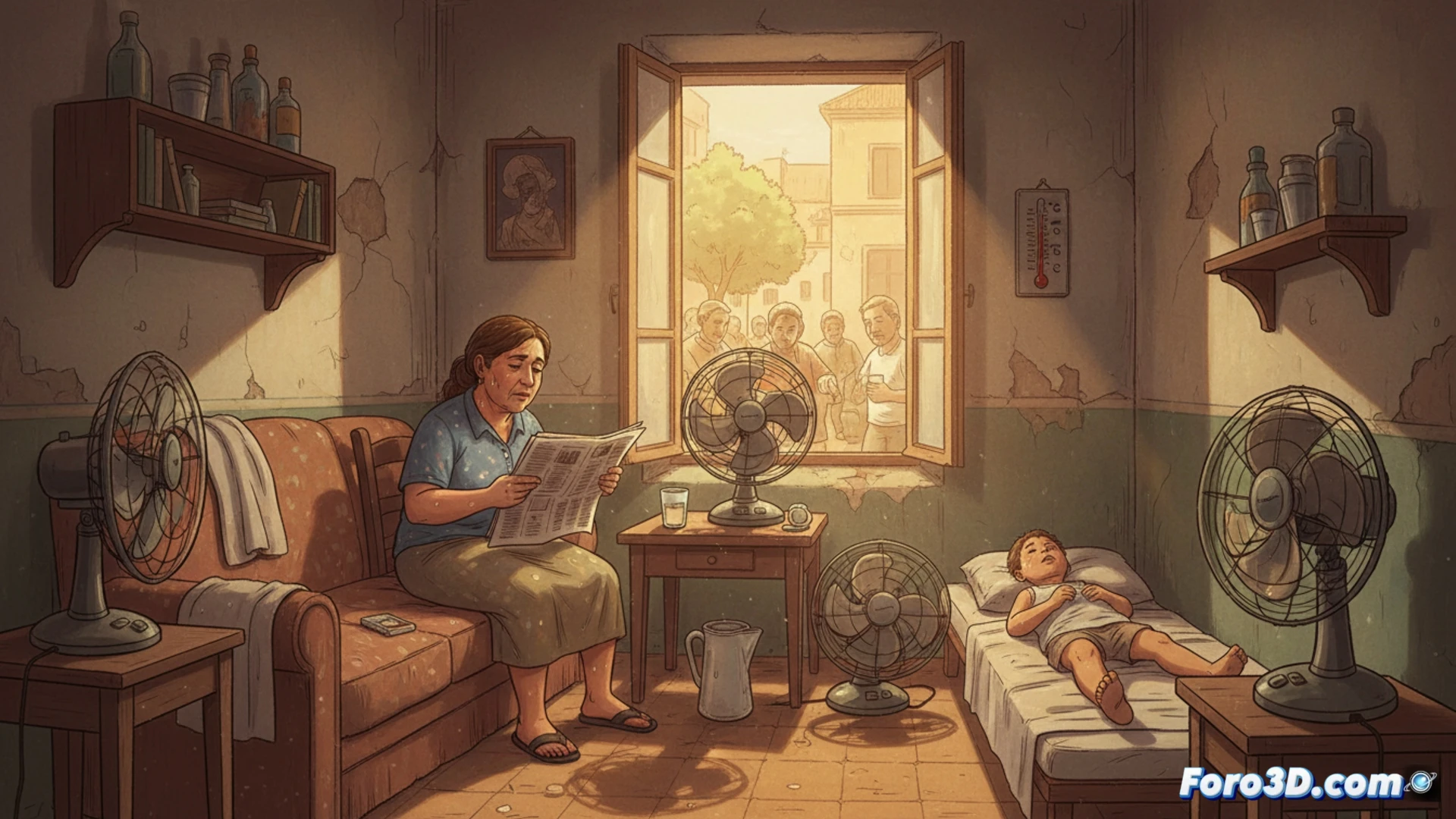
In Seville, the heat isn't just suffered on the sidewalk. Working-class neighborhoods endure a thermal trap that turns homes into saunas: the thermometer reads 40 degrees outside, but inside the air is even denser and more suffocating. Lack of insulation and poor ventilation transform every home into a health risk, forcing families to spend more on fans or air conditioning that they can't always afford. The conclusion is clear: the most vulnerable pay the price of housing inadequate for extreme climate.
Passive Technology: Plug-Free Solutions for Extreme Heat 🌿
To combat this situation, developing low-cost solutions is key. Systems like nighttime cross-ventilation, the use of high-reflectance awnings and blinds, or installing vertical gardens on facades can reduce indoor temperature by up to 5 degrees without using electricity. Materials like cork or expanded clay, applied to roofs, also improve insulation. These accessible technologies, with a short-term return on investment, offer a practical way to mitigate the oven effect without relying on expensive appliances.
Air Conditioning: The Luxury That Pays the Mortgage 💸
Sure, if you have a state-of-the-art air conditioner, congratulations. But in Seville's working-class neighborhoods, that luxury usually comes with fine print: the electricity bill. In the end, the decision is as absurd as choosing between paying the rent or not melting in the living room. And while politicians talk about energy efficiency, many residents make do with a paper fan and a prayer to the air. At least global warming gives us a conversation topic for summer dinners.