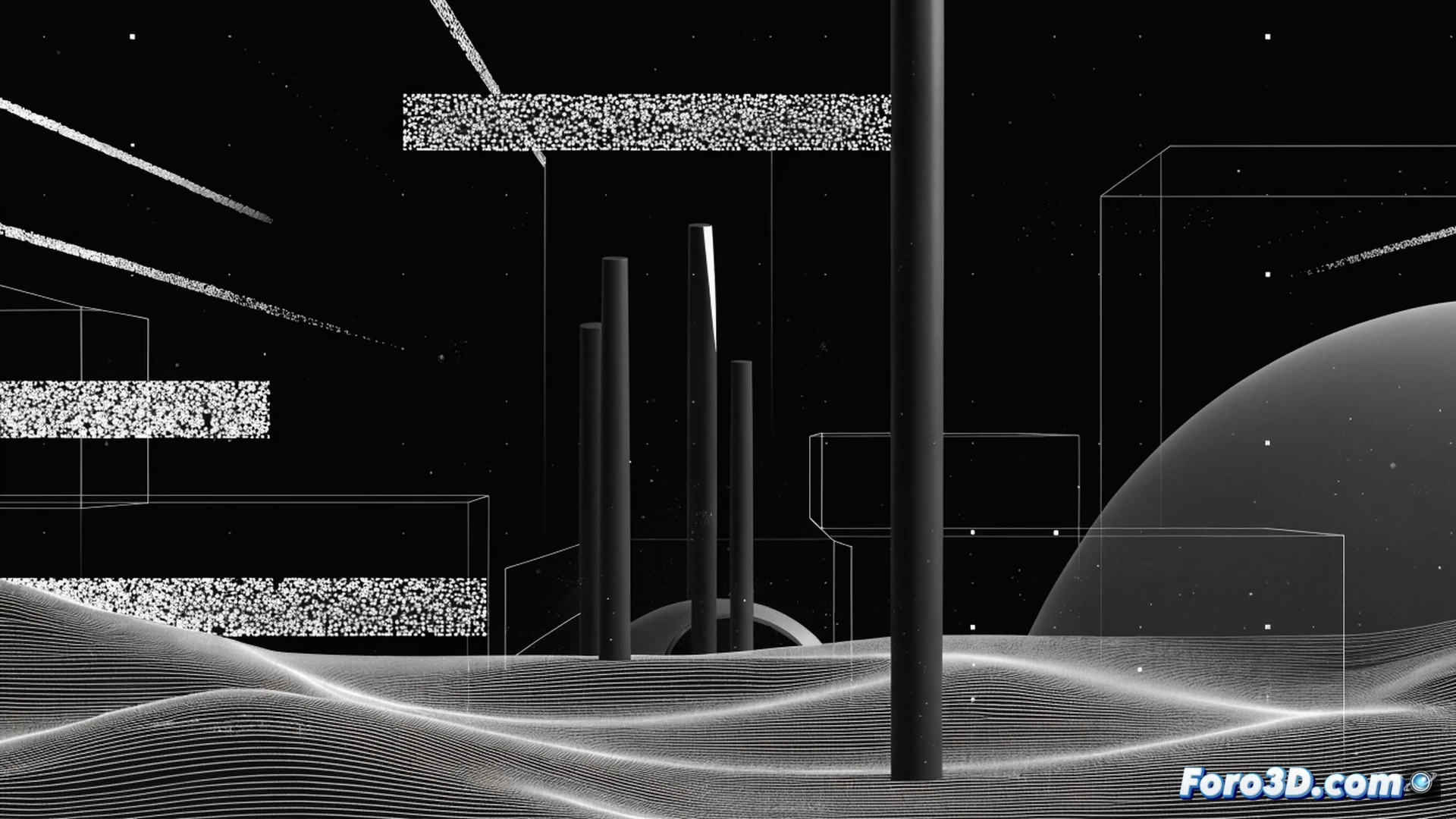
The SOS mode without signal transforms the interface into a landscape of minimal geometries and chromatic voids. That collapsed screen, where the network icon disappears and only a white line remains on a black background, is no longer an error: it is an aesthetic. Digital disconnection becomes visual language, a new code that expresses material absence with an almost architectural purity. Foro3D analyzes this phenomenon as a silent glitch that redefines our relationship with devices.
How to render the void: modeling techniques for disconnection 🖤
To recreate this aesthetic in 3D, start with a base mesh with low polygon density, applying a random displacement modifier that breaks symmetry. Materials should use shaders with maximum roughness and emission value set to zero, eliminating reflections and textures. Color is reduced to a grayscale with a single variable opacity channel. Lighting is resolved with diffuse ambient light, without hard shadows, to simulate the absence of signal. The result: a geometry that speaks of its own absence.
Airplane mode as artistic performance (and an excuse not to reply) ✈️
Digital artists have spent years trying to capture the loneliness of a screen without signal, but ordinary users perfected it first: activating airplane mode at a family dinner is a whole aesthetic statement. The silent glitch not only decorates the phone but also justifies our social absence. Now, when someone says I have no coverage, it is no longer a complaint, it is a pose. And if you also have a black and white screenshot, you are a curator of disconnection.