A fossil found in Scotland rewrites the history of arachnids. The Praearcturus gigas, one meter long, is four times larger than modern scorpions. This predator inhabited rivers and hunted fish and terrestrial animals. For the public, the discovery shows that ancient life was very different from what we know today.
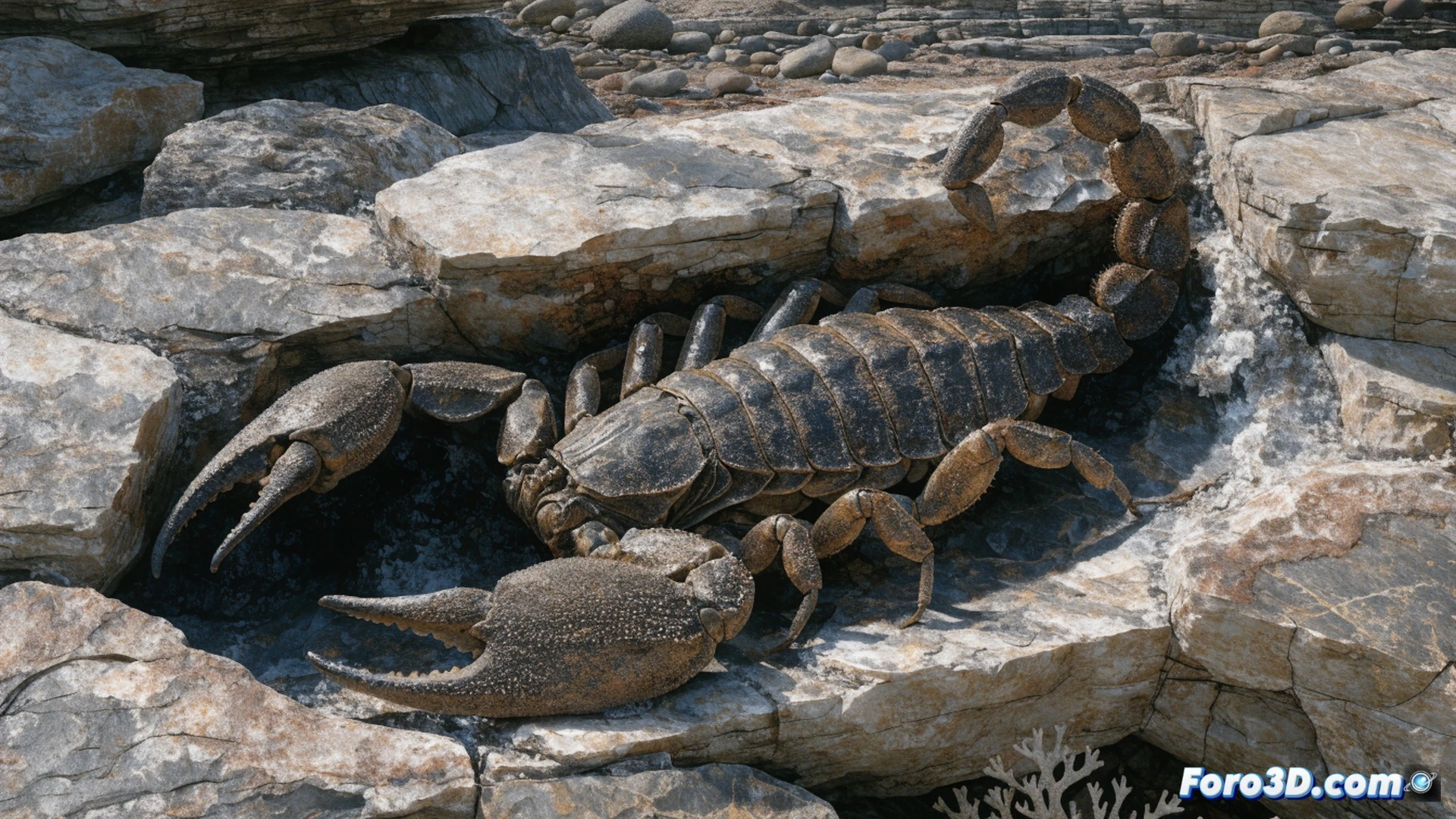
Technology reveals an aquatic predator from another time 🦂
The analysis of the fossil, preserved in sedimentary rock, was carried out using computed tomography and electron microscopy. These techniques allowed its anatomy to be reconstructed without damaging the sample. Researchers identified robust appendages for capturing prey and a developed stinger. The study confirms that giant scorpions existed much earlier than previously thought, expanding the fossil record of these arthropods.
A one-meter scorpion: the nightmare of those who hate bugs 😱
Imagine a scorpion the size of a small dog prowling the river. If a 25-centimeter scorpion already causes screams today, a one-meter one would have emptied entire pools. Luckily, this prehistoric bug went extinct millions of years ago. So you can sleep soundly: the only danger now is stepping on a modern one in the shower.