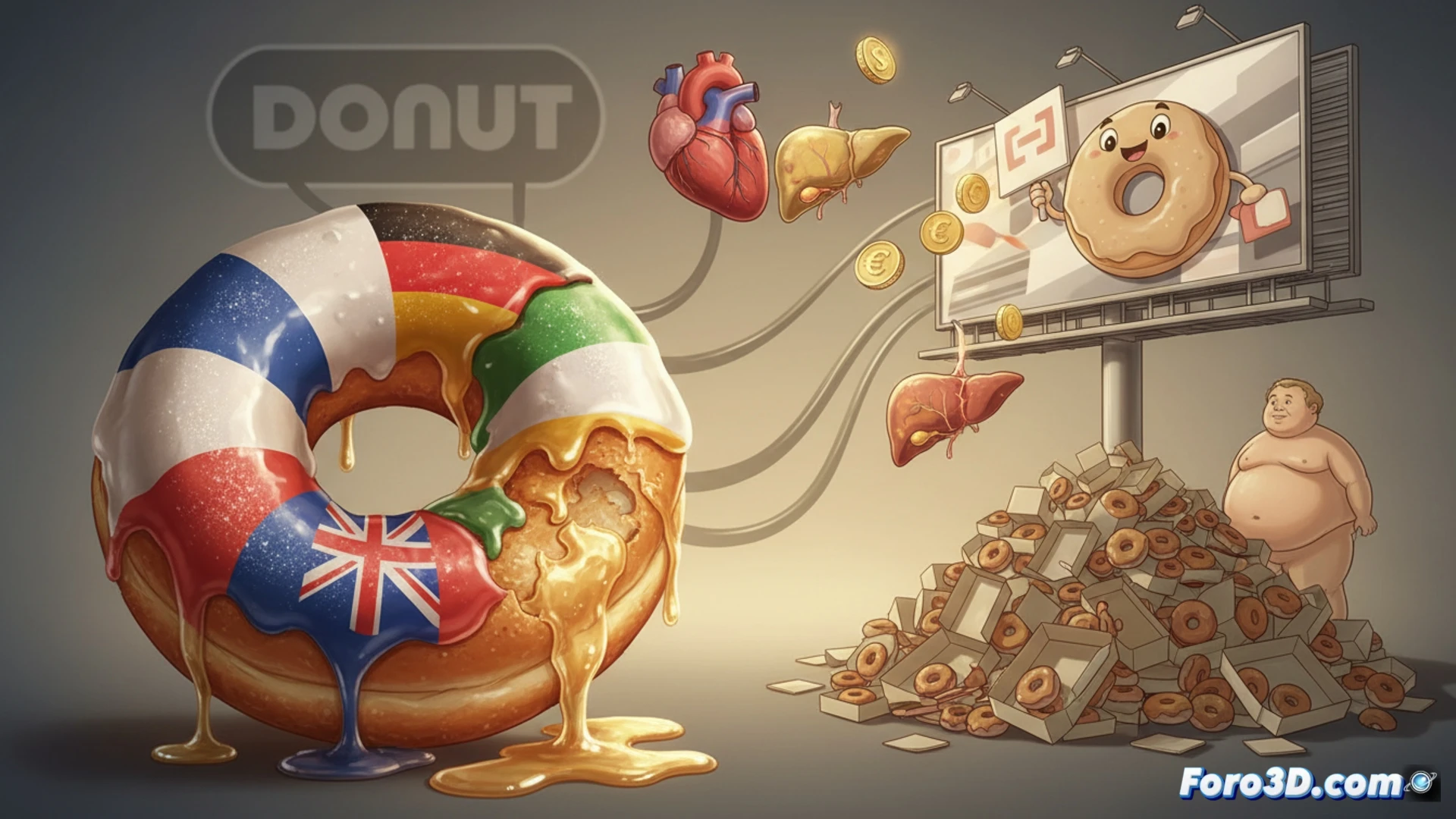
The donut craze has swept across Europe with over 3.2 billion units per year. Chains like Dunkin' and Krispy Kreme have turned this fried dough into a common breakfast or snack. But this boom is no accident: it is the result of a multi-million dollar campaign to normalize ultra-processed food, hiding the fact that each piece can contain 300 calories, 20 grams of sugar, and trans fats. The consumer thinks they are treating themselves, but they are paying the bill for the pharmaceutical industry.
The engineering of flavor: how the algorithm processes your glucose 🧠
Behind that perfect glaze lies an industrial process calculated to the millimeter. The chains use refined flours that cause glucose spikes, combined with saturated fats and sugars that activate the brain's reward center. Mass production involves single-use plastic packaging and logistics that push out local bakeries. Each donut is a product designed to hook, not to nourish. Children and young people are the primary target, fueling an obesity epidemic that fills endocrinology offices.
The treat that fattens your endocrinologist and the pharmacy 💊
You buy it at the gas station, thinking it's a quick reward. But that donut is not a treat; it's a Trojan horse: it gives you a sugar rush that lasts ten minutes, followed by a crash that makes you crave another. Meanwhile, American chains get rich and neighborhood bakeries close. The only one who benefits, besides Dunkin', is your primary care doctor, who already has a slot reserved in their schedule to talk to you about cholesterol.