Fable and Tomb Raider will arrive without Spanish dubbing from Spain, only with Latin American voices. Behind the conflict between actors and companies over clauses against artificial intelligence lies an economic interest: Latin dubbing is cheaper and is recorded in countries with less labor regulation. The Spanish player receives a product that sounds foreign to them, while companies save costs.
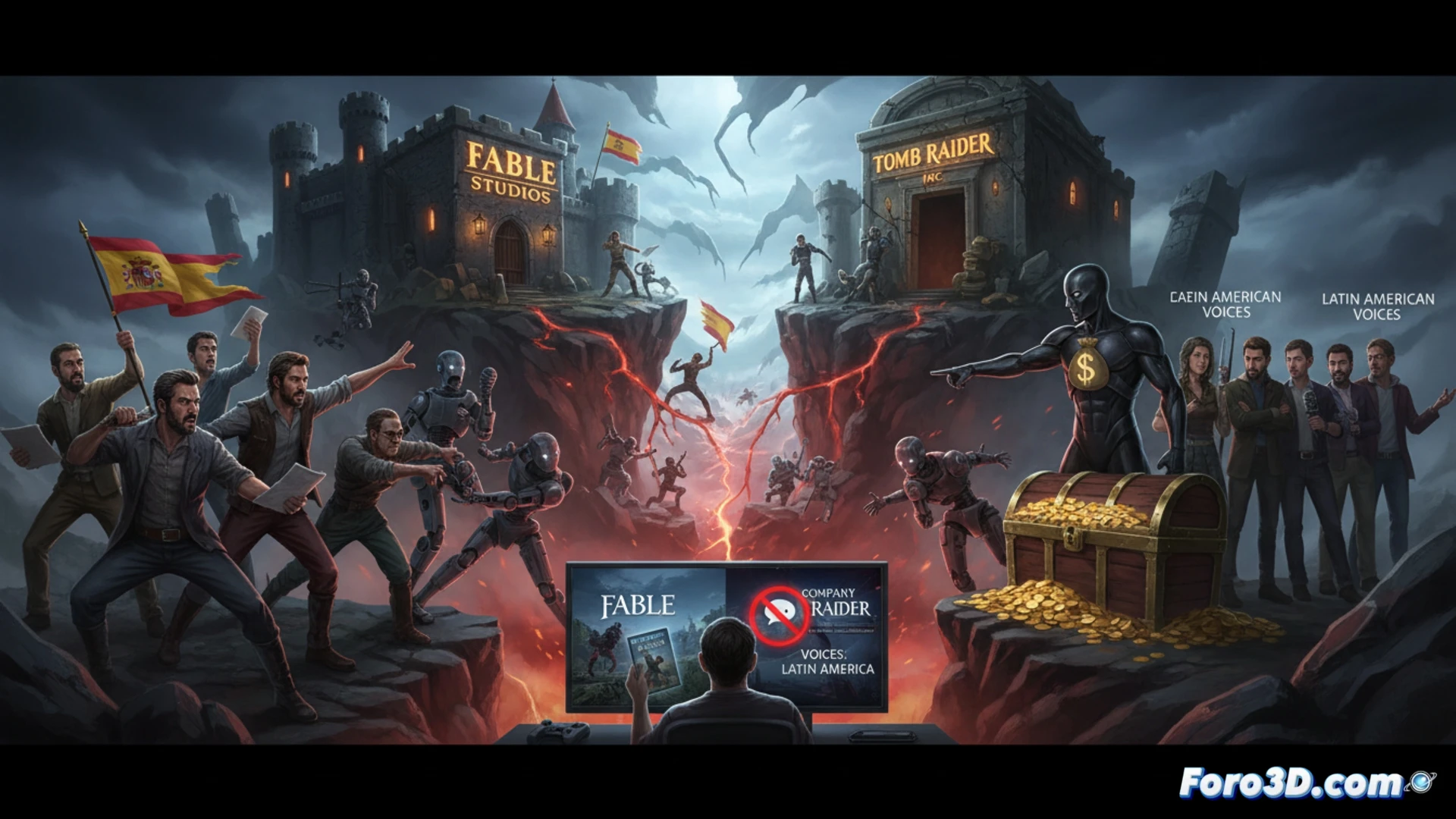
AI as an excuse: the real plan is to record voices to dispense with actors 🎭
The anti-machine clauses are not a union whim. Companies want to record and store actors' voices to train speech synthesis algorithms and, in future releases, generate dialogues without paying royalties. By fragmenting the Spanish-speaking market into two variants, they weaken collective bargaining. The debate is not about accents, but about labor survival and technological control over human performance.
Player, don't complain: your ear is the price of corporate savings 💰
Don't panic: if you hear Lara Croft speaking as if she had watched every Mexican telenovela, it's because it's cheaper than paying an actor from here. Companies have discovered that dividing us by accents is more profitable than signing fair clauses. So now you know, when you hear a órale in the middle of Albion, smile: you are financing the CEO's next bonus.