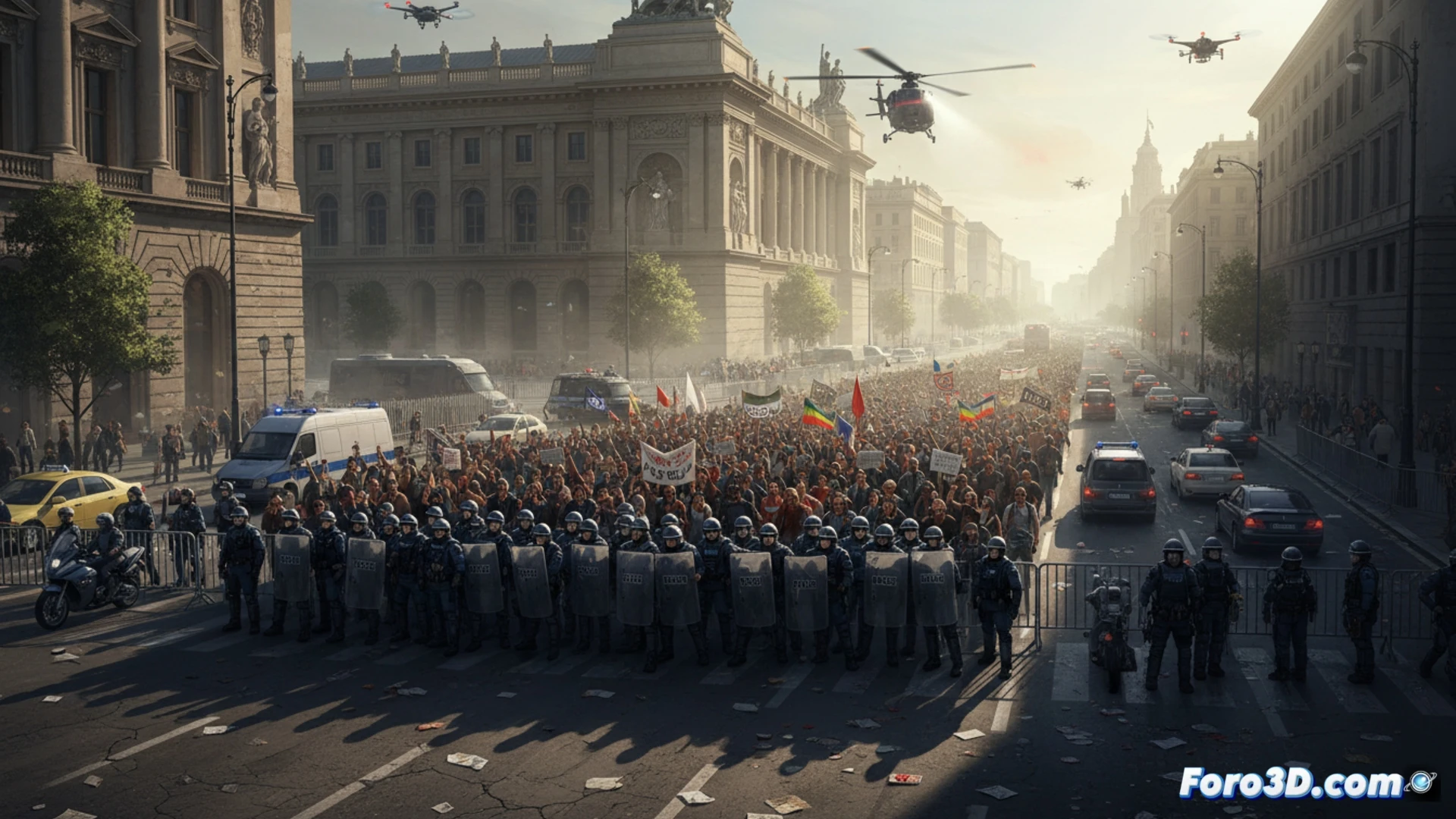
The National Police faces an increasingly complex logistical challenge when coordinating mass events such as the Pope's visit or protests with riot police. Managing human resources and vehicles requires precise planning to avoid collapses. For citizens, this translates into traffic cuts and disruptions to their free time, a difficult balance between safety and daily inconveniences that affects urban mobility.
Control systems and mobility in the face of mass events 🚦
Current technology allows security forces to monitor the flow of people and vehicles in real time using cameras and sensors. Predictive analysis tools help deploy agents at critical points without clogging the streets. Even so, coordinating mobile units, barriers, and detours remains a manual process that depends on the experience of commanders. Integrating navigation apps with official data could improve information to the public and reduce road chaos during these operations.
The riot police dilemma: between the baton and the GPS 😅
Riot police have a titanic task: protecting both a Pope and a protester who cannot agree on schedules. While some demand free passage to see the pontiff, others insist on streets for their banners. The poor officer ends up with a city map full of pins, wishing that at least the GPS would warn him which street is about to erupt in shouts. In the end, police logistics is like organizing a wedding and a funeral in the same church.