Last weekend, a digital fashion event was interrupted by a critical failure: a virtual model suffered an abrupt fall during the presentation of a haute couture collection. This incident, more than a simple error, exposes the technical vulnerabilities that still persist in 3D garment simulation. We analyze the causes behind the collapse and its impact on the realism of digital fashion.
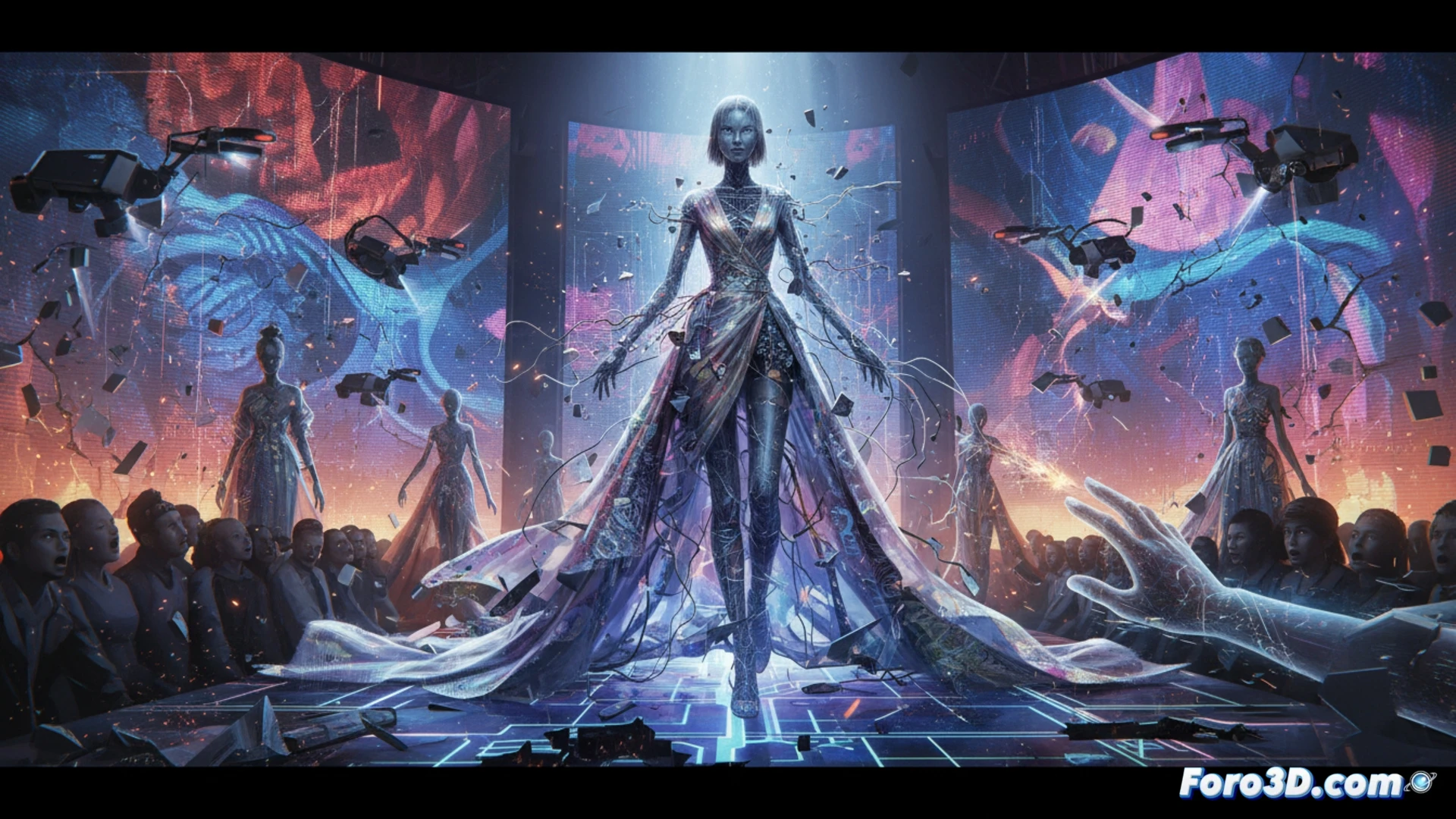
Technical diagnosis: cloth physics and avatar synchronization 🛠️
The observed fall likely originated from a mismatch in the cloth physics engine (cloth simulation). In environments like Marvelous Designer or CLO 3D, parameters such as stiffness, gravity, and collision must be calibrated with millimeter precision. A common bug is the loss of contact between the garment geometry and the avatar's skeleton, generating a disconnection that causes the fabric to slide or the avatar to lose balance. Additionally, real-time rendering, required by streaming virtual runways, can force a reduction in mesh quality, creating visual artifacts that break the illusion of the fabric's natural weight and drape.
The realism dilemma: when technical perfection kills credibility 🎭
This incident reminds us that digital fashion depends not only on artistic modeling but also on the stability of the technical ecosystem. The pursuit of extreme realism in fabric folds and movements clashes with hardware and software limitations. A fall like this can be seen as a failure, but in reality, it is an opportunity to debug collision systems and improve the integration between avatar animation and textile simulation. The virtual runway must learn to fall in order to rise again with greater solidity.
Between realistic fabric simulation and real-time performance, what technical compromises do you think developers should prioritize to avoid a collapse like the one on the virtual runway last weekend?
(PS: Designing fashion in 3D has the advantage that you never have to sew a button.)