A discovery in Germany has rewritten local history: a 15-meter-wide Roman canal, hidden beneath what was believed to be a meander of the Rhine. For centuries, no one suspected that this river curve was a military engineering work connecting the great river to a fort. The canal not only functioned during the Empire but remained active for over 300 years after its fall, used by medieval communities who took advantage of the infrastructure without knowing its origin.
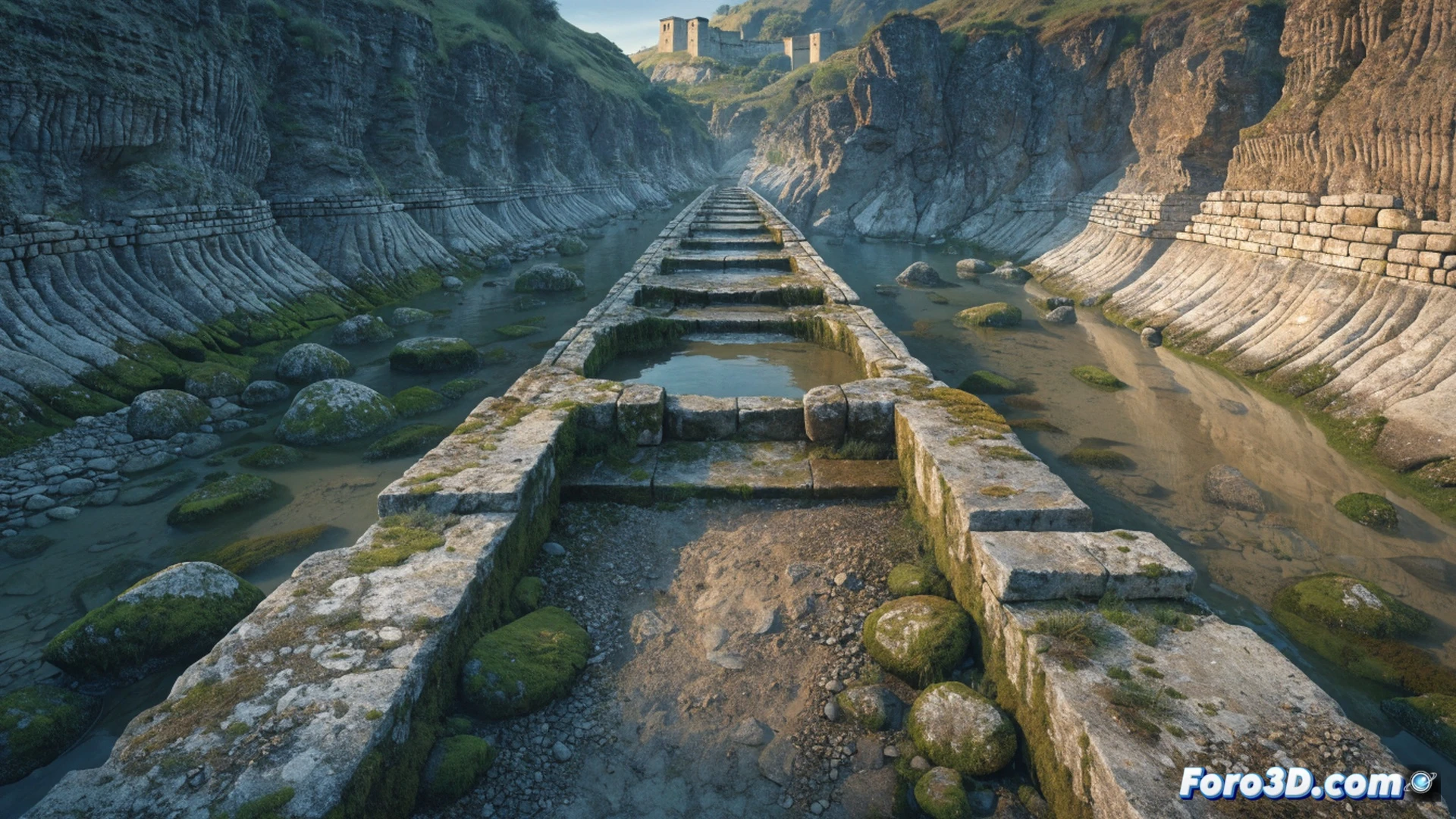
Roman engineering: precision that defies time 🏛️
Archaeologists have confirmed that the canal was designed with a clear purpose: to facilitate the transport of supplies and troops between the Rhine and the fort. At 15 meters wide, it allowed the passage of medium-sized cargo vessels. The work included rudimentary sluice gate systems to control the flow. Remarkably, despite the Roman abandonment, the canal maintained its basic functionality for centuries, demonstrating solid construction and a design adapted to the terrain that medieval engineers could not replicate.
The Romans: plumbers of half the world (and no one noticed) 😂
While medieval experts scratched their heads thinking it was a whim of nature, the canal kept working like the first day. That is, for centuries there were ships sailing on an aquatic highway that no one knew was artificial. The most ironic part is that the Romans, known for their roads, also mastered the art of making fake rivers. If someone built such a canal today, they would have to go through three environmental impact studies and a neighborhood committee.