The sale of prepared meals in Spanish supermarkets has grown by 55% since 2022, with Mercadona leading the market by generating 3 billion euros in 2025. The reason is clear: we only spend 24.5 minutes a day cooking and 41% of the population eats in a hurry. Convenience and price outweigh traditional cooking or dining out, transforming our eating habits towards immediacy. 🍽️
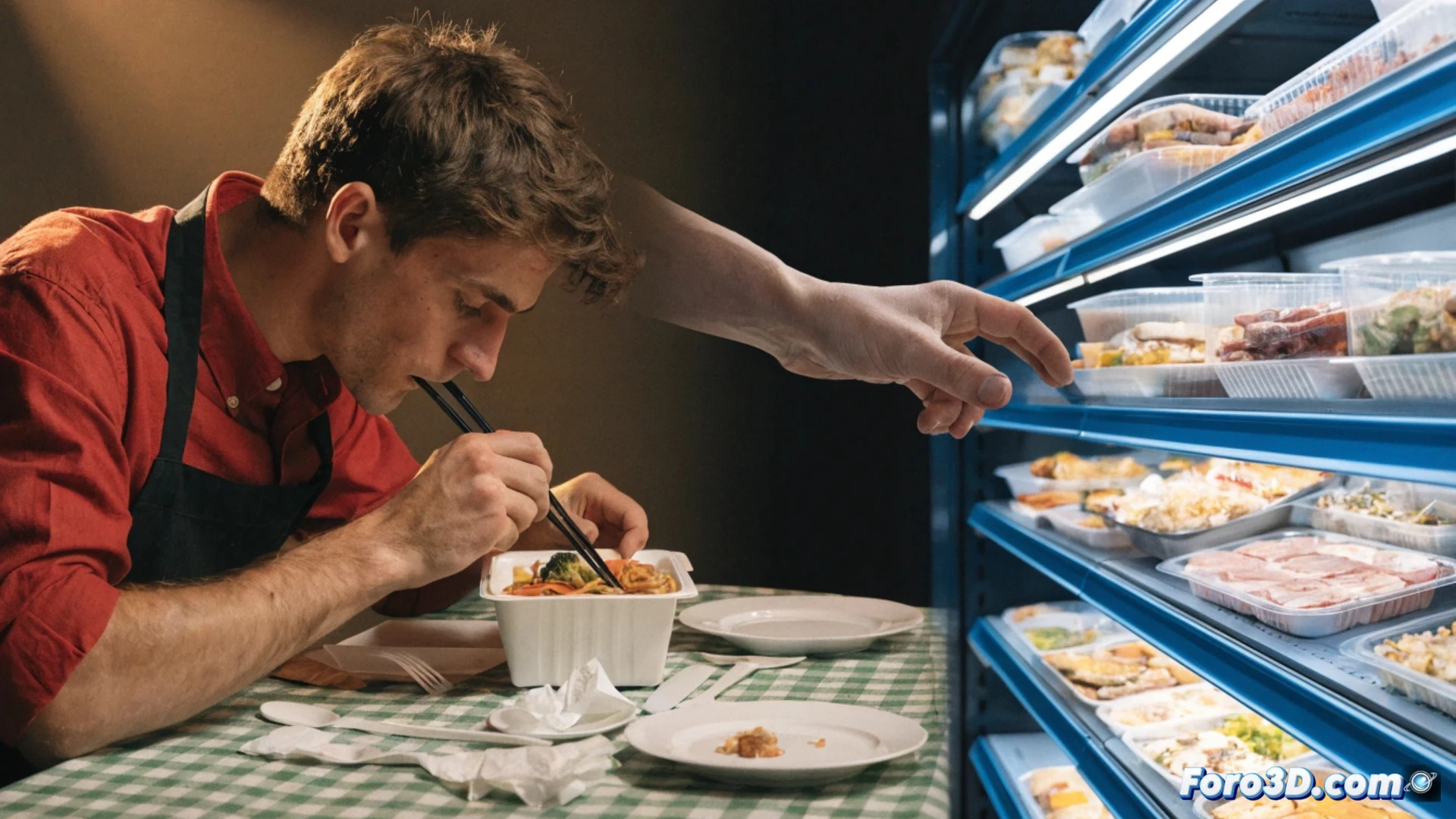
The technology behind the oven: logistics and cold chain 🔧
The success of these products is no coincidence. Chains have optimized logistics with advanced refrigeration systems and vacuum packaging that extend shelf life without additives. Restocking algorithms analyze real-time sales data to adjust production. Additionally, industrial microwave ovens and sous-vide cooking lines enable textures and flavors that mimic home-cooked food, all integrated into a supply chain that reduces costs and keeps prices low.
The kitchen surrenders: 24 minutes a day is too little even for a fried egg 🥚
With 24.5 minutes to cook per day, one wonders if people prepare a full meal or just heat water for coffee. The 41% who eat in a hurry probably consider peeling a potato a weekend hobby. Meanwhile, supermarkets smile: they sell ready-made paellas in three minutes and the consumer applauds. Soon we will see a microwave on the dinner table, because why dirty a frying pan.