In the world of visual effects, magic lies not only in creating spectacular explosions but also in knowing how to end them. The term Quench refers to the controlled process of extinguishing or fading out a particle system. Far from a simple abrupt shutdown, a good Quench allows smoke to dissipate, fire to burn out, and sparks to cool naturally, granting realism and polish to any simulation.
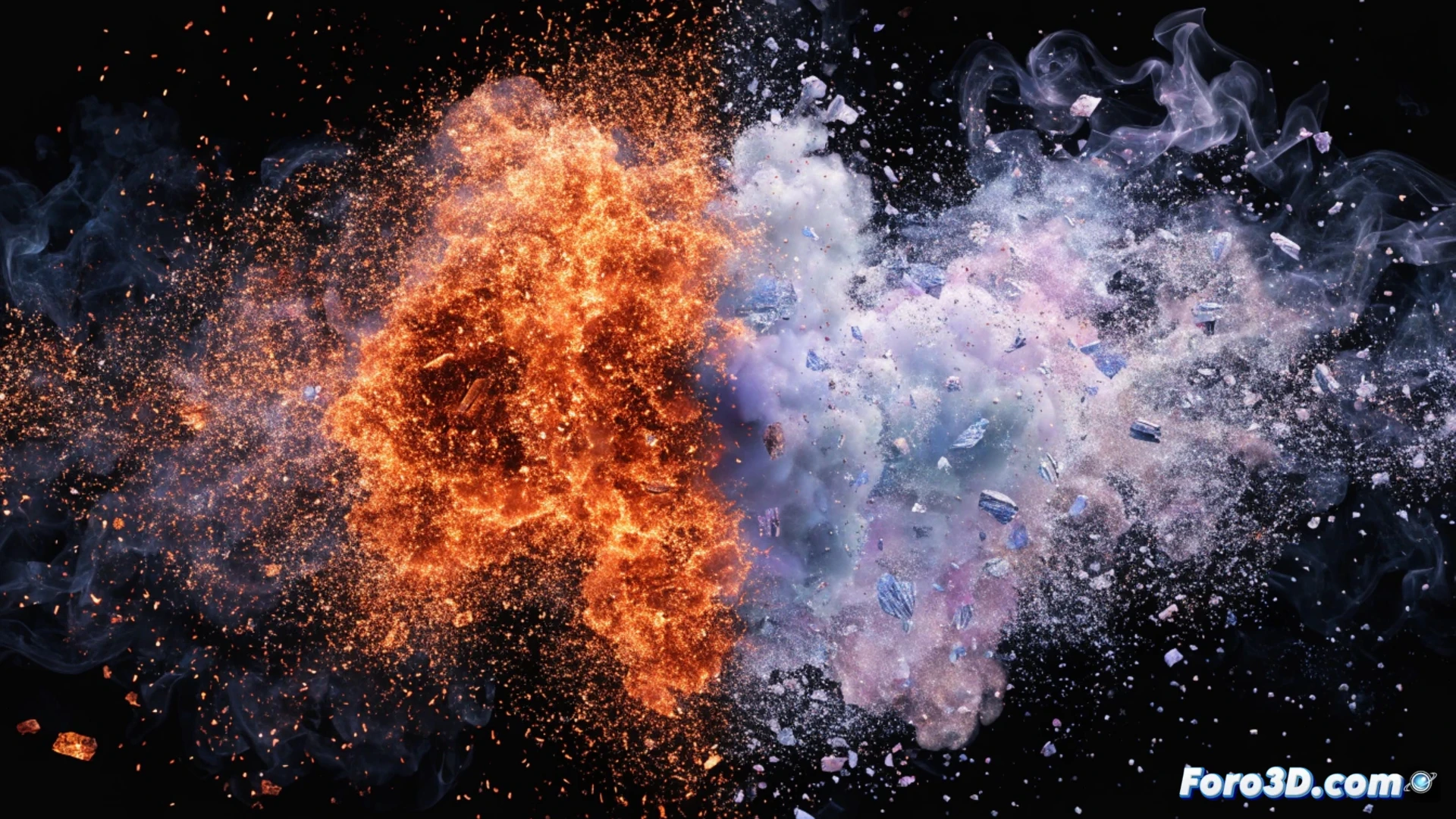
Technical Implementation of Quench in Graphics Engines 🔥
In software like Houdini, Quench is primarily managed through lifespan (life) and opacity (alpha) attributes. Instead of a particle dying instantly upon reaching its age limit, a dissipation ramp is programmed. For example, in a smoke system, opacity can be mapped to begin dropping smoothly when the particle reaches 80% of its life. In Unreal Engine, Quench is achieved through particle modules that control the fade rate or through color curves that shift the tone toward transparency. An advanced technique is to use Quench as a global kill switch: when a trigger is activated, all particles enter an accelerated extinction state, ideal for simulating a sudden wind extinguishing a fire or a spark source running out of fuel.
The Importance of Realism in Extinction ✨
Mastering Quench is what separates a generic effect from a cinematic one. An abrupt transition breaks the illusion of inertia and energy that the human eye expects. By applying a smooth Quench, we make the viewer feel that the simulation obeys physical laws, even if it is a fantastical effect. Remember that in VFX, subtlety in endings is as crucial as the impact of beginnings; a good fade-out leaves a clean and professional visual footprint.
What is the most effective technique for controlling the realistic dissipation of particles in a smoke or fire simulation without noticing an abrupt cut in the animation?
(PS: VFX are like magic: when they work, no one asks how; when they fail, everyone sees it.)