Augmented reality glasses weigh less and offer more pixel density. That changes the rules of street art. Concrete facades become digital canvases visible only to those wearing the glasses. The mural appears, mutates, and disappears without leaving a physical mark. Vandalism is over: spray paint is replaced by code.
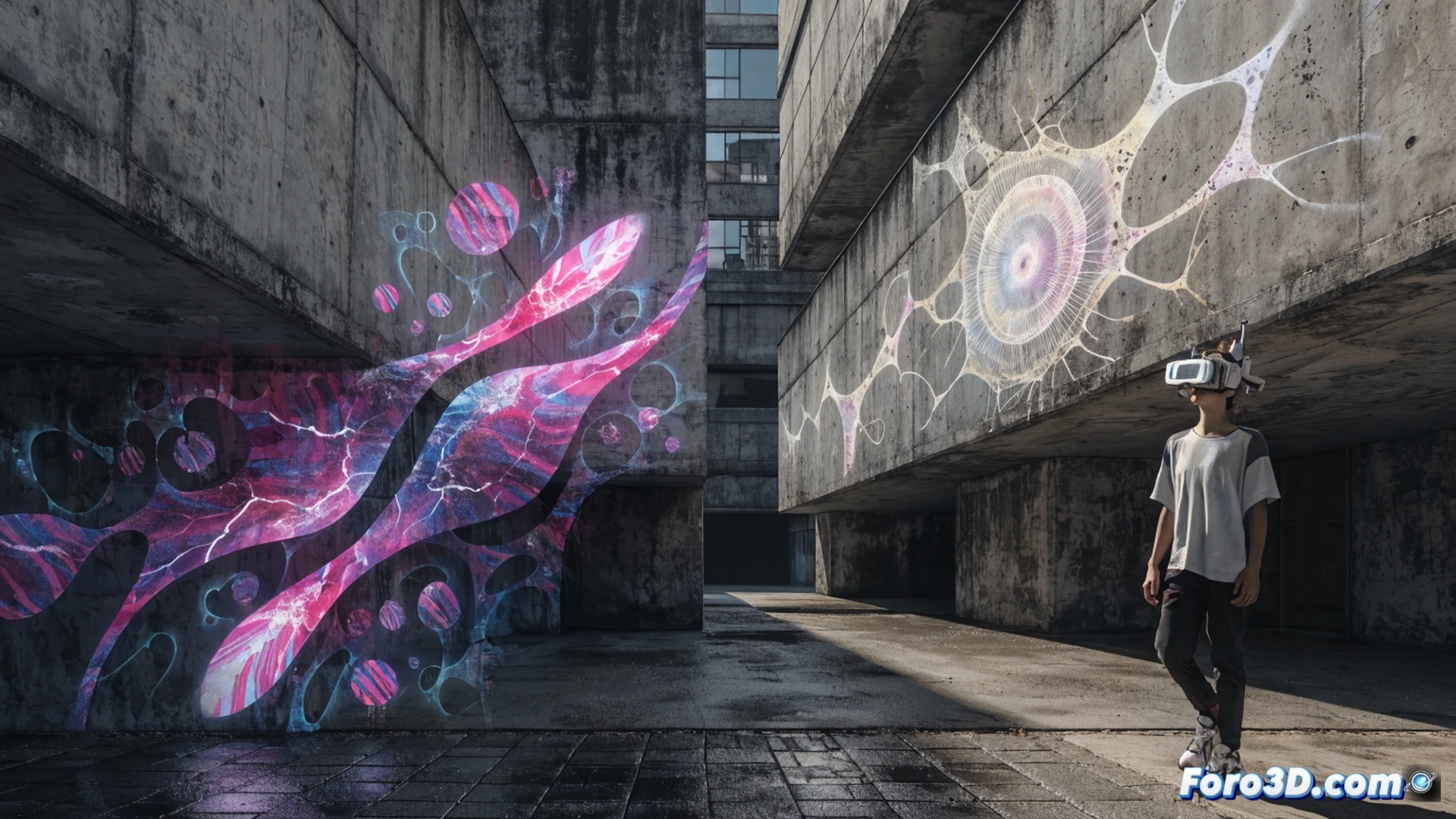
How lightweight optics and spatial sensors make the ephemeral mural possible 🎨
The new AR visors integrate depth sensors and eye tracking with lenses weighing less than 80 grams. The software anchors the artworks to GPS coordinates or visual reference points in the environment. The artist uploads their piece to a platform, and the user sees it superimposed on the real wall with precise occlusion. The resolution reaches 2K per eye, enough to distinguish fine strokes and shadows. The battery lasts about three hours, just enough for a cultural walk. No paint, no damage, no municipal cleaning.
Now graffiti artists complain that their fingers get tired from swiping virtual brushes 🖌️
Street artists have swapped the spray can for the touch stylus and already miss the smell of solvent. Some protest because virtual works don't allow them to bypass intellectual property rules as easily. And the worst part: when it rains, the artwork doesn't run, but the Wi-Fi goes down and you're left staring at an empty facade like a fool. Digital vandalism now consists of putting giant cat memes on the town hall facade.