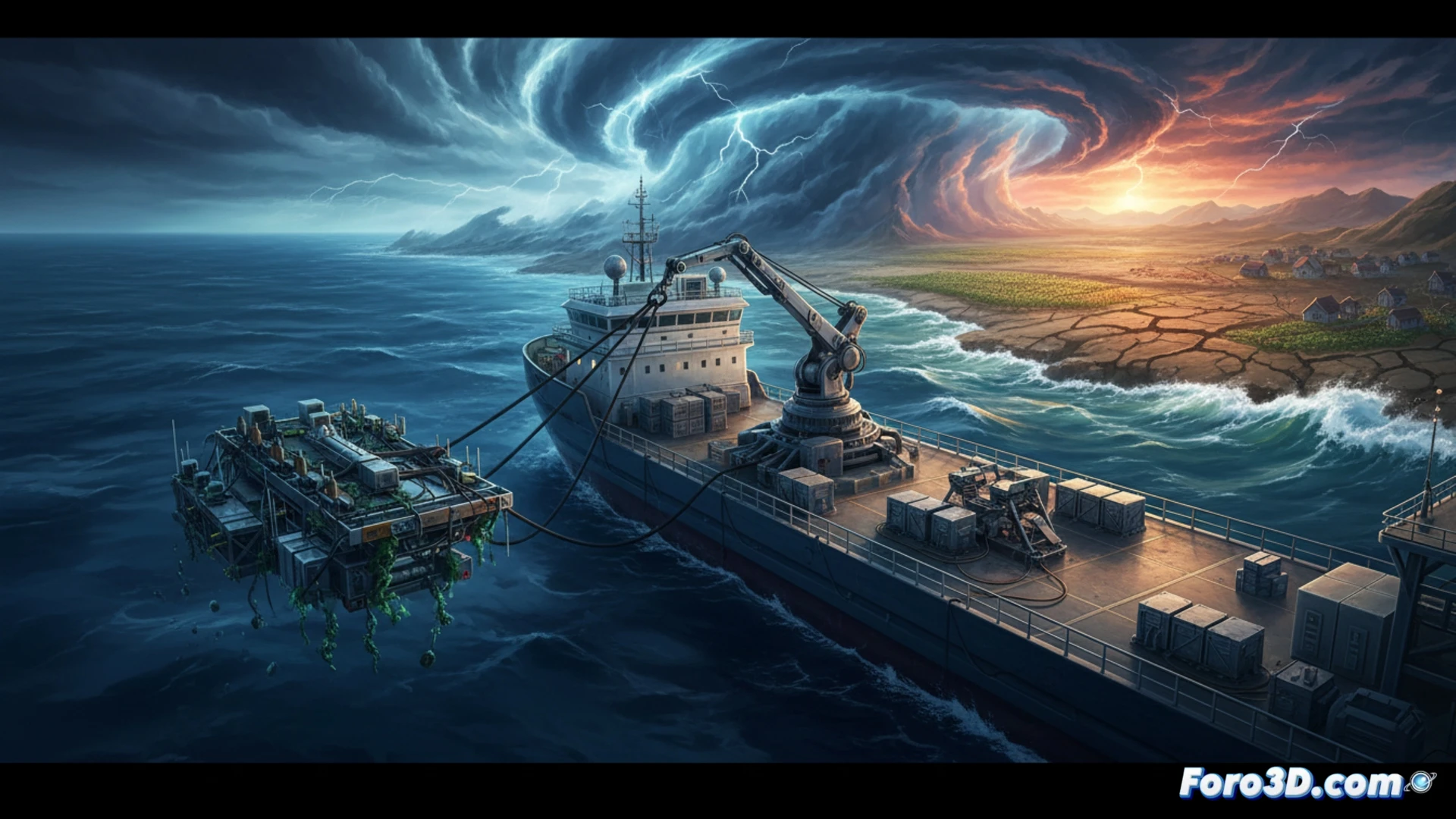
The United States government has begun dismantling a network of ocean sensors crucial for monitoring phenomena such as El Niño and the AMOC current. Scientists warn that this decision will reduce the ability to predict droughts, floods, and other extreme events that directly impact crops, food prices, and housing safety.
The ocean technology that will be left in airplane mode 🌊
The sensor network, composed of buoys and autonomous underwater devices, collected real-time data on temperature, salinity, and currents. Without this information, climate models lose accuracy. NOAA, the responsible agency, justifies the cut due to budget constraints. However, ocean data is the foundation for early warnings and agricultural planning. Its absence leaves coastal communities and farmers without prevention tools.
Goodbye to sensors: now we guess the weather with a fishbowl 🐟
It seems the new administration's climate strategy is as accurate as observing the behavior of a goldfish in a bowl. If we once had smart buoys monitoring the ocean, now it's time to pull out the crystal ball or ask the neighbor if their knee hurts. Sure, we'll save on submarine cables, but we'll surely complain later when corn costs double due to a drought no one saw coming.