After a wildfire, the danger does not end with the flames. Ash and the loss of vegetation leave the ground unstable, prone to landslides. Scientists have combined drones with 3D scanning technology to inspect these high-risk areas, identifying slopes that could collapse with the first rains. The goal is to accurately map vulnerable areas to alert the population and prevent homes from being buried under tons of mud and rocks.
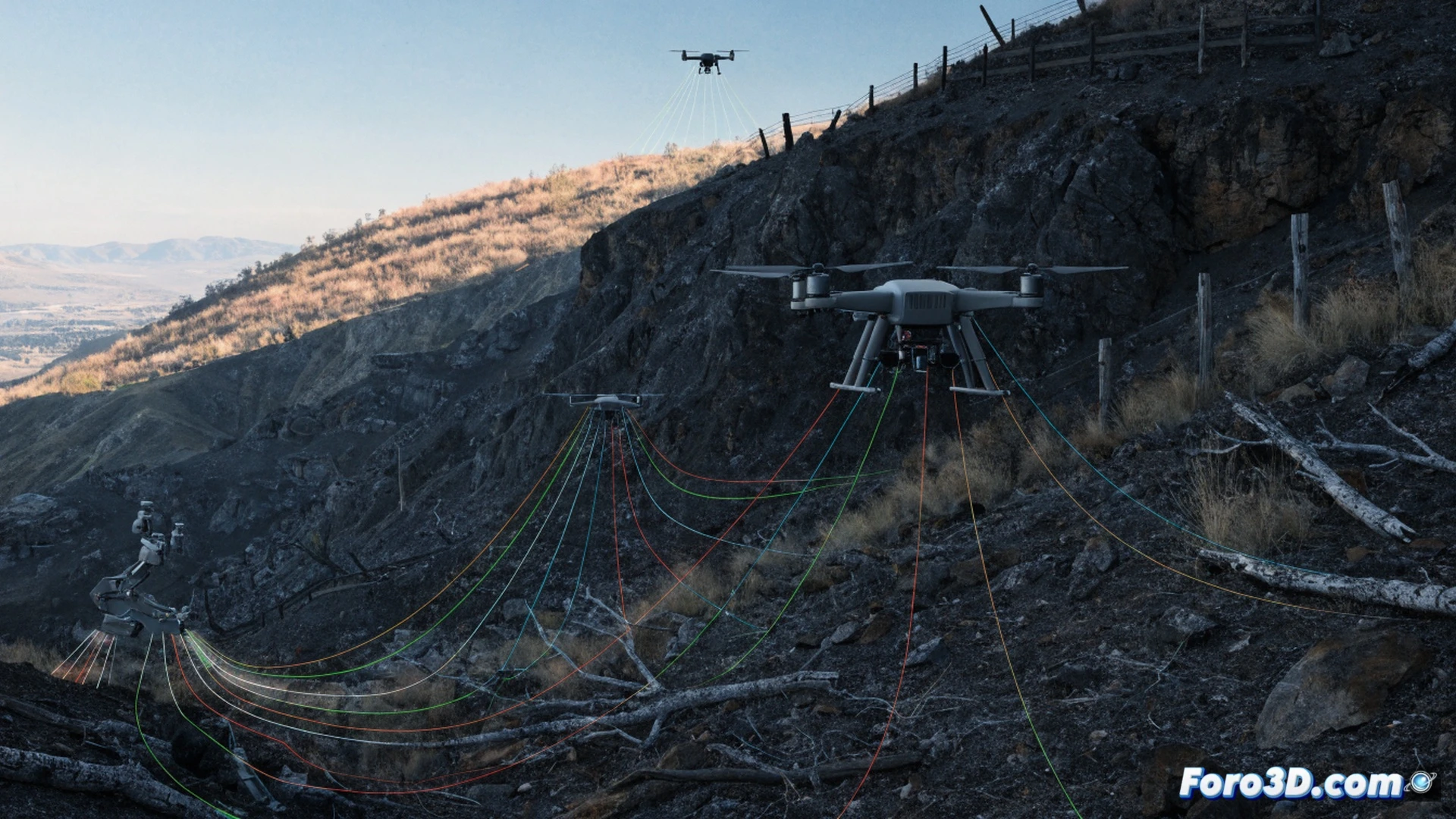
Aerial scanners to see the ground without touching it 🌲
Drones equipped with LiDAR sensors fly over the burned slopes and emit laser pulses that penetrate the ash layer to measure the terrain's topography. The software processes this data into high-resolution 3D models, allowing geologists to detect cracks, critical slopes, and accumulations of loose material. By comparing these maps with pre-fire images, it is possible to calculate the volume of displaced earth and predict weeks in advance where a landslide will occur. This provides time to evacuate or reinforce slopes.
Because the ground also has its post-fire depression 🏔️
It turns out that the ground, like many of us after seeing the electricity bill, suffers an emotional collapse after a fire. It loses its vegetation, its structure, and decides to roll downhill in an existential drama. But while we only need a coffee, the terrain needs a drone to perform a 3D scan to know if it will end up on top of your garage. At least technology warns you before your house decides to move to the valley without asking permission.