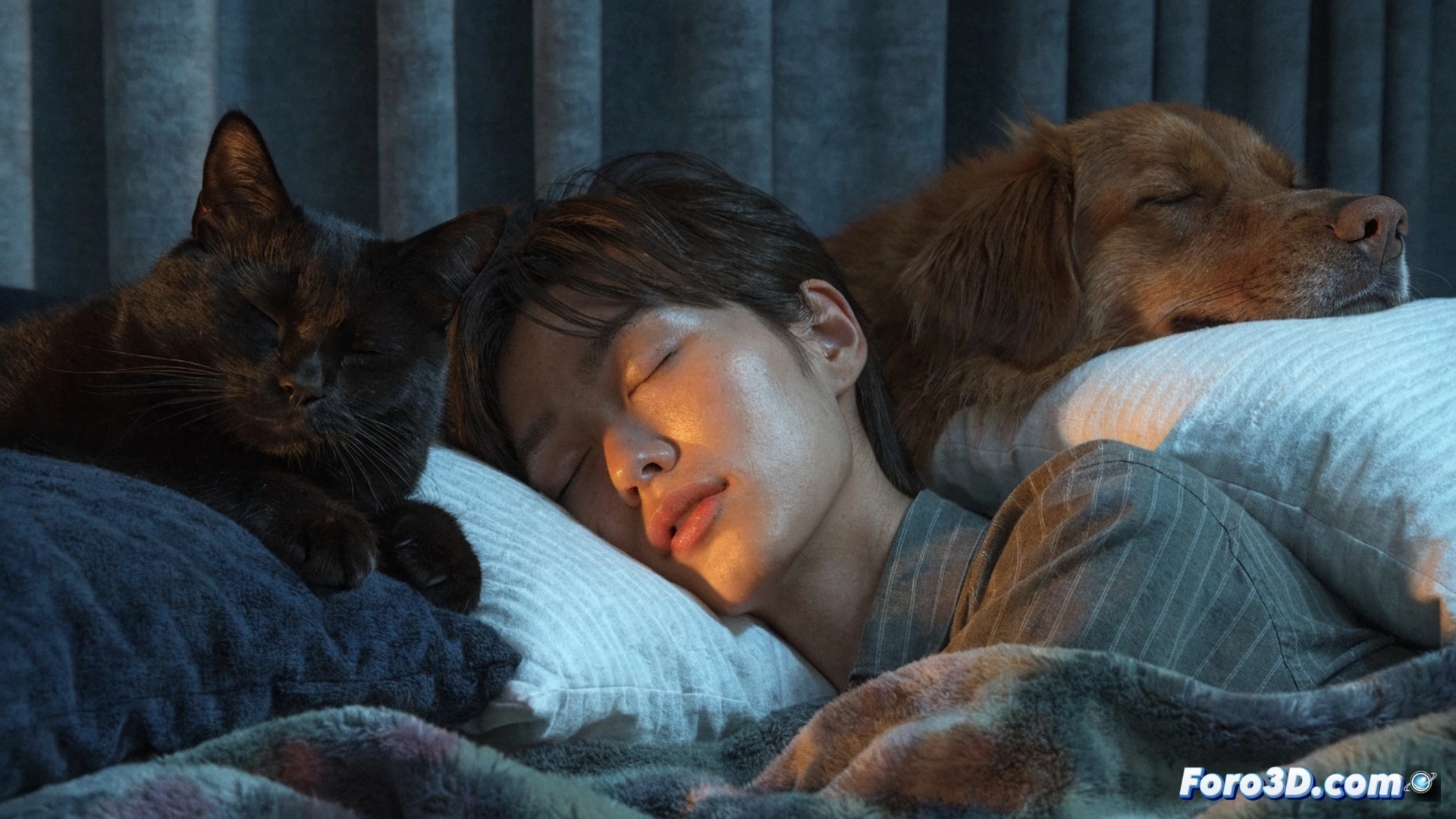
Sleeping with your dog or cat in bed is a common practice that, according to studies, carries a low risk of disease transmission such as bacterial infections or parasites for healthy people. However, limited research suggests that the presence of the animal can disrupt the sleep cycle, reducing its quality. For the public, the key is to evaluate their own health and rest before making a decision.
How technology records your pet's impact on sleep 📊
Devices such as wearables and sleep monitors allow you to quantify nighttime interruptions caused by your pet. These sensors record movements, heart rate, and sleep stages, offering objective data on whether the animal affects your rest. For an accurate analysis, it is recommended to use these devices for two weeks, alternating nights with and without the pet, and comparing the results. This helps decide whether to change the routine.
The dog snores, you wake up: the science of nighttime chaos 😴
It turns out your faithful companion not only occupies 80% of the bed in a starfish position but also decides to snore just when you reach deep sleep. Science confirms that these micro-awakenings accumulate, leaving you with a zombie face the next day. But hey, don't blame your pet either; in the end, it's you who allows them to have the best hotel with snoring service included.