3D design faces a dilemma: replicating what exists or daring to model the impossible. Safety lies not in the exact copy of a real object, but in the ability to create structures that defy physical laws. Like an airline that seeks storms instead of clear skies, three-dimensional modeling must declare its own risk to move forward.
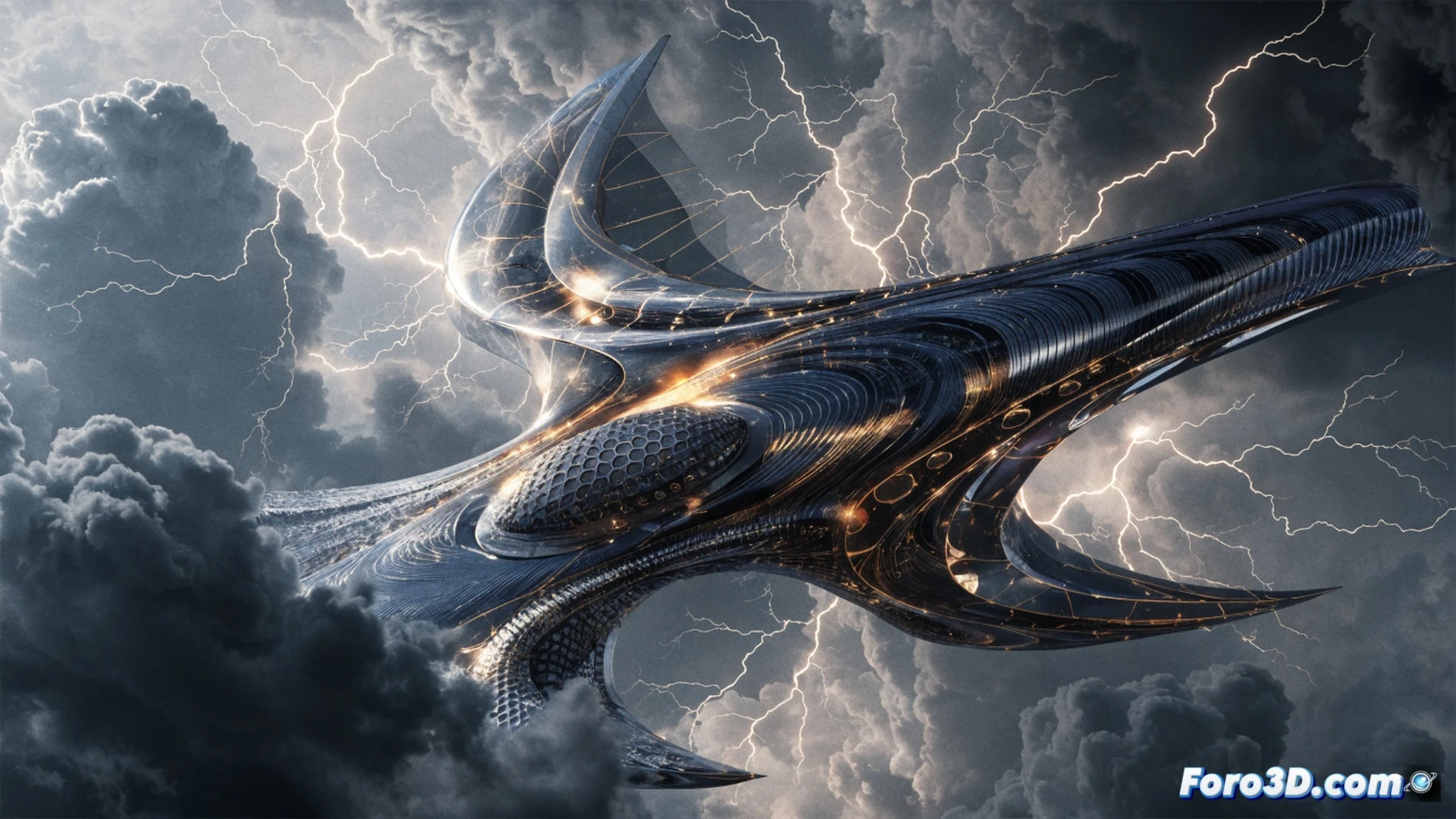
Chaos simulation: algorithms that embrace disorder 🌪️
Current physics engines allow simulating deformations and collapses in real time. Instead of auditing each polygon against a real reference, developers implement particle systems and fluid dynamics that generate unpredictable behaviors. The key lies in using differential equations to model turbulence, allowing the software to calculate impossible trajectories without asking gravity for permission.
The modeler who wanted to be a storm pilot ⛈️
A colleague tried to render a paper airplane in the middle of a hurricane. The software returned a twisted origami and a note: Check wind parameters. But instead of correcting, he increased the wind speed to 500 km/h. The result was a model that looked like a plastic bag in a washing machine. He said: It's art, not simulation. The tempest won.