When a robotic vacuum gets stuck under furniture or ignores a visible stain, we are facing an Autonomous Cleaning Failure. This technical term describes the system's inability to complete its operational cycle due to errors in navigation, sensors, or mechanical components. Far from being a simple household inconvenience, it represents an engineering challenge that 3D simulation can solve by modeling the environment and the robot's behavior before manufacturing it.
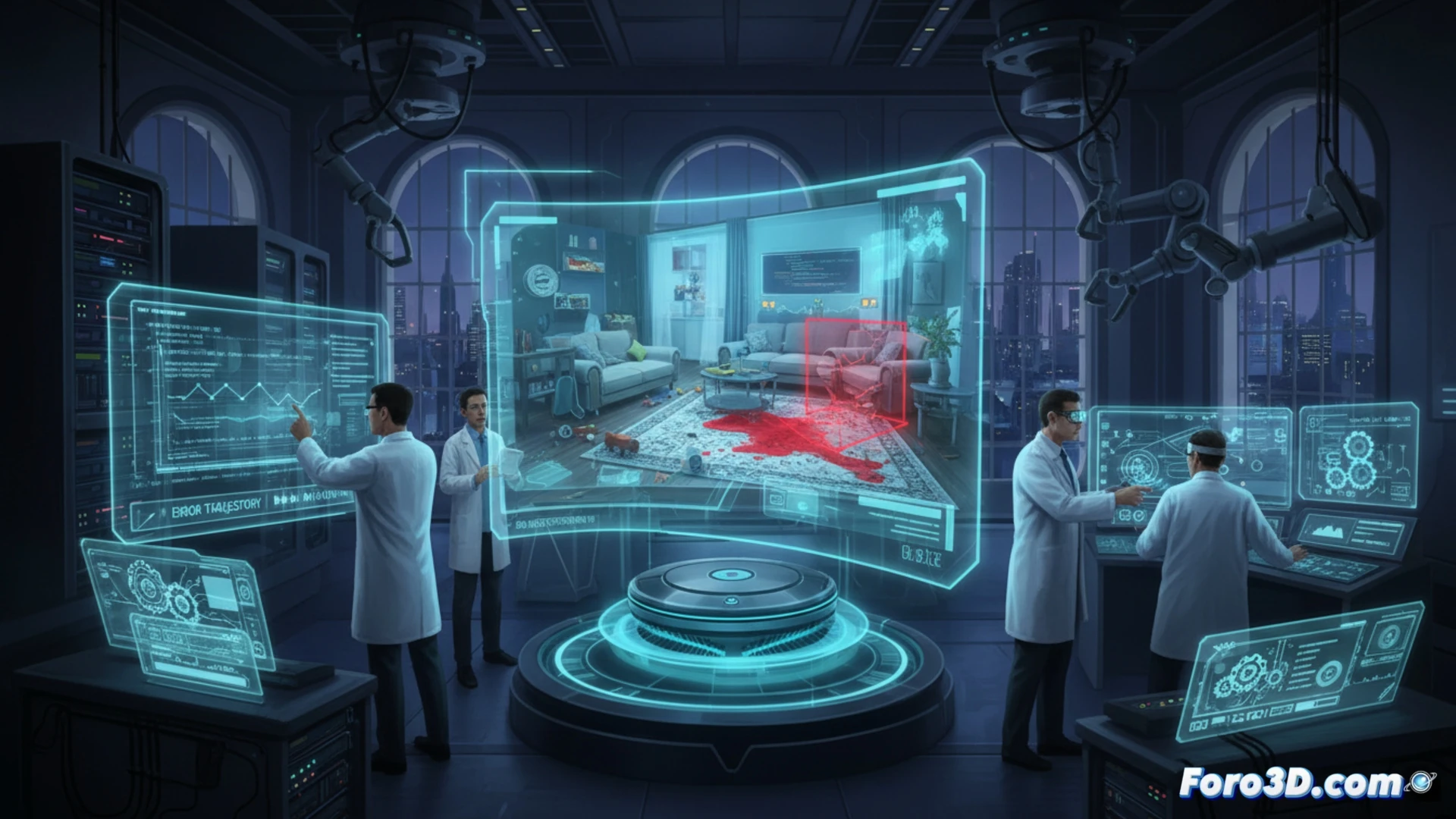
Technical Analysis of the Failure: Navigation, Sensors, and Mechanics 🤖
The most common causes of an autonomous cleaning failure fall into three categories. First, navigation error due to odometry drift or loss of SLAM reference, which causes erratic trajectories. Second, sensor failure, such as an obstructed LIDAR or an uncalibrated contact sensor, which prevents detection of low obstacles. Third, mechanical failure in the main brush or suction system, which reduces efficiency. Using 3D simulations with tools like Gazebo or ROS, we can visualize the actual trajectory versus the planned one, inject noise into the sensors to replicate the failure, and model part wear on a detailed CAD mesh.
Simulation as a Tool for Prevention and Redesign 🛠️
The true value of 3D simulation lies in its ability to prevent failures before they occur in the field. By recreating complex environments with carpets, cables, and changing furniture, we can stress the navigation algorithm and detect blind spots in sensor coverage. This approach allows redesigning the chassis geometry, relocating sensors, or adjusting the cleaning logic without creating costly physical prototypes. Thus, the autonomous cleaning failure ceases to be an error and becomes an input in the robot's continuous improvement cycle.
How can 3D simulation identify and predict autonomous cleaning failures, such as a robot's inability to detect stains or navigate low obstacles, before they occur in the real environment?
(PS: Simulating robots is fun, until they decide not to follow your orders.)