Pacemaker desynchronization is an alteration in the synchrony between the artificial electrical stimulus and the natural contraction of the heart. This condition can lead to heart failure or complex arrhythmias. 3D modeling technology allows for the digital reconstruction of both the organ and the implanted device, offering a detailed view of the abnormal electrical propagation. Thus, specialists can plan precise interventions without the need for exploratory surgeries.
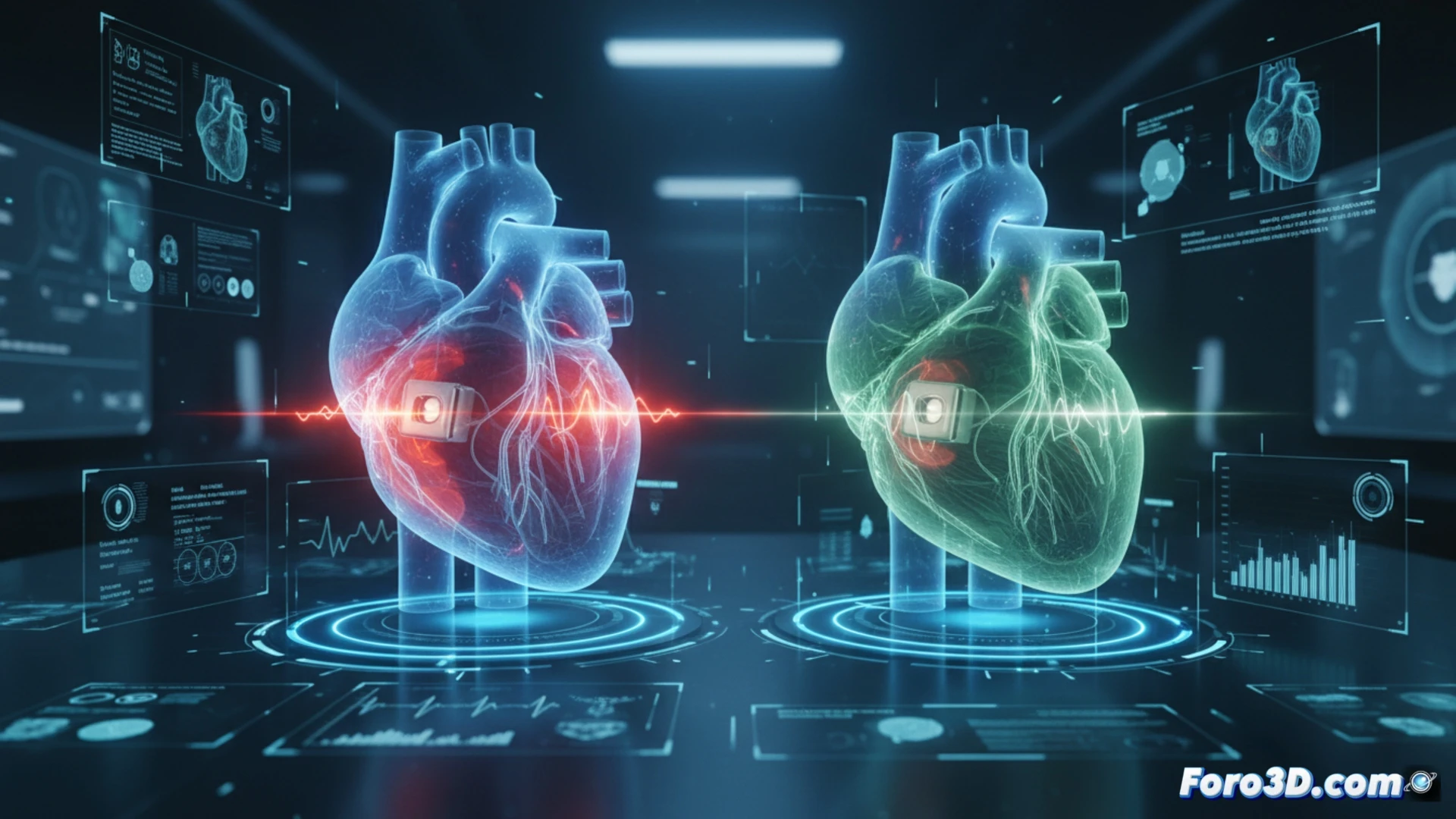
Simulation of electrical flow and parameter readjustment 🫀
Using biomedical simulation software, data from computed tomography scans and electrocardiograms are integrated to generate a digital twin of the heart. In this virtual environment, the depolarization front is visualized, and the exact point where the pacemaker causes a delay or premature activation is identified. The clinical engineer can modify parameters such as pulse amplitude or electrode location in the 3D model, observing in real time how synchrony is restored. This process reduces the risk of complications and shortens adjustment times for the actual patient.
Towards a more predictive and less invasive cardiology ⚡
Three-dimensional visualization of desynchronization not only improves diagnosis but also transforms the relationship between the cardiologist and the device. Instead of relying solely on abstract electrical recordings, the physician can see the heart beating asynchronously and correct the problem before touching the patient. This approach represents a qualitative leap towards personalized medicine, where the precision of 3D modeling becomes the main ally in restoring natural rhythm to those who depend on a pacemaker.
How can real-time 3D modeling predict and virtually correct pacemaker desynchronization to optimize cardiac synchrony without the need for invasive intervention.
(PS: If you 3D print a heart, make sure it beats... or at least doesn't cause copyright issues.)