A 43-year-old Japanese man pours fake detergent over sushi, films the scene, and posts it online. Tens of thousands of views, immediate arrest. The motive: fame, visibility, likes. This is not an isolated case, but a symptom of an epidemic: the desperation for attention has made many people stupid. Here, there is jail time, but in other countries, the same trick would land sponsorships.
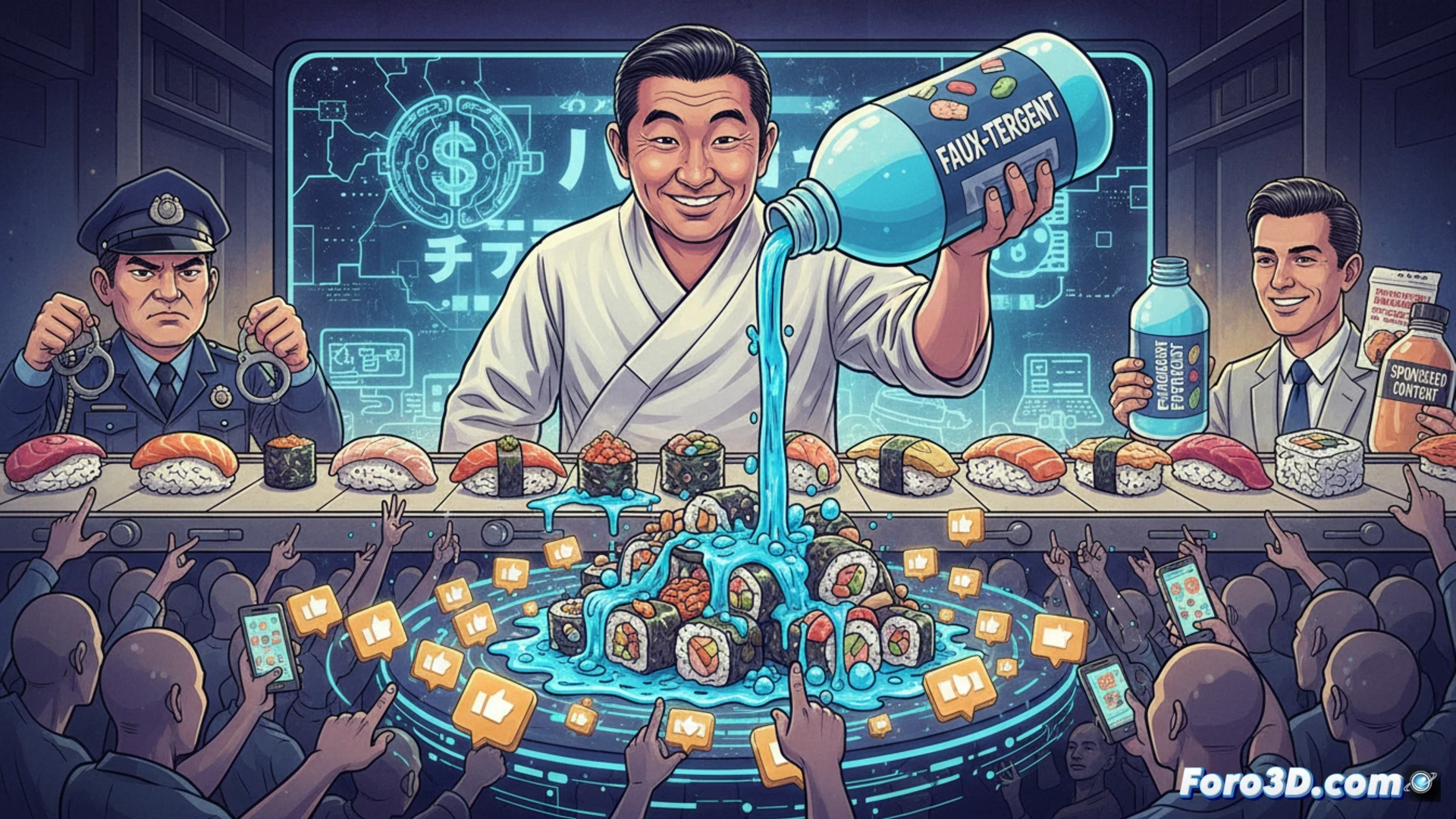
The algorithm that rewards chaos: how technology fuels the circus 🎪
Social platforms reward the outrageous. Their logic is simple: the more extreme the content, the more screen time. Fake detergent is not the problem; it's a system that prioritizes impact over truth. While algorithms amplify these stupidities, creators learn that risk is worth it. Moderation arrives late, when the video has already racked up millions. Technology does not judge, it only measures. And it measures poorly.
How to become famous (and end up in the slammer) in three steps 🚔
Step one: buy detergent, but make sure it's fake, because the real stuff stains. Step two: film yourself pouring it over sushi while putting on a mischievous face. Step three: upload the video, wait for views, and if you're lucky, a shared cell. The plan is foolproof if your goal is to make the news as an idiot. The good part is that when you get out, you'll have a story to tell. The bad part: no one will want to have dinner with you.