Scientists have confirmed for the first time the physical existence of a black hole's event horizon. Using gravitational waves generated by the collision of two black holes in 2025, they managed to measure that invisible boundary from which nothing escapes. What was pure theory now has direct evidence, bringing these phenomena closer to everyone's understanding.
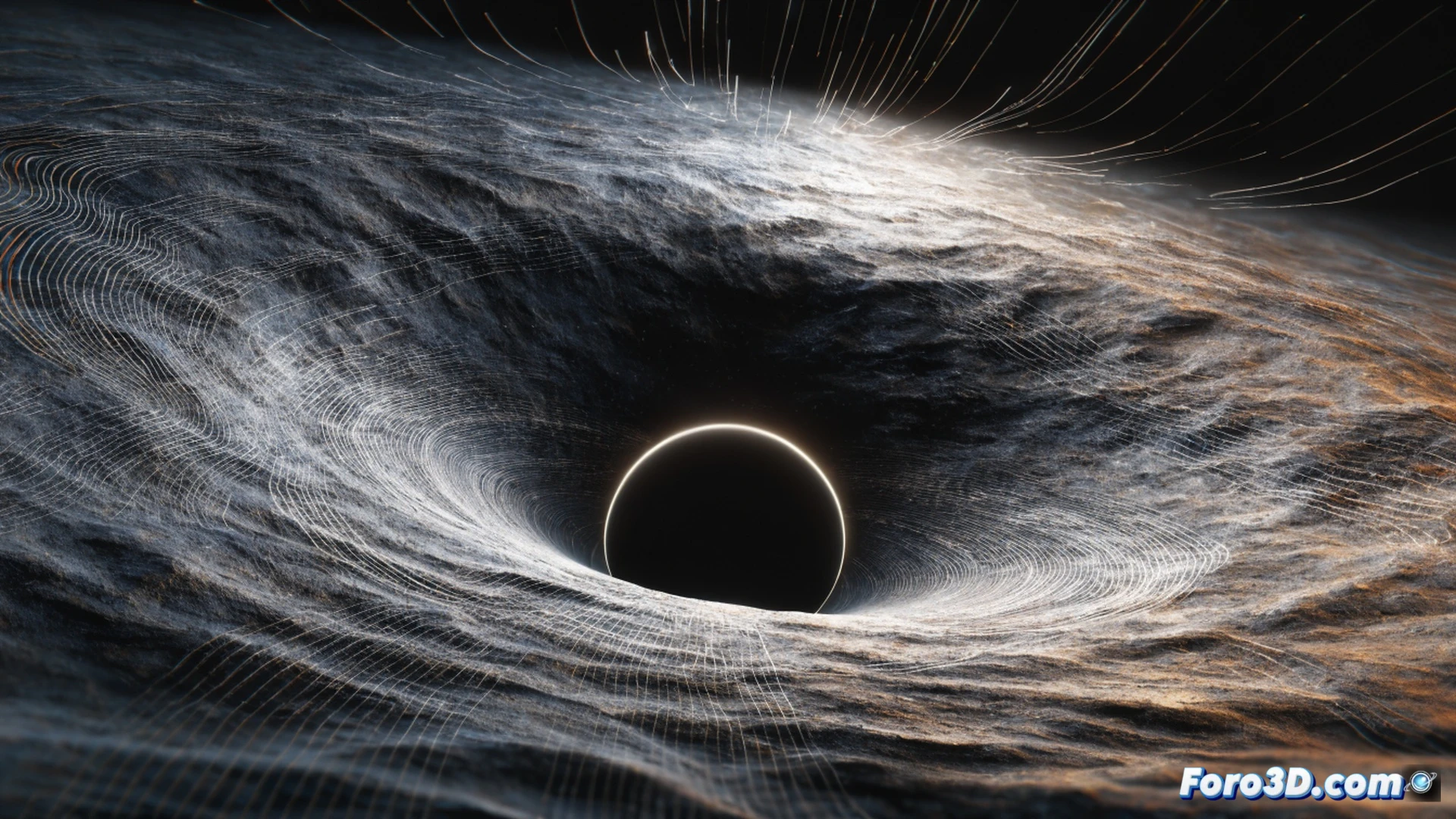
Waves that trace the edge of the impossible 🌌
The discovery was achieved by analyzing the gravitational waves from the collision of two black holes detected in 2025. Researchers identified a specific pattern in the waves that corresponds to the event horizon, the point of no return. This allows studying how extreme gravity warps spacetime and confirms predictions of general relativity that were previously only simulated on computers. Science takes a firm step toward the unknown.
Now, no excuses for being late ⏰
With this discovery, black holes can no longer claim they have no clear boundaries. If someone gets lost in space, they'll now know where the limit is: right where gravitational waves say there's no return. Of course, if your boss asks why you weren't on time, don't try to blame the event horizon. Science has already measured it, and you were just stuck in traffic.