The recent collapse of a shoring system on a construction site has highlighted the fragility of formwork and temporary support processes. What seemed like a safe structure gave way in a matter of seconds, dragging tons of fresh concrete and steel. We analyze the incident from the perspective of forensic 3D modeling, recreating the failure sequence to identify the critical points that led to the disaster.
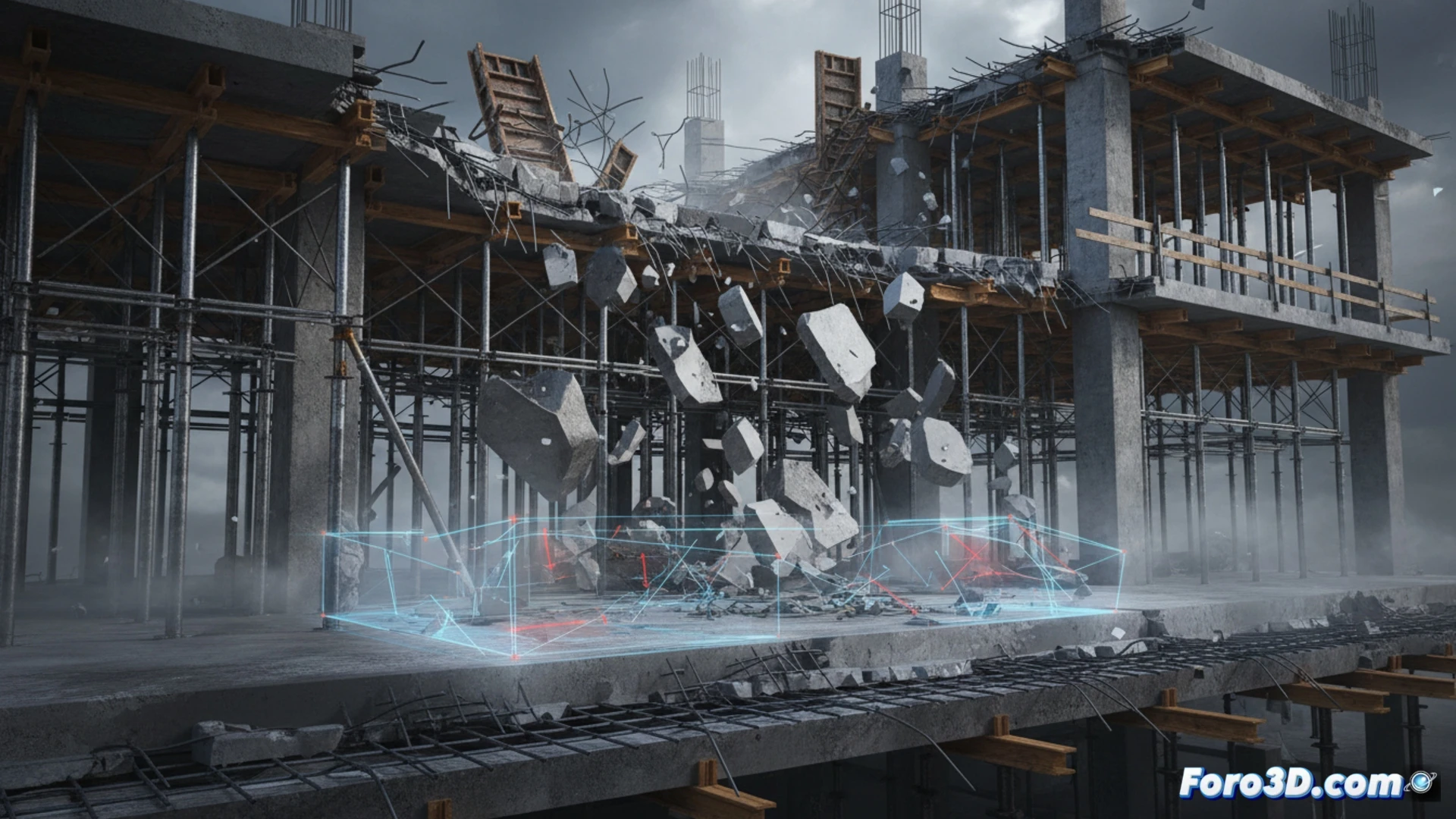
Forensic Analysis: Modeling the Collapse Sequence 🏗️
Using structural simulation software, we have recreated the construction site in its pre-collapse state. The 3D model reveals a critical deficiency in load distribution. The telescopic props in the central area had excessive spacing, exceeding the load capacity of the formwork deck. The simulation shows how the initial deformation at the center triggered a domino effect: the overload was transferred to the perimeter supports, which were already poorly anchored to the lower slab. The comparison between the original design (uniform loads) and the actual state (point loads) highlights a calculation error in the horizontal bracing, a key element to prevent lateral buckling of the props.
Virtual Lessons for Safer Construction 🔧
The digital recreation not only confirms the failure but also serves as a pedagogical tool. By visualizing the collapse in slow motion, it becomes clear how the lack of cross bracing (diagonal stiffeners) allowed the system to twist. Common errors such as omitting the base plate on props or using wet wood in wedges are detectable in the model. This case demonstrates that investing in prior simulations can prevent tragedies, turning a 3D model into a life insurance policy for workers.
Considering that human error is the most common root cause, how can we model in 3D the difference between a progressive buckling failure and a material yield failure so that post-collapse analysis can accurately distinguish a design error from a deviation in assembly execution?
(PS: Simulating a collapse is easy. The hard part is not crashing the program.)