Gigabyte has launched D5 Single Boost technology, an innovation that allows a single DDR5 RAM module to reach speeds of up to 8400 MT/s through automatic overclocking. This matches the performance of a traditional dual-channel configuration without the user having to intervene in complex settings. For 3D modeling and animation professionals, this solution promises a significant leap in the performance of demanding applications, reducing the initial hardware investment.
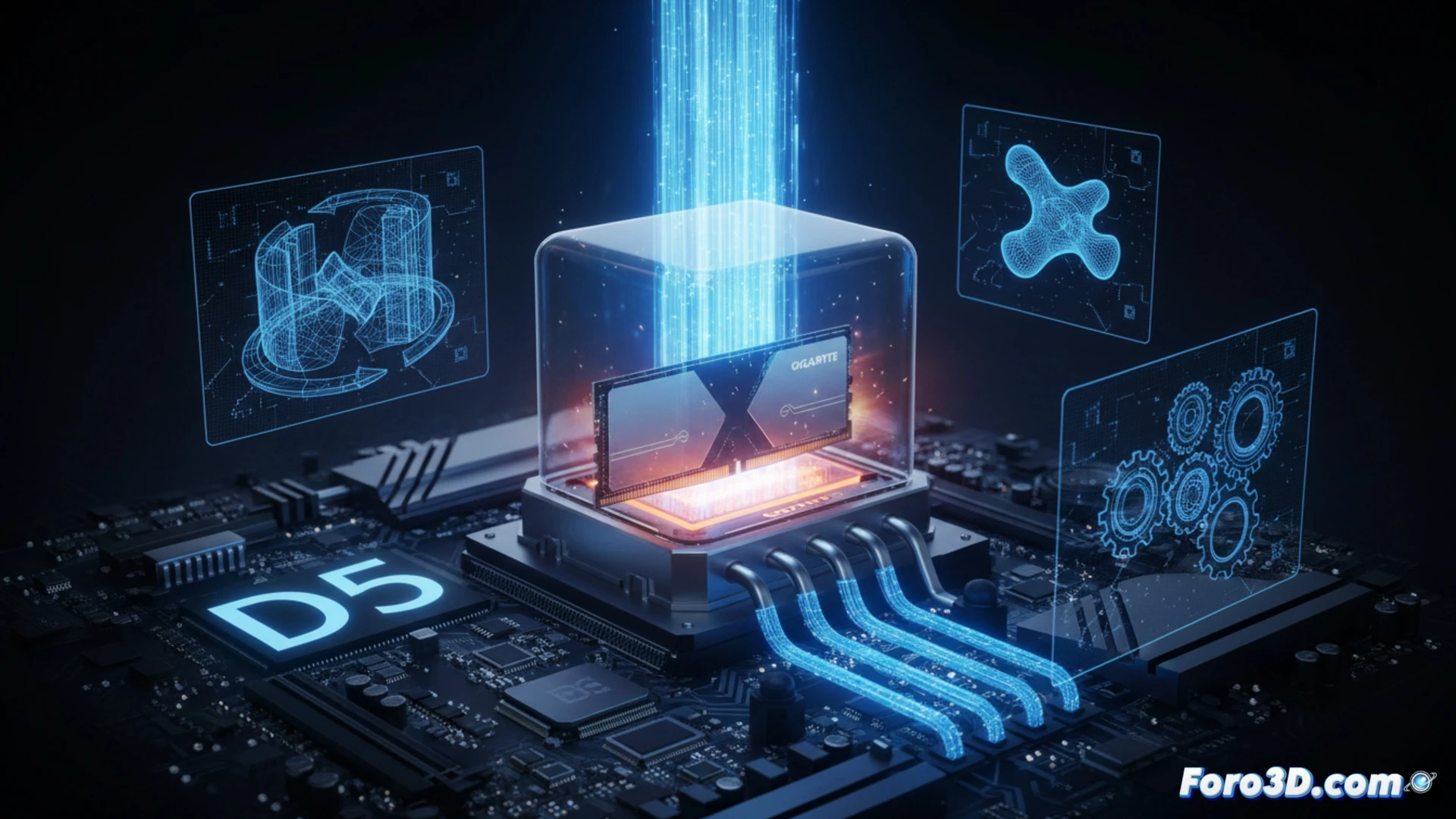
Technical impact on intensive 3D workflows 🚀
In real-time rendering environments, such as Unreal Engine or Blender Cycles, RAM speed is critical for loading high-resolution textures and managing complex geometries. With D5 Single Boost, a single module provides the necessary bandwidth to handle particle simulations and dense meshes without bottlenecks. Although traditional dual-channel configurations often offer advantages in sequential read tasks, this technology levels performance in random and low-latency operations, key for editing interactive scenes. The automation of overclocking eliminates the risk of instability, a critical factor in workstations operating during long rendering sessions.
Democratization of high performance for independent modelers 💡
For 3D artists on tight budgets, D5 Single Boost represents a gateway to RAM frequencies that previously required double the investment. By purchasing a single high-speed module, capital is freed up to be allocated to other components such as the GPU or NVMe storage. This technology is ideal for polygonal modeling and texturing workflows in programs like Maya or ZBrush, where data access speed does not require the redundancy of dual channel. The recommendation is clear: if you prioritize frequency over total capacity, this solution optimizes your investment without sacrificing performance in daily 3D tasks.
Is it truly viable for a professional 3D workflow, such as rendering with engines like V-Ray or Cycles, to work with a single RAM module at 8400 MT/s instead of a dual-channel configuration with higher total capacity?
(PS: Your CPU gets hotter than the debate between Blender and Maya)