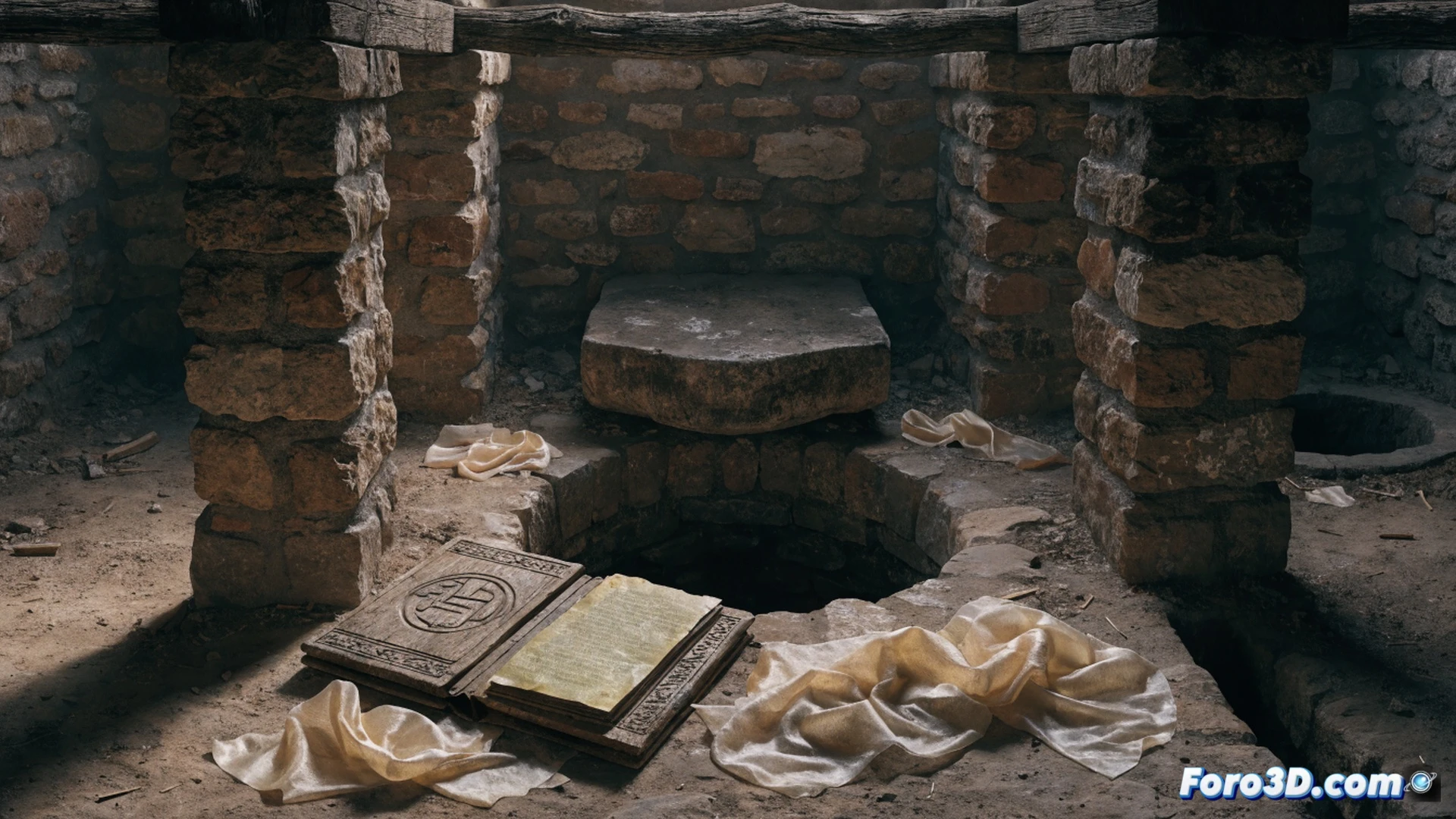
Archaeologists in Paderborn, Germany, have found a wooden and wax notebook at the bottom of a medieval toilet. The lack of oxygen and humidity of the place preserved the tablets, which contain Latin writing from the 13th or 14th centuries. This discovery sheds light on the daily life of the wealthy of the time, including their business habits and a peculiar detail: they used silk as toilet paper.
Preservation in anaerobic conditions and its historical value 🏛️
The preservation of the notebook is due to the humid, oxygen-free environment of the toilet, conditions that slow the decomposition of wood and wax. Researchers have managed to read fragments of accounts and lists of goods, allowing them to reconstruct transactions and the standard of living of the medieval upper class. Chemical analysis techniques also confirmed traces of silk, used for hygienic purposes, a luxury reserved for a few that details their daily routines.
Silk as toilet paper: the luxury of cleaning with class 🧻
It turns out that medieval rich people not only accumulated properties, but also wiped their behinds with silk, a fabric more expensive than the land of many peasants. While commoners used moss or straw, the elite of Paderborn left evidence of their taste for the finer things even in the toilet. This discovery shows that, even in the Middle Ages, money didn't buy dignity, but it did buy anal softness.