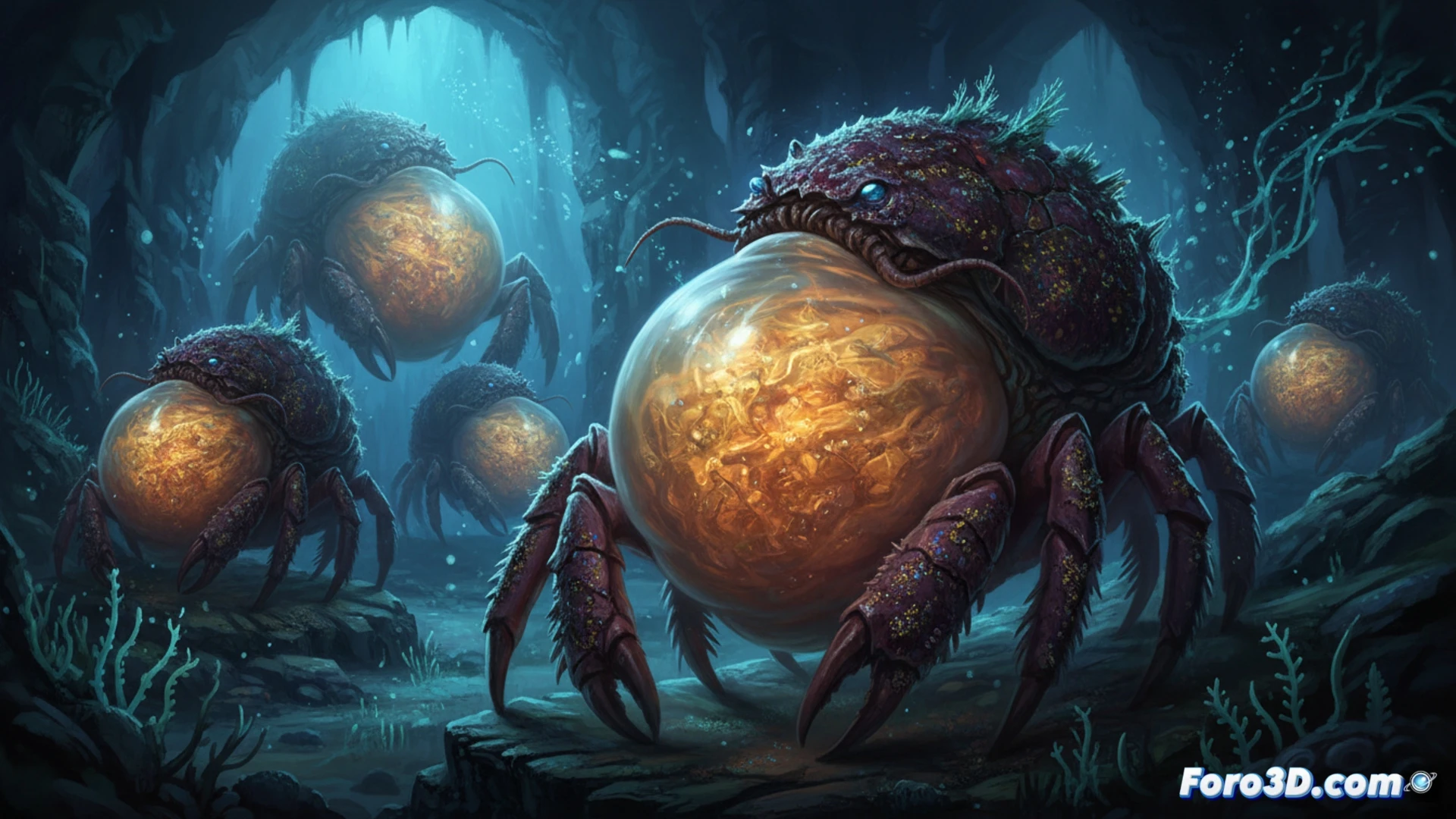
A scientific study has revealed that certain giant deep-sea crustaceans can fast for more than five years. The key lies in a disproportionately large stomach that stores vast amounts of food and a metabolism that slows to a minimum at rest. This adaptation allows them to survive in an environment where food is scarce.
The natural engineering behind extreme endurance 🦾
From a technical perspective, these crustaceans function as low-energy systems. Their stomach acts as a high-capacity reservoir, similar to a hard drive storing data for future use. Basal metabolism drops drastically, like a processor in idle mode that only uses what is necessary. This energy efficiency allows the animal to require no caloric intake for long periods, a design that hardware engineers would envy for optimizing battery consumption.
My fridge: the crustacean that doesn't order delivery 🦞
While these critters enjoy the luxury of not opening the fridge for five years, we go into crisis if the supermarket closes on a Sunday. They store supplies in their stomach; we store leftover lasagna that expires in three days. Maybe we should learn from them, even if just to justify that extra pack of cookies we buy just in case.