The recent disruption of a submarine cable is not a simple technical failure; it is a geopolitical risk event that exposes the fragility of the global data supply chain. In a world where 99% of intercontinental traffic depends on these optical fibers, a cut at strategic points like the Luzon Strait or the Suez Canal can paralyze entire economies in minutes. We analyze the real impact of this critical infrastructure.
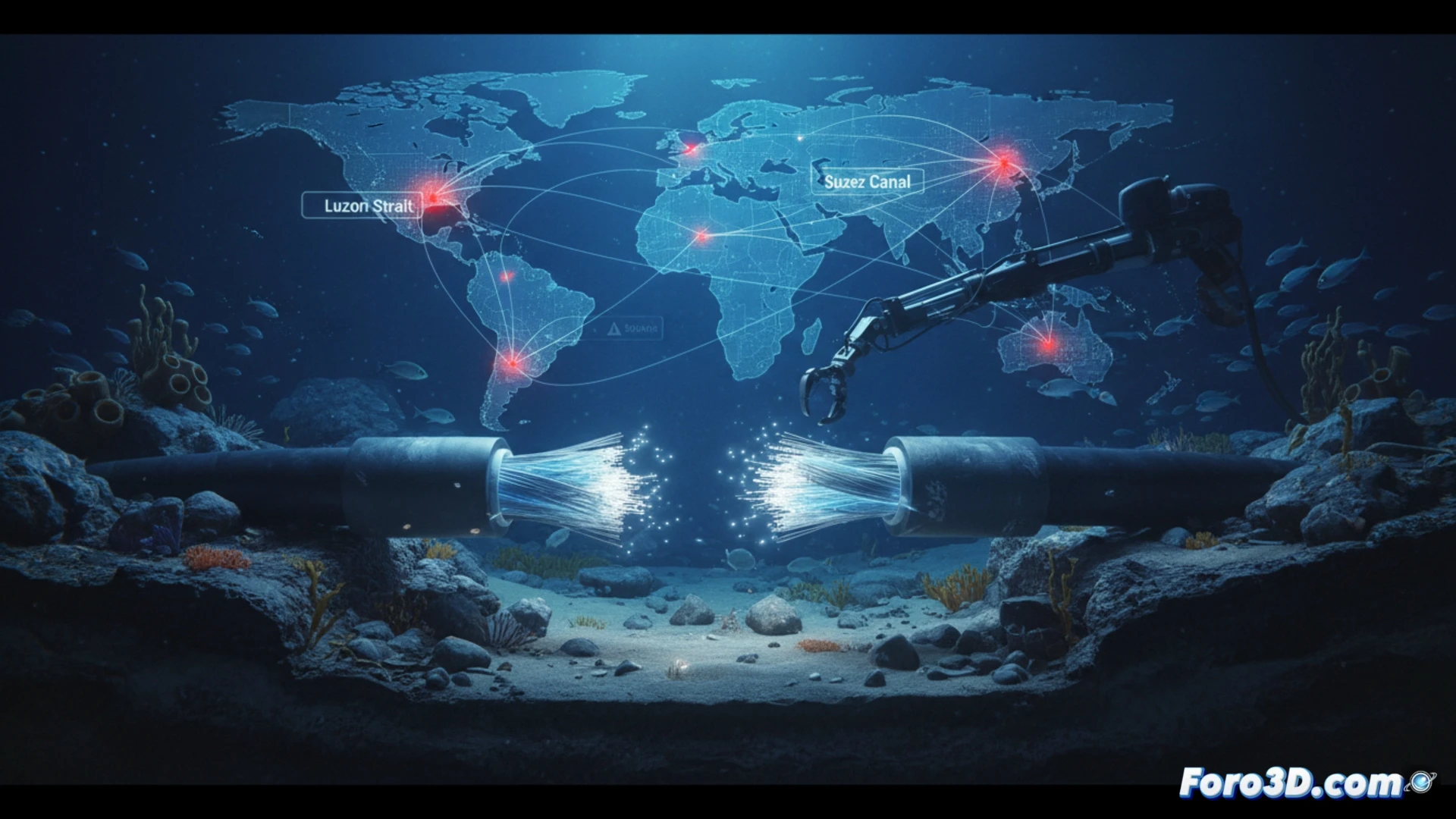
3D Visualization of the Submarine Network and Congestion Points 🌐
To understand the magnitude of the risk, we have modeled in 3D the main submarine cable routes, identifying congestion points where multiple systems converge, such as the coast of Egypt or the Indonesian archipelago. Through traffic disruption simulations, we visualize how a single cut can redirect petabytes of data to saturated alternative routes, critically increasing latency. This interactive model allows us to see the dependence of countries like Singapore or South Africa, which lack sufficient redundancy, exposing their digital sovereignty to the physical vulnerability of the cable.
The Hidden Geopolitics Beneath the Sea 🗺️
The location of these cuts is rarely random. The submarine cable map is a reflection of global alliances and tensions. Damage to a cable near Taiwan or in the Red Sea not only affects connectivity but also activates national security protocols. The lesson is clear: the data supply chain is not just a bandwidth issue, but a chessboard where physical infrastructure dictates the economic and military response capacity of nations.
How can a single cut in a submarine cable reconfigure the balance of power between nations and highlight the strategic vulnerability of the global supply chain in the face of a geopolitical conflict?
(PS: geopolitics in 3D looks so good it makes you want to invade countries just to see it rendered)