Dielectric fluid-induced corrosion represents a silent threat in power transformers and capacitors. This phenomenon degrades solid insulation and metallic conductors exposed to mineral or synthetic oil. Understanding its kinetics is vital for material fatigue simulation. 3D modeling allows visualizing the progression of degradation, identifying areas of high electrochemical stress where microcracks initiate, eventually leading to catastrophic system failures.
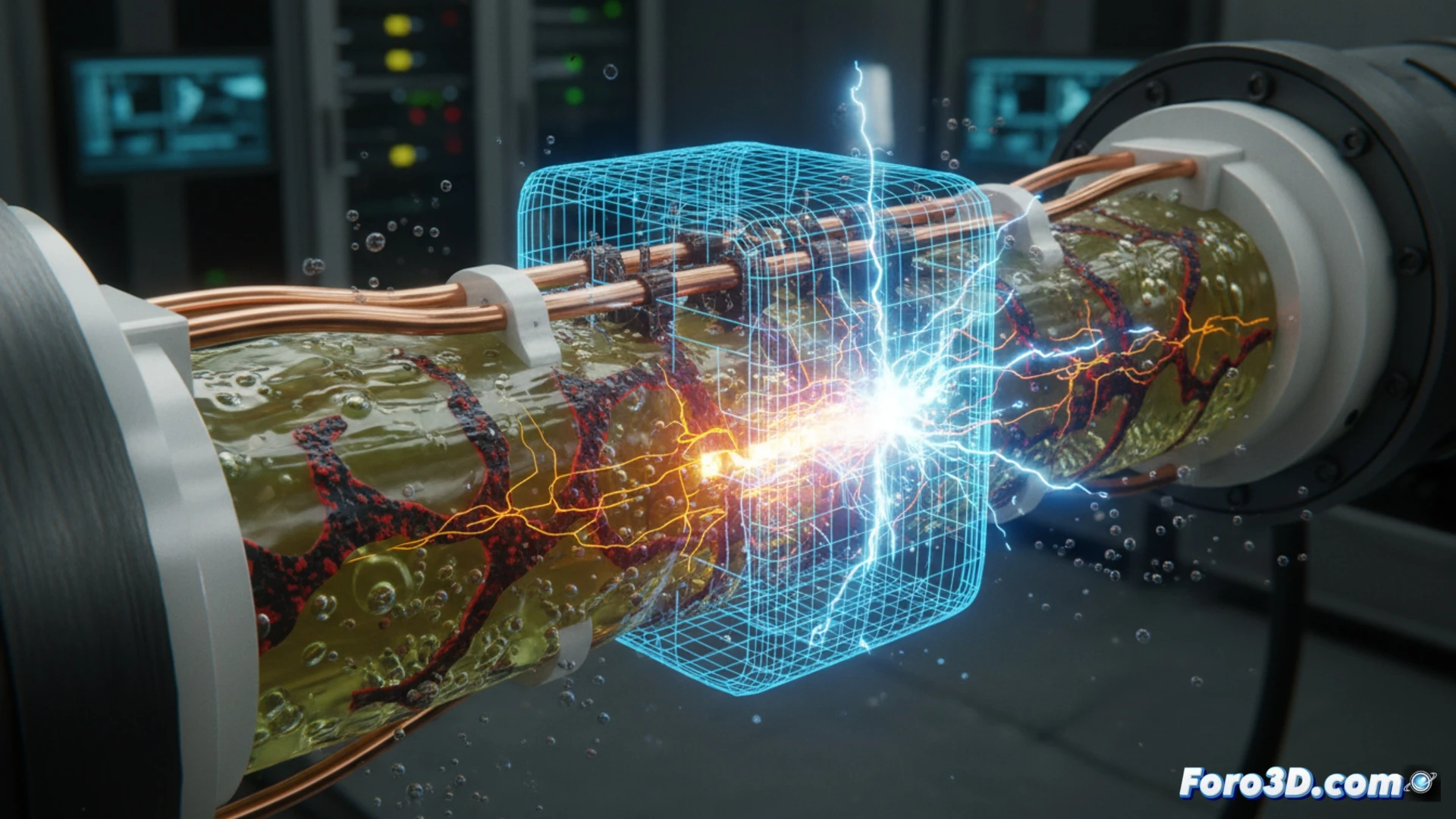
Corrosion mechanisms and finite element simulation approach ⚡
Degradation begins with the hydrolysis of dielectric oil, generating organic acids and water that attack the cellulose of insulating paper and copper or aluminum alloys. This process accelerates fatigue under alternating electric fields. To model it in 3D, a multiphysics analysis is applied, coupling the diffusion of corrosive species (Fick's law) with continuum damage mechanics (CDM). Finite element meshes are refined at winding edges, where acid concentration and thermal stress are highest. The result is a residual life map that predicts the exact location of chemical-mechanical fatigue failure.
Predictive visualization for industrial maintenance 🔍
Integrating these models into 3D visualization platforms allows engineers to virtually inspect the interior of the equipment without disassembly. Corrosion zones are represented with color gradients indicating the level of damage penetration. This tool not only optimizes maintenance cycles but redefines the design of new dielectric components by identifying geometries that minimize the accumulation of corrosive byproducts. Fatigue simulation ceases to be a theoretical exercise and becomes a digital shield against premature aging.
Is it possible to predict the remaining useful life of a power transformer through 3D simulation when dielectric fluid corrosion acts as a stress concentrator in the fatigue modeling of the insulating material?
(PS: Material fatigue is like yours after 10 hours of simulation.)