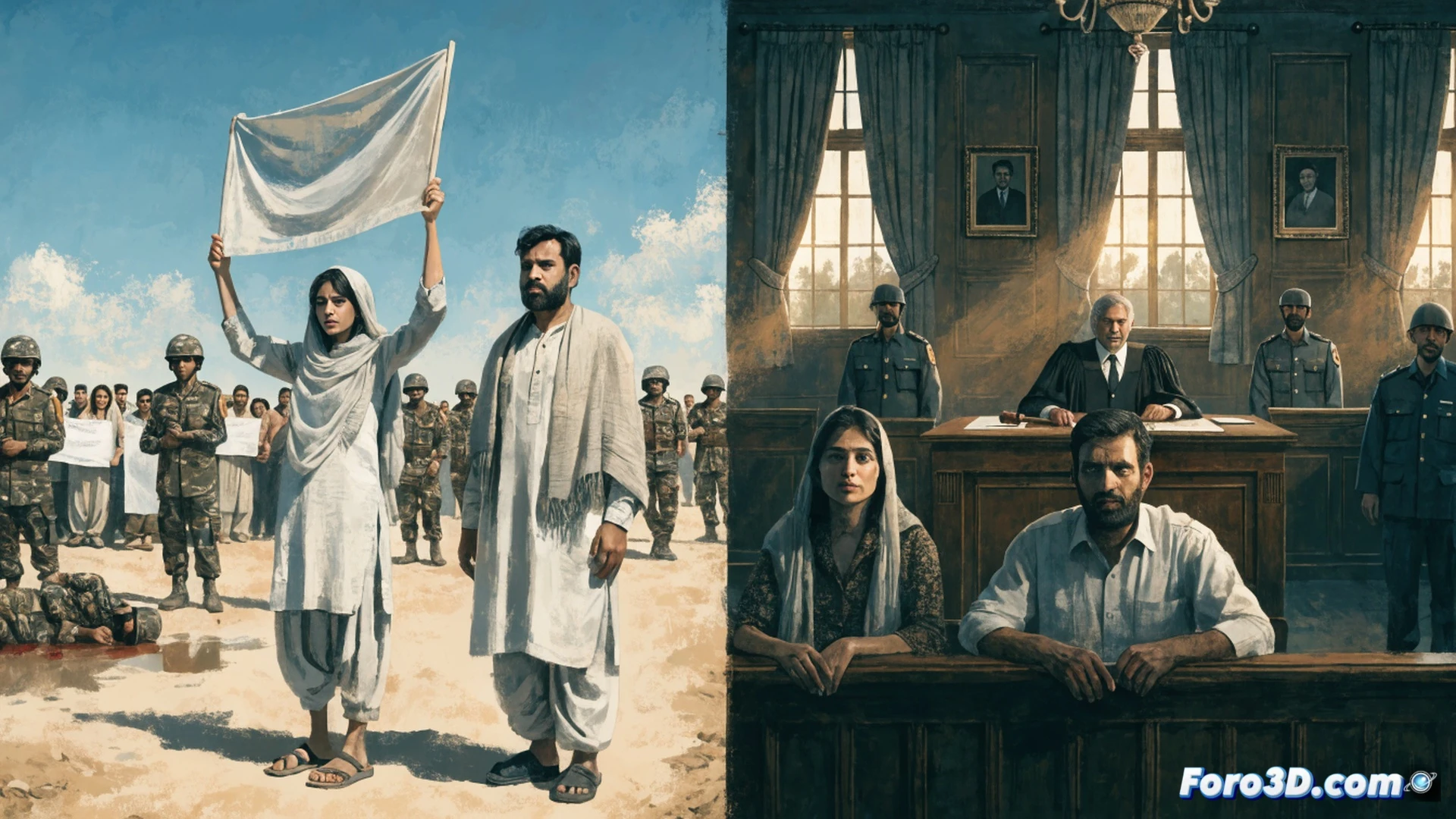
A Pakistani anti-terrorism court has sentenced human rights activists Mahrang Baloch and Sibghatullah Shahji to life imprisonment. They are accused of inciting a protest in 2024 that resulted in the death of a soldier. Baloch, a doctor and advocate for the disappeared, describes the ruling as a weapon to silence dissent. For citizens, this case highlights how state repression can criminalize peaceful protest, fueling tension in Balochistan.
Surveillance technology: the all-seeing (and all-punishing) digital eye 🎥
In this context, the Pakistani government has intensified its use of facial recognition systems and social media analysis to track protest organizers. These tools, powered by artificial intelligence, enable real-time identification of activists during demonstrations. However, the accuracy of these systems is debatable: local studies indicate a 15% error rate in identifying individuals, which can lead to false accusations. Technology, far from being neutral, becomes an arm of selective repression.
Protester's manual: bring a sign, don't bring human rights 🪧
It seems that in Pakistan, protesting is like playing Russian roulette, but with judges. If you attend a peaceful march, you risk being gifted a life sentence as a souvenir. Mahrang Baloch, with her medical degree, now has plenty of time to study criminal law. The irony is that the government sells the sentence as an act of justice, when in reality it's an express tutorial on how to turn a placard into a crime of high treason.