The concordance between a ligature and the skin groove is a cornerstone in the investigation of deaths by ligature or strangulation. Traditionally, documentation was limited to two-dimensional photographs that could distort the depth and relief of the marks. The introduction of photogrammetry and 3D scanning allows capturing the exact topography of the skin, preserving millimeter-level data that is critical for expert analysis.
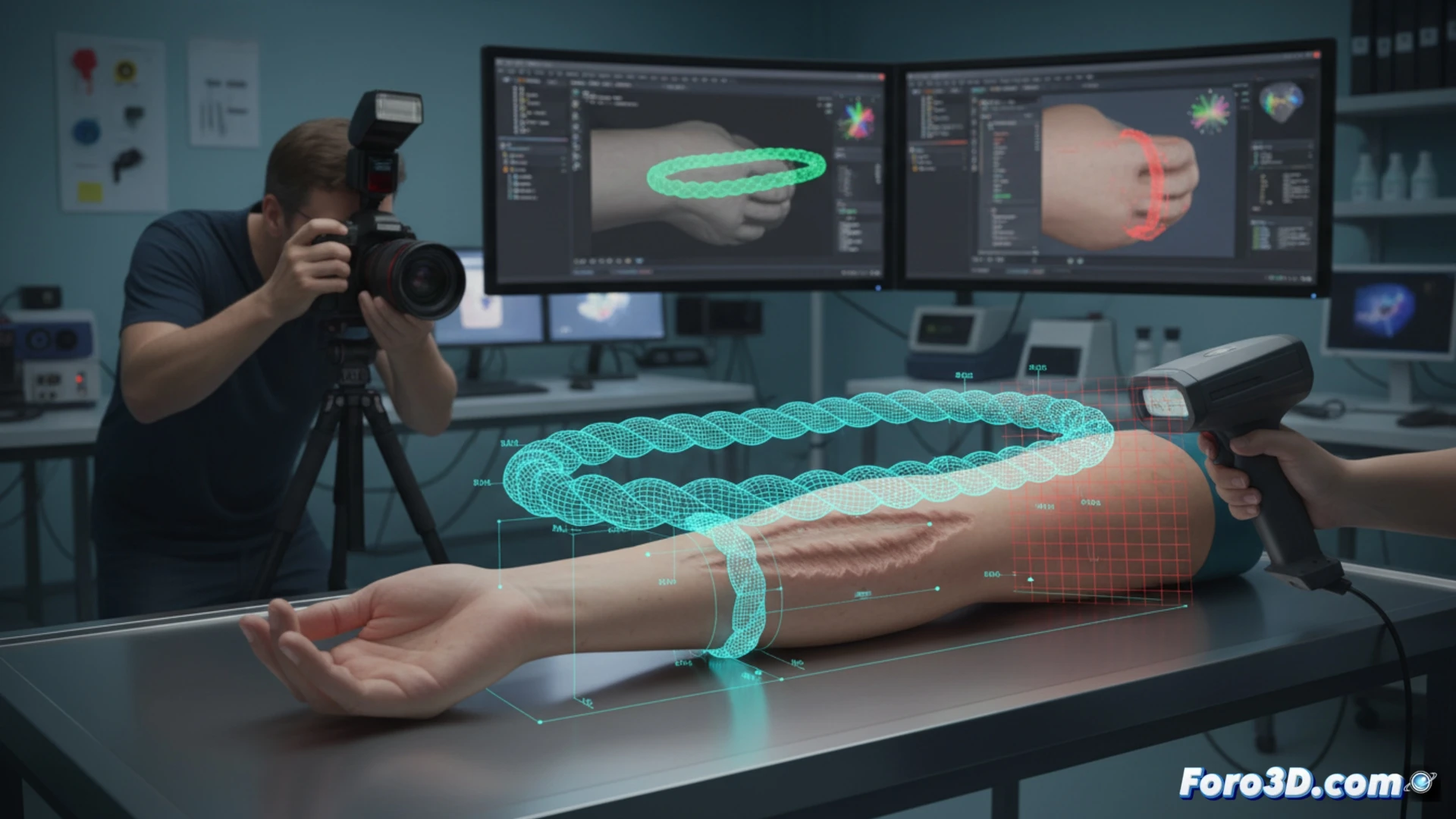
Workflow for Digital Mesh Overlay 🔍
The process begins with scene capture. The ligature object (rope, cable, fabric) and the skin groove area are scanned using high-resolution photogrammetry or a structured light scanner. Both 3D meshes are imported into forensic analysis software (such as CloudCompare or MeshLab). The expert aligns the models using anatomical reference points or pattern morphology. Concordance verification is performed using chromatic deviation maps, which color the height differences between the ligature and the mark on the skin. If the deviation is less than 1-2 mm across the entire surface, a high probability of match is established, eliminating the subjectivity of direct visual comparison.
Towards Objective and Reproducible Expertise ⚖️
3D documentation not only improves accuracy but also allows case review by other experts without the need to re-examine the body. This forensic pipeline transforms a descriptive analysis into a quantitative one. By digitizing the evidence, it ensures that the concordance between ligature and skin groove is an irrefutable technical fact, raising the standard of expert testimony in courts and minimizing the human error inherent in traditional photographic interpretation.
How does the variability in post-mortem skin elasticity influence the accuracy of 3D scanning for the concordance between the ligature and the skin groove in the forensic pipeline?
(PS: In the forensic pipeline, the most important thing is not to mix the evidence with the reference models... or you'll end up with a ghost at the scene.)