The recent approval of a bill in California introduces a new paradigm in digital compliance for hardware manufacturers. The regulation requires that 3D printers sold in the state incorporate a verification algorithm capable of detecting and blocking the printing of firearm models. This requirement transforms the device into a regulatory control point, forcing companies to integrate compliance systems directly into the product's firmware, an unprecedented move in the additive manufacturing industry.
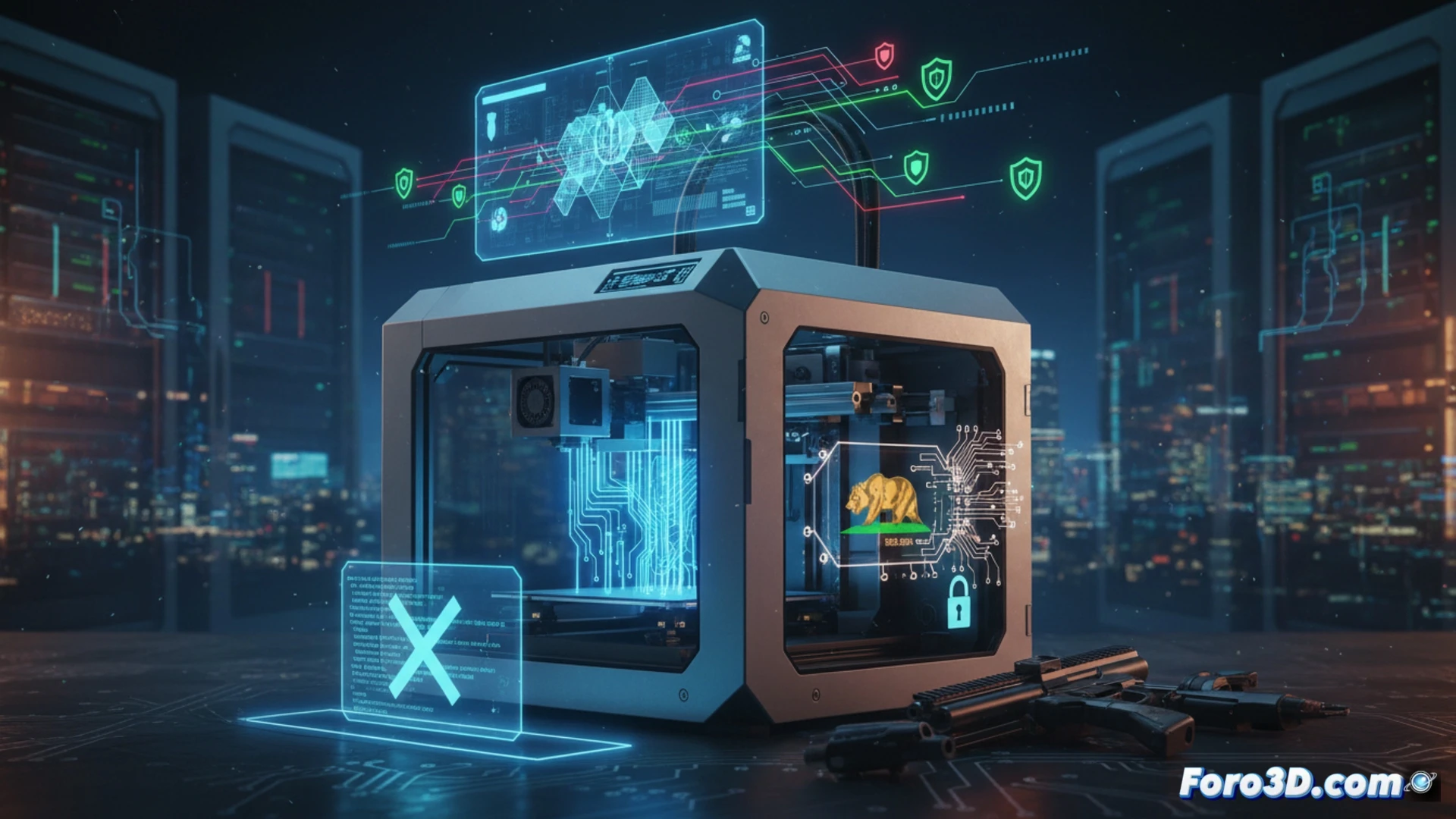
Technical challenges in implementing the verification algorithm ⚙️
The main technical challenge lies in the algorithm's accuracy to distinguish between a functional weapon and a decorative piece or a toy. Manufacturers will need to train machine learning models with databases of prohibited geometries, which implies high development costs and constant updates. Furthermore, detection must be performed at the slicer level, analyzing the G-code before the print head moves. Any false positive will block legitimate objects, while a false negative exposes the company to penalties for false statements, including significant fines and potential revocation of licenses to operate in California.
Balancing security and technological freedom ⚖️
This California case resembles content control systems on digital platforms, but applied to physical hardware. While the European Union has opted to regulate weapon design through material traceability, California is betting on preventive blocking. The immediate impact will be an increase in printer prices and a reduction in the availability of open models. For compliance professionals, the dilemma is clear: public safety justifies restricting freedom of use, but the flawed implementation of these filters could generate massive technical censorship of legitimate creativity.
Question: How should 3D printer manufacturers adapt their digital compliance protocols to meet California's new law regulating weapon manufacturing, without compromising technological innovation and user privacy?
(PS: verification systems are like print supports: if they fail, everything collapses) 🛠️