Fragments from the Oort Cloud Perturbation could fall into the oceans, injecting tons of frozen freshwater. This phenomenon would alter the salinity of the seas and halt the thermohaline currents, the engine that regulates the global climate. A scenario that combines astronomy and oceanography.
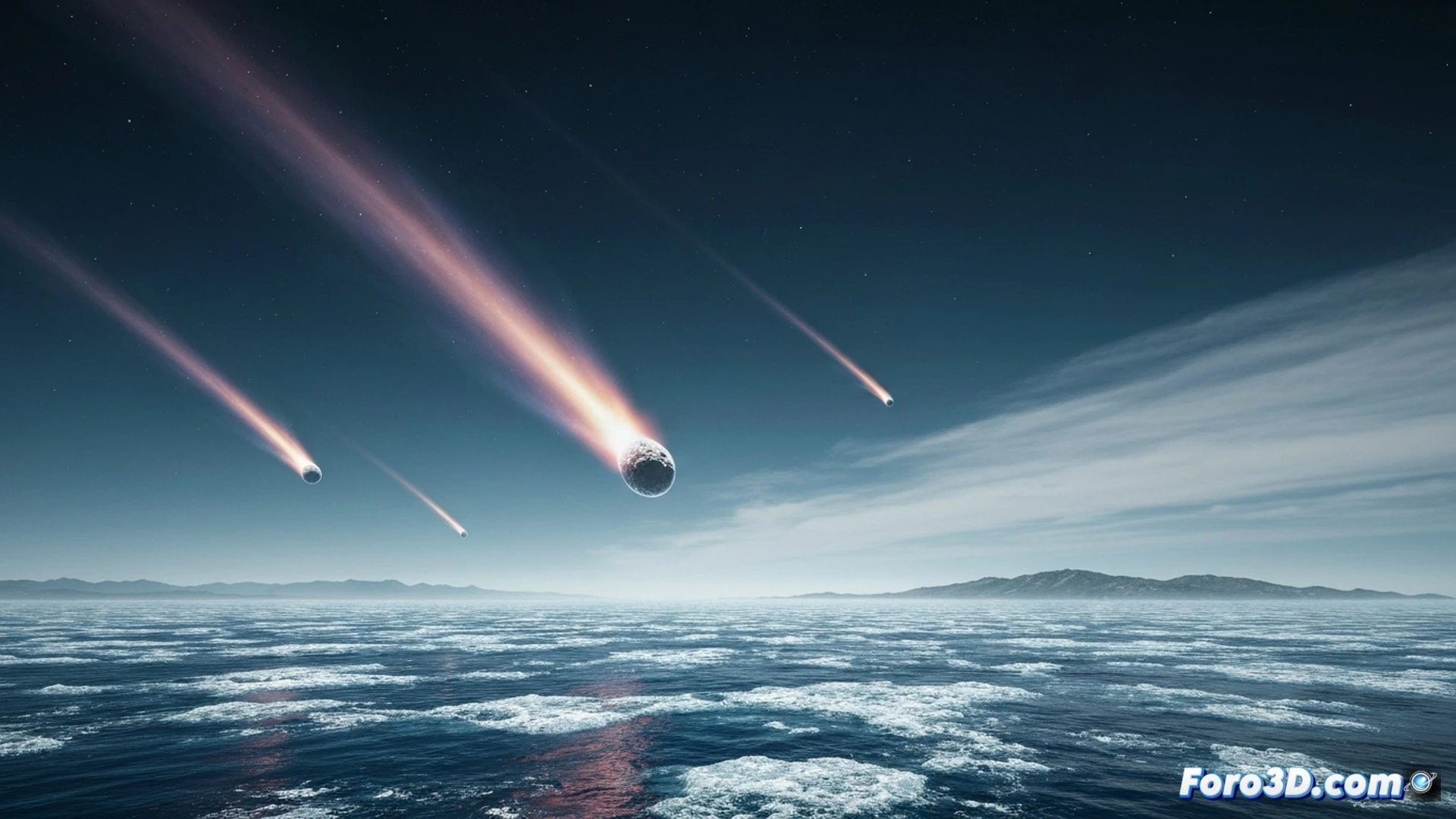
The technical collapse of ocean circulation 🌊
Thermohaline currents depend on water density, determined by its temperature and salinity. The massive influx of freshwater from comets would reduce surface density, halting the sinking of water masses in the North Atlantic. Without that vertical pumping, the global conveyor belt slows down or collapses, altering wind and precipitation patterns. Climate models show regional cooling in Europe and warming in the tropics, with consequences for agriculture and fisheries.
Plan B: changing the fish menu 🐟
If the oceans become less salty, saltwater fish might request a transfer. Meanwhile, humans would have to redesign ships to navigate in an almost freshwater soup. Of course, as a consolation, desalination plants would close for lack of customers. A cosmic irony: comets come to solve the planet's thirst but ruin the climate.