Submarine collision is one of the most critical events in navigation, where the ocean's silence is shattered by a devastating impact. Analyzing these accidents is vital for prevention. Thanks to 3D technologies, we can now model submarine hulls with millimeter precision and simulate impact forces, transforming a disaster into a data source to save lives.
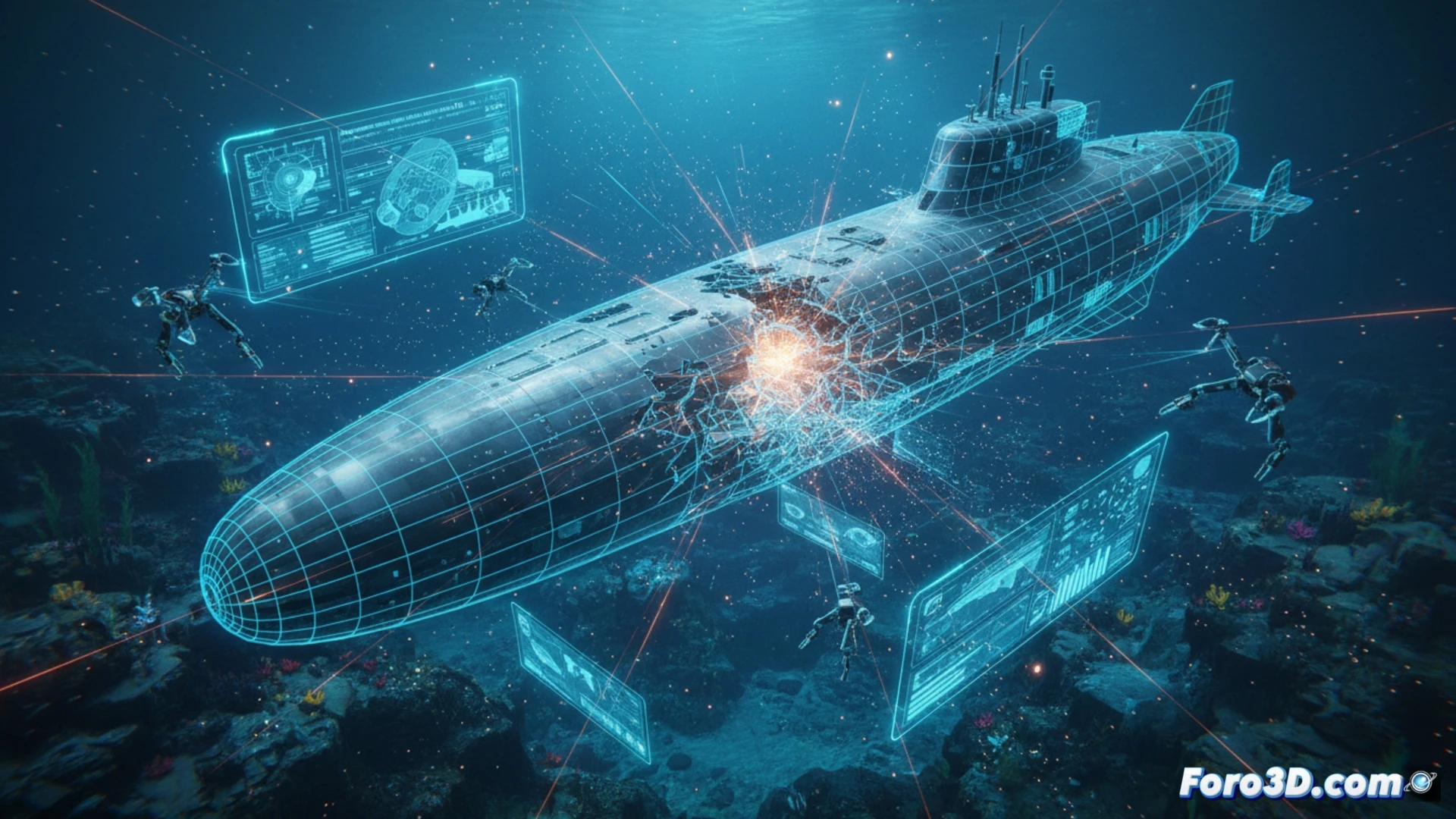
Hull Modeling and Impact Simulation 🛠️
To reconstruct a submarine collision, experts create digital twins of the vessel, replicating every rivet and alloy. Through numerical simulations, variables such as hydrostatic pressure and impact velocity are introduced. Finite element software calculates crack propagation and structural deformations. This process allows engineers to visualize the exact failure point, assess steel strength, and predict compartment flooding, providing crucial data to improve future designs.
Disaster Prevention and Response 🚨
The usefulness of 3D modeling does not end with forensic analysis. By simulating rescue scenarios, such as the approach of salvage vehicles to a damaged hatch, emergency protocols are optimized. These tools allow crews to train in realistic virtual environments, reducing reaction time. Ultimately, each simulated collision is a lesson learned that reinforces naval safety and minimizes the risk of future catastrophes.
What underwater 3D reconstruction techniques allow for more accurate simulation of the exact impact point and forces involved in a collision between submersibles to improve naval safety protocols?
(PS: Simulating catastrophes is fun until the computer crashes and you are the catastrophe.)