When we talk about catastrophes, we usually think of earthquakes or fires, but there is a silent enemy that acts as a trigger: noise. Noise pollution doesn't just damage hearing; it distorts the perception of operators in control towers, bridges, and industrial plants. A misinterpretation of an audible alert or a communication failure due to excessive decibels can lead to a fatal collision. In this article, we analyze how noise becomes the invisible factor that triggers chaos.
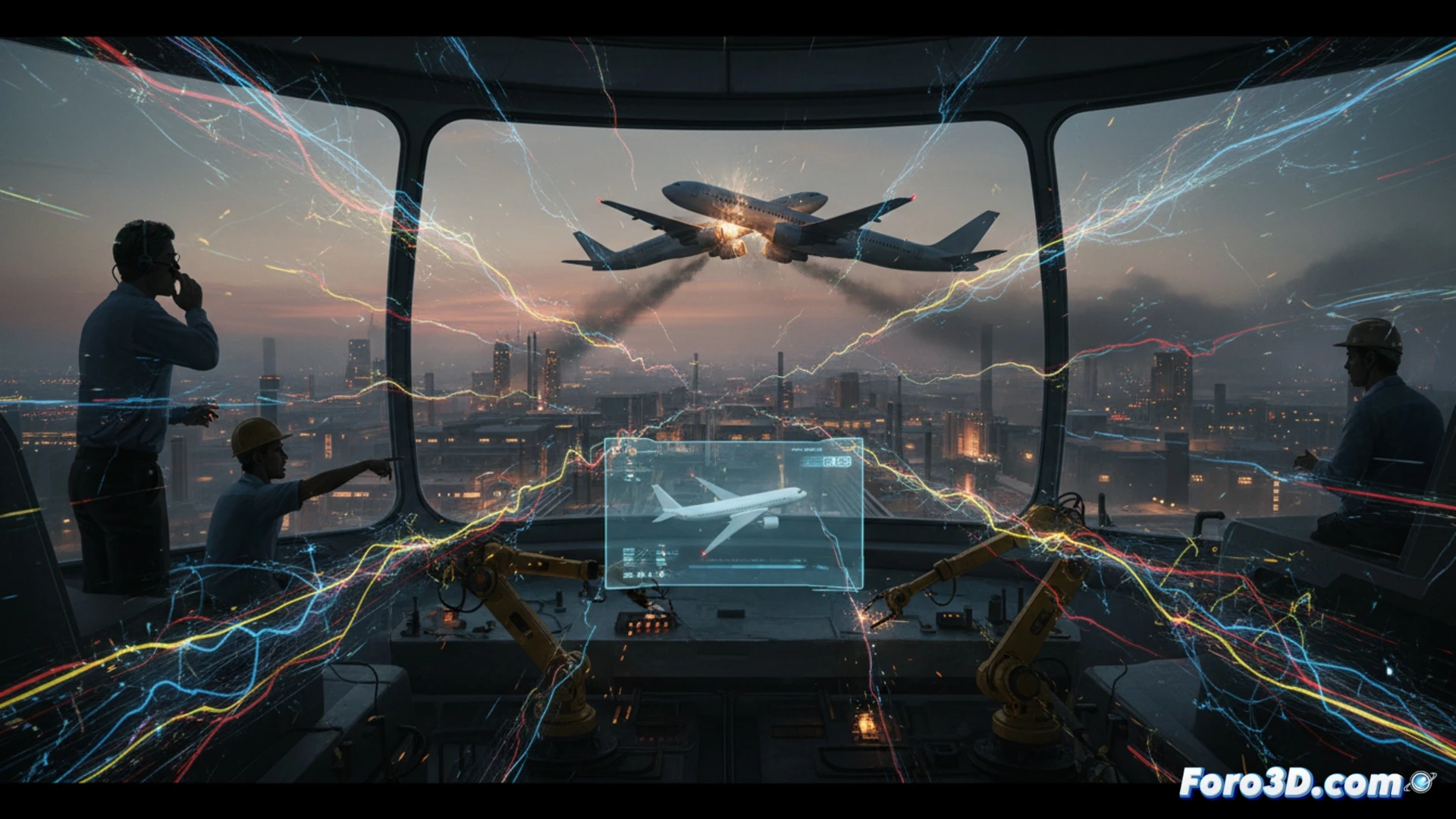
Acoustic modeling and digital twins for collision prevention 🎧
To visualize this phenomenon, engineers turn to 3D simulations that integrate acoustic modeling. Using digital twins of airports or ports, environments with high levels of ambient noise are recreated to study how it affects the cognitive load of controllers. For example, in an air traffic scenario, a noise spike of 120 dB can mask critical communication between pilot and tower. The simulation allows measuring reaction time and predicting collision trajectories before they occur. These models help design acoustic barriers and visual alert protocols that mitigate risk.
Prevention: when silence is the best tool 🤫
3D technology offers us a window into disaster before it happens, but the final solution is not just digital. Reducing noise in critical environments involves redesigning spaces, isolating sound sources, and training personnel to recognize auditory fatigue. A noise-induced collision is not an inevitable accident; it is a design flaw that we can correct. At Foro3D, we believe that simulation not only predicts catastrophes but teaches us to listen to danger before it shouts.
Could a collision error due to noise in a 3D simulation be the true trigger of a real catastrophe if it replicates extreme acoustic conditions that generate undetected structural resonances in time?
(PS: Simulating catastrophes is fun until the computer crashes and you are the catastrophe.)