The recent support failure in a high-density hydroponic farm has raised alarms in the vertical agriculture sector. What seemed like an efficient design collapsed under the accumulated weight of the irrigation and cultivation systems. This incident, classified as a technical catastrophe, demonstrates how an error in load distribution can destroy a productive facility in seconds, generating million-dollar losses and risks for operators.
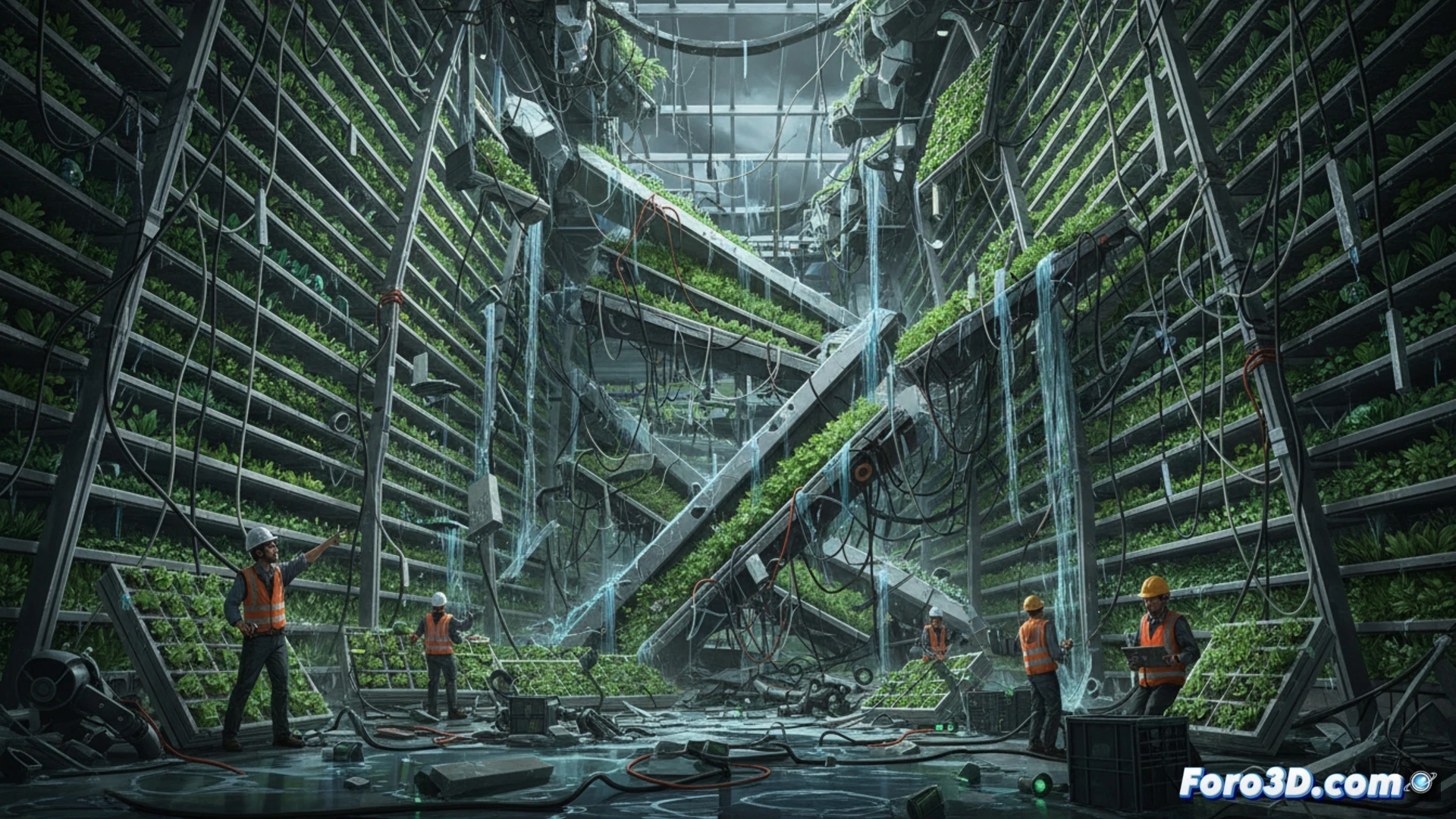
3D Simulation of Fatigue and Collapse Sequence 💥
Using finite element software, we have modeled the original structure of the farm to identify the breaking point. The 3D simulation revealed that the anchors of the upper trays suffered cyclic fatigue due to the constant vibration of the water pumps. The rendering shows how the progressive deformation in the aluminum supports triggered a chain reaction: one tray gave way, overloading the lower ones until total collapse. The visualization allows us to appreciate the exact moment when the stress exceeded the material's elastic limit, offering critical data for prevention.
Redesigning Safety in Green Infrastructures 🔧
This case forces us to rethink design standards in hydroponic systems. The simulation not only shows the disaster but also proposes concrete solutions: diagonal reinforcements on the shelving, real-time deformation sensors, and larger gauge stainless steel anchors. We share the before and after renders so that engineers and farmers can visualize the risk. Prevention is not a luxury; it is the only way to prevent innovation from turning into ruin.
Could the integration of real-time structural monitoring sensors prevent the collapse of vertical hydroponic farms, or is a radical change in support materials needed?
(PS: Simulating catastrophes is fun until the computer melts down and you are the catastrophe.)