The term High Altitude Tourism Failure describes a structural collapse in elevated infrastructures such as cable cars, viewpoints, or walkways. This article analyzes in 3D the collapse of a pedestrian suspension bridge in a canyon. We model the original geometry, identify the fracture point due to metal fatigue, and recreate the fall sequence to understand how tourist overload triggers the disaster.
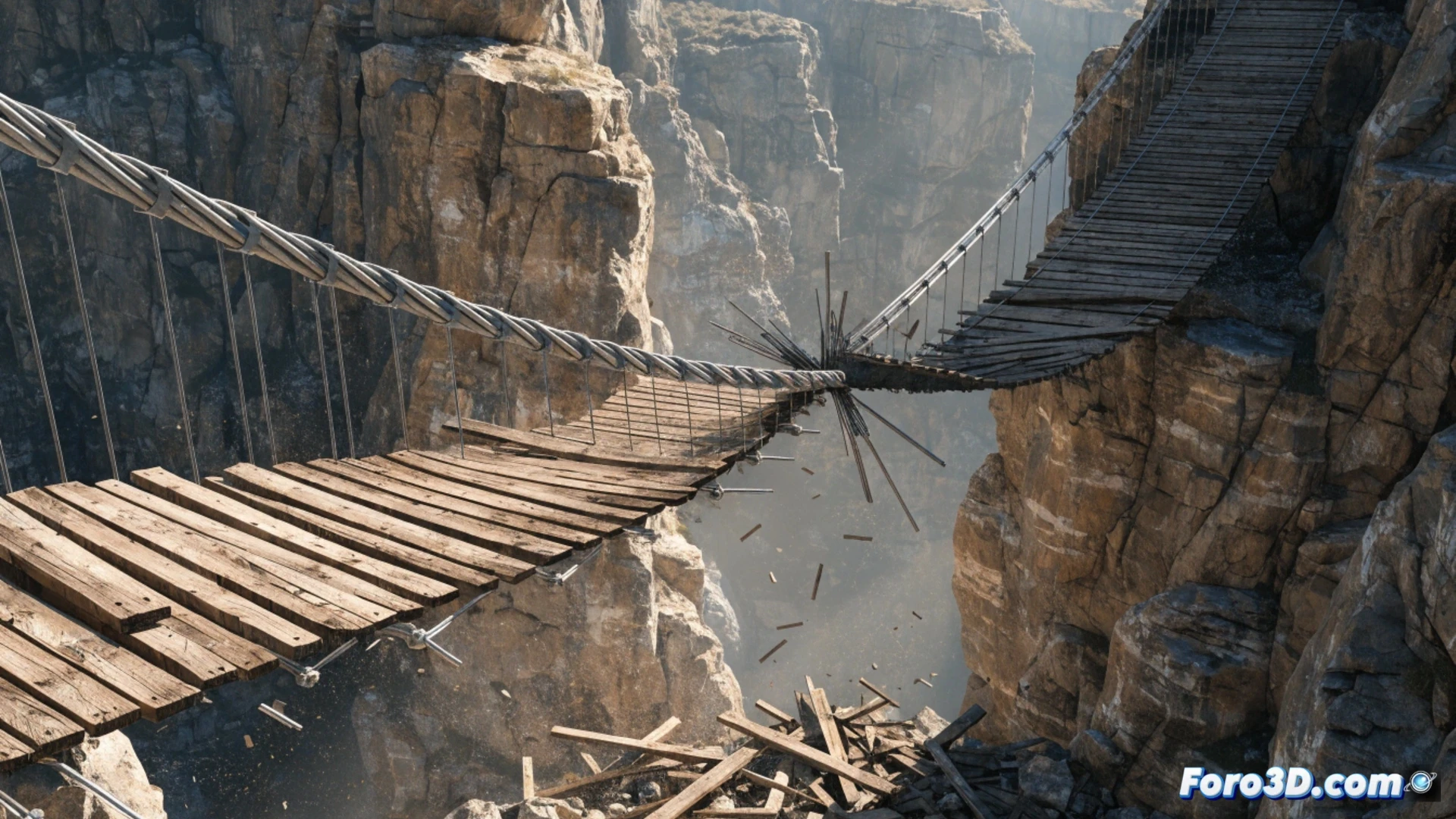
Structural modeling and simulation of the rupture point 🏗️
In the 3D software, we build the walkway with steel cables, wooden planks, and concrete supports. We apply a stress map using finite elements, highlighting the main cable anchor zone as the critical point. The simulation shows that after 10,000 load cycles from visitor traffic, the material suffers micro-cracks. By adding a point load of 50 people in the center, the software calculates the exact moment of fracture. The collapse animation reveals a cascading fall: first the right cable gives way, then the platform tilts, and the planks detach one by one.
Lessons for disaster prevention 🛡️
This 3D recreation demonstrates that the High Altitude Tourism Failure is not a random event, but the result of ignoring material fatigue and load limits. Stress maps allow engineers to identify weak points before construction. For emergency response, the collapse animation serves as a drill tool, showing rescue teams the exact trajectory of debris and the reaction times needed to evacuate tourists.
Which physical and material behavior parameters are most critical to model in order to achieve a realistic 3D simulation of fatigue collapse in an elevated tourist structure such as a cable car or a walkway?
(PS: Simulating disasters is fun until the computer crashes and you are the disaster.)